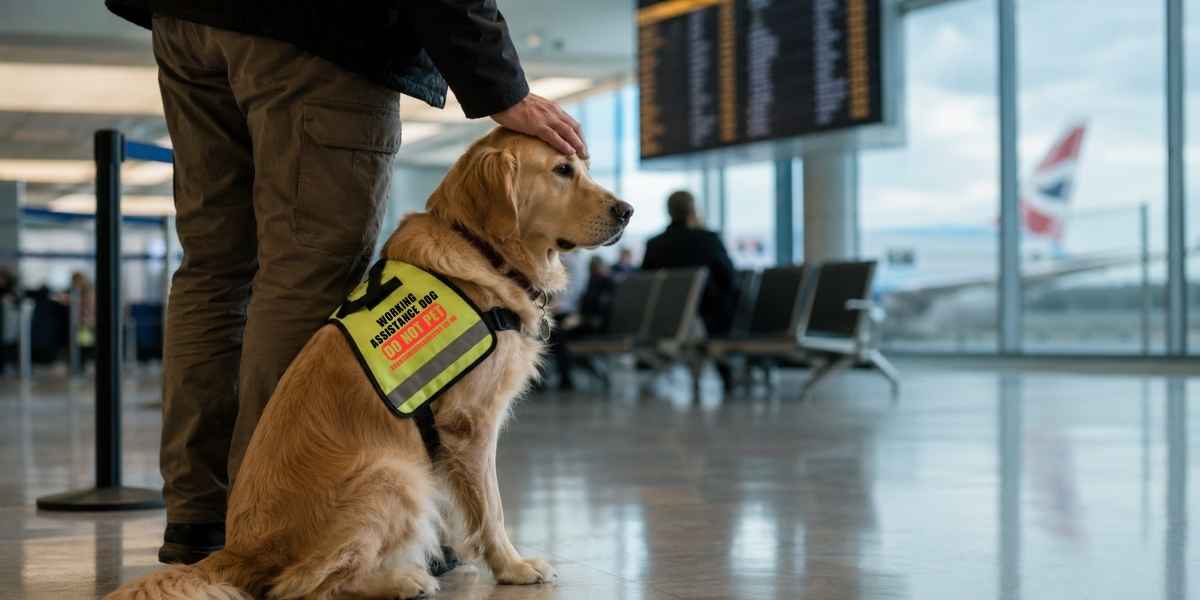
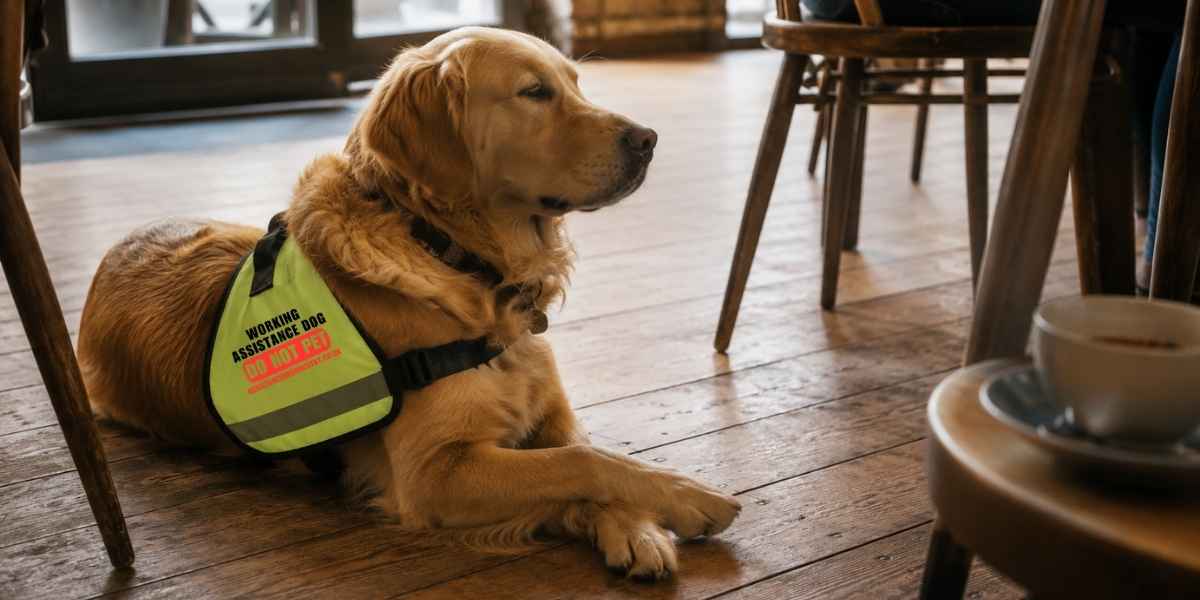
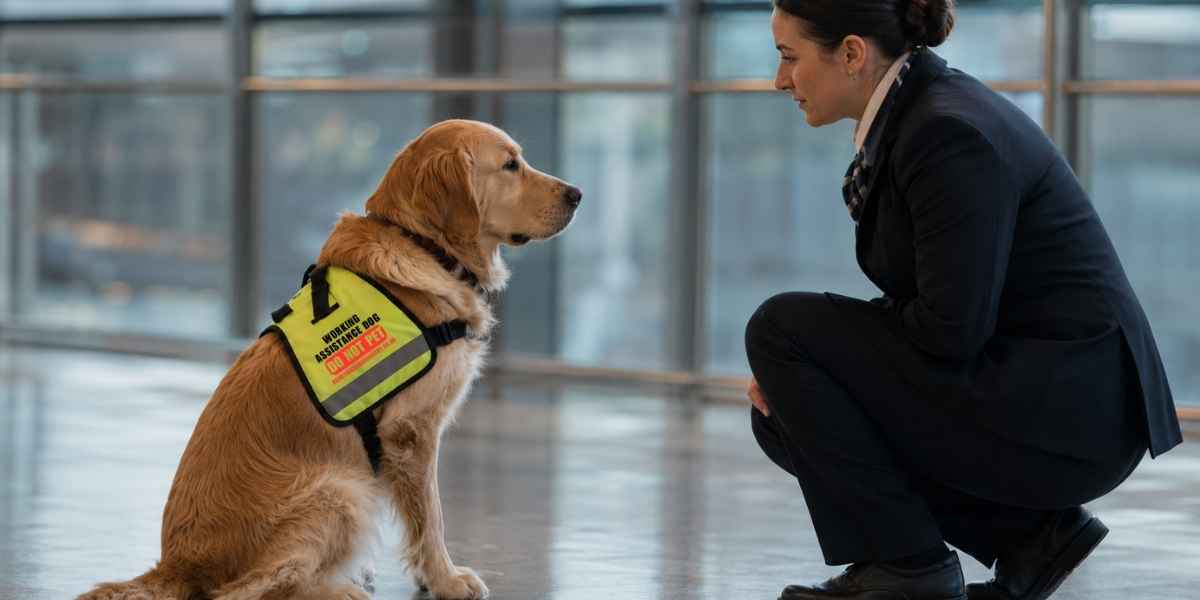
Training your own assistance dog can be incredibly rewarding, especially when supporting a loved one with Autism Spectrum Disorder (ASD). Assistance dogs provide comfort, companionship, and essential help for children and adults with autism. Owner-trained dogs can be just as effective as professionally trained ones.
What Is an Owner-Trained Assistance Dog for Autism?
An owner-trained assistance dog for autism is a dog trained by the owner to provide assistance to a person with ASD. Unlike dogs provided by charities or professional organizations, owner-trained dogs offer:
Lower costs since you aren't paying for professional training programs.
Personalized training tailored to the individual's unique needs.
A deeper bond formed during the training process, which creates a strong partnership.
Benefits of Assistance Dogs for Autism
Owner-trained assistance dogs provide a wide range of benefits to individuals with autism and their families, such as:
Emotional and Behavioral Support
Assistance dogs provide emotional stability during stressful situations.
They offer deep pressure therapy by leaning against the person during times of anxiety.
Dogs act as a calming presence, which helps reduce meltdowns.
Social Interaction and Independence
Assistance dogs serve as social bridges, making it easier for individuals with autism to connect with others.
They encourage social interactions, whether at school, in the park, or in public settings.
The presence of a dog can help boost the confidence of a child with autism, allowing them to feel more independent.
Safety and Security
Assistance dogs can be trained to prevent bolting in crowded or unsafe areas.
They help families feel more at ease when in public by staying close to the person they assist.
Training Your Own Assistance Dog: The Key Steps
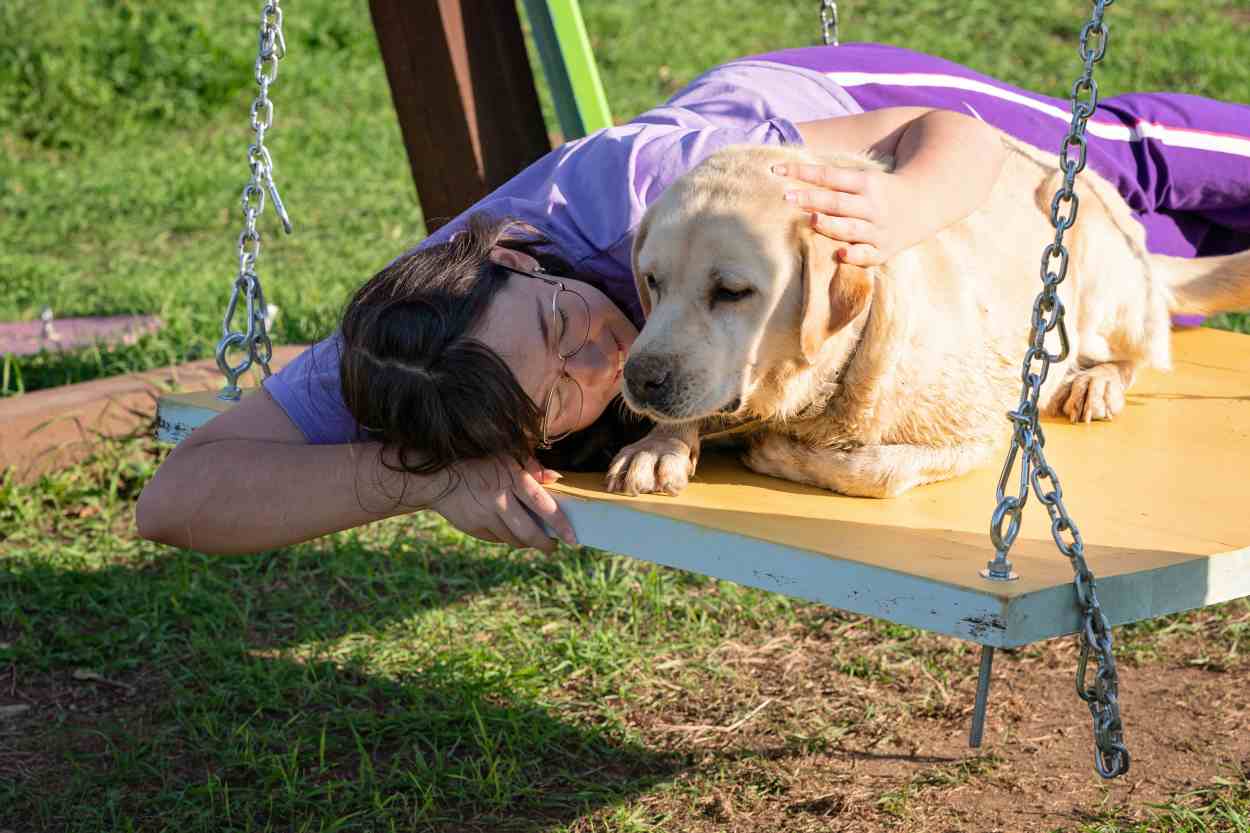
A well-trained assistance dog wearing a harness, taking a break at the playground.
Training an assistance dog for autism requires time, patience, and dedication, but it is achievable with the right guidance. Here are some steps to help you get started:
Start with Basic Obedience Training
Begin by teaching basic obedience commands such as sit, stay, and come. These are foundational skills that every assistance dog needs.
Consistency is key—spend time each day reinforcing these skills to build your dog's discipline.
Specialized Autism Support Training
Train your dog to recognize signs of anxiety or stress in the person with autism. This might include pacing, repetitive behaviors, or signs of a meltdown.
Practice task-specific training: teach your dog to nudge, lean, or lay on the person when they need calming.
Work on public access training, ensuring your dog is well-behaved in public spaces and can handle a variety of environments.
Legal Rights for Owner-Trained Assistance Dogs
Under the Equality Act 2010, assistance dogs, including those that are owner-trained, have the same rights as those trained by professional organizations. This means your assistance dog has the legal right to accompany you in public places, providing crucial support for you or your loved one with autism.
Your dog's registration with the Assistance Dog Registry can also help make access smoother, as it ensures your dog's role is clearly recognized by businesses and the public.
Tips for Success When Training Your Assistance Dog
Be patient: Training can take time, especially when teaching complex tasks. Stay consistent, and celebrate small victories along the way.
Socialize your dog: Expose your dog to different people, places, and situations to ensure they are comfortable in a variety of environments.
Use positive reinforcement: Reward-based training is particularly effective. Use treats, praise, and play as rewards for a job well done.
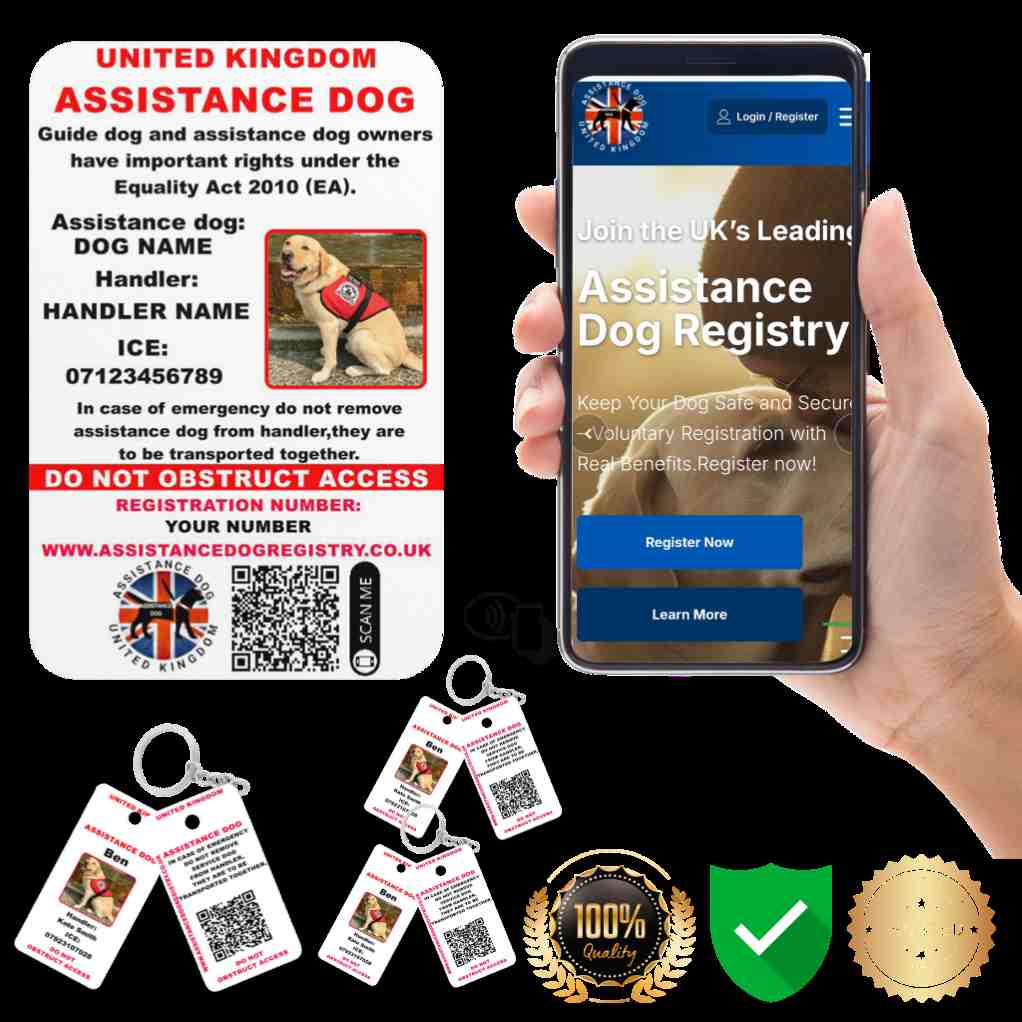
Join the UK's Leading Assistance Dog Registry – Voluntary registration with premium features including personalized ID cards and easy online access
Easier access: Registered assistance dogs often experience fewer issues when entering public places.
Identification: An ID card or NFC tag makes it easier for you to communicate your dog’s role as a working animal to others.
Community support: Being part of the Assistance Dog Registry community means having access to resources, discounts, and information that can support your journey.
Real Stories: Owner-Trained Assistance Dogs Changing Lives
Families who have trained their own assistance dogs often share stories of transformation:
Sarah, mother of an 8-year-old with autism, describes how training their dog Max helped her son feel less anxious in new environments.
John, an adult with autism, says his assistance dog gave him the confidence to navigate daily life independently, improving his quality of life.
Conclusion
Training your own assistance dog for autism is an empowering journey. Not only does it create a strong bond between you and your dog, but it also provides personalized support that truly meets the needs of the person with autism. With patience, dedication, and the right support, owner-trained assistance dogs can offer life-changing benefits, helping individuals with autism lead more fulfilling lives.
Learn More and Register Your Assistance Dog
If you’re considering training your own assistance dog, explore how the Assistance Dog Registry can help you every step of the way. Register today and become part of a supportive community dedicated to enhancing the lives of those with autism through the power of assistance dogs.
Written & reviewed by the ADR Team Assistance Dog Registry, supporting UK assistance dog handlers since 2020
We're a UK-based team dedicated to assistance dog handlers. Since 2020 we've supplied 20,000+ assistance dog ID cards and supported thousands of handlers, owner-trained and charity-trained alike. Our guidance on the Equality Act 2010 and assistance dog access rights is referenced in UK public-sector accessibility policy and relied on by NHS staff, employers and carers. We're not a government body: registration is voluntary, and we'll always tell you so honestly. Learn more about us → | [email protected]
Asked for an ADUK Yellow Booklet at Wetherspoon? What Owner-Trained Assistance Dog Handlers Should Know
Not all assistance dogs are ADUK-trained, and an ADUK yellow booklet is not the only way handlers organise their information. Here is what the guidance actually says.
This is no longer just a doorway dispute. The Equality and Human Rights Commission has written to JD Wetherspoon, saying it is concerned the policy may not comply with UK law. A spokesperson said the Commission is “aware that a significant number of disabled people with assistance dogs have been refused entry from JD Wetherspoon venues because they aren’t carrying formal identification.”
Assistance Dogs UK — the charity whose booklet the policy relies on — has said it believes the policy is discriminatory, and that its identification is not a legal requirement. Its chief executive said Wetherspoon approached the charity for guidance before introducing the policy, but “sadly they didn’t take on board any of the advice we provided.”
The charity Guide Dogs said it had received 27 complaints about Wetherspoon from people challenged or refused entry. An MP, Steve Darling, was challenged for ID last August. Wetherspoon maintains its position, saying it considers requiring ADUK-accredited training “a reasonable adjustment,” and citing an increase in dog bites.
What this means for owner-trained handlers
Most coverage has focused on guide dog owners who had the booklet and were still stopped. There is a second group barely mentioned: handlers of owner-trained assistance dogs, who cannot obtain an ADUK booklet at all, because ADUK accredits dogs trained by its member organisations. Under a policy that accepts only ADUK accreditation, a lawful owner-trained team is excluded by design, not by behaviour.
Being straight about the law: it is genuinely unsettled. The Equality Act 2010 requires service providers to make reasonable adjustments and not to treat disabled people less favourably, but it does not set training standards for assistance dogs, and it does not state outright that they must be admitted. Only a court can decide whether a specific policy is unlawful. What is clear is that no UK law requires you to carry ID for an assistance dog.
And straight about us: an ADR card is not ADUK accreditation and will not satisfy this policy. We are a voluntary register, not a government body and not an accreditation scheme. What we can help with is being prepared and knowing exactly what to say, which is why the refusal kit on this page is free and needs no sign-up.
Key takeaways
ADUK has publicly said JD Wetherspoon misrepresented its position (statement, 11 February 2026), and that the Equality Act 2010 does not require disabled people to carry ID or documentation for an assistance dog.
An ADUK yellow booklet is not a legal requirement. ADUK itself states the booklet is not proof required by law, and not every assistance dog is ADUK-trained.
Owner-trained assistance dogs are recognised in UK guidance. An assistance dog does not have to be trained by a charity or an Assistance Dogs UK member organisation.
EHRC guidance says a dog needs no jacket, harness or ID book by law. A handler should not be refused simply for lacking documentation.
Refusing access only because there is no ADUK booklet may raise Equality Act 2010 concerns, but the dog's behaviour still matters in every case.
Ask for the reason in writing. A calm written request turns a doorway misunderstanding into a complaint a venue must answer.
Uses your device's voice. No data sent to anyone.
Asked for a yellow booklet? 3 steps
A calm reply when a venue asks for ADUK ID.
1
Explain calmly
"Not all assistance dogs are ADUK-trained, and an ADUK booklet is not a legal requirement."
2
Ask the right question
"Are you refusing access only because I don't have an ADUK booklet? Please confirm in writing."
3
Record it and follow up
Note venue, time, staff and words. Ask for their assistance dog policy afterwards.
If you have ever been stopped at a pub door and asked to produce an "ADUK yellow booklet" for your assistance dog, you are not alone, and you have not done anything wrong. It is one of the most common access problems UK handlers report to us, and it lands hardest on people with invisible disabilities and owner-trained assistance dogs, who often have no charity paperwork to wave at a doorway.
This guide explains, calmly and factually, what an ADUK yellow booklet actually is, what Assistance Dogs UK and the Equality and Human Rights Commission (EHRC) really say about it, and exactly what to say if a member of staff insists on seeing one. We are not here to attack any pub chain. We are here to make sure you walk in knowing the facts.
Why this issue keeps happening
Most front-of-house and security staff have a simple mental model: guide dog equals "real" assistance dog, everything else is a pet. That model is decades out of date, but it is sticky, and it causes the same painful scene to play out again and again.
Many pubs and venues understand guide dogs but genuinely misunderstand owner-trained assistance dogs, which are trained by the disabled handler rather than a charity.
Handlers report being asked specifically for an ADUK yellow booklet, as if it were a national licence, which it is not.
This creates real fear and humiliation for people with invisible disabilities such as PTSD, autism, epilepsy or anxiety, whose need for an assistance dog is not visible at a glance.
The result is that a lawful, well-trained assistance dog team can be turned away at the door for the sole reason that they do not carry a particular charity's booklet. Understanding why staff get this wrong is the first step to correcting it without a confrontation.
What Wetherspoon said, and how ADUK replied
In early 2026 this stopped being a quiet doorway-by-doorway problem and became a national talking point. JD Wetherspoon introduced a policy that, in practice, can ask assistance dog handlers for evidence of training before granting access, and its wording referred to Assistance Dogs UK (ADUK). Assistance Dogs UK then published a statement responding directly to it.
Update · 11 February 2026
ADUK has publicly stated that JD Wetherspoon misrepresented ADUK and its position. In its statement, ADUK says Wetherspoon implied that its new policy reflects ADUK policy and legal advice, and that "this is not the case". ADUK also restates that, under the Equality Act 2010, disabled people are not required to carry identification or documentation for their assistance dog, and that ADUK does not tell service providers to restrict access only to dogs trained by ADUK member organisations.
This matters for you as a handler. The very body whose booklet staff so often demand has now said, in public, that requiring proof of training as a condition of entry does not reflect its policy or the law. We are still not making our own finding that any single refusal was unlawful, because policies vary and individual staff get things wrong. But you no longer have to take our word for the central point: ADUK has said it too.
Always check a venue's current published accessibility statement for yourself, because these policies are updated over time, sometimes in response to exactly this kind of feedback.
A venue expecting an ADUK booklet is common. It does not change the fact that, under UK guidance, the booklet is not a legal requirement.
What ADUK says about yellow booklets
Here is the part that surprises most people, including the staff asking for it. The yellow booklet comes from Assistance Dogs UK (ADUK), an umbrella body for a group of assistance dog charities. ADUK-trained handlers may be issued a yellow booklet, an ID card or an app as a courtesy, to make day-to-day life smoother.
But ADUK's own guidance is clear on two things that matter enormously here:
The yellow booklet is not a legal requirement and is not legally required "proof". It is a convenience for handlers trained by ADUK member charities.
ADUK guidance recognises that not every assistance dog is trained by an ADUK member organisation or a charity. Owner-trained assistance dogs exist and are legitimate.
In other words, the very organisation whose booklet staff are demanding does not claim that the booklet is compulsory, nor that its absence means a dog is not a genuine assistance dog. That is a powerful, fair point to make calmly at a doorway.
What EHRC guidance says about owner-trained assistance dogs
The Equality and Human Rights Commission (EHRC) is the body that publishes official guidance for businesses on the Equality Act 2010. Its guidance for businesses is helpful and clear on the points handlers most often need:
EHRC guidance recognises owner-trained assistance dogs. A dog does not have to be trained by a particular charity to be an assistance dog.
EHRC states that assistance dogs do not legally need to wear a harness or jacket.
EHRC says a disabled person should not be refused simply because they cannot produce an identification book.
Read together with ADUK's own position, the picture is consistent: documentation can be handy, but it is not the legal test. Refusing a disabled handler purely because they have no ADUK booklet is exactly the kind of situation that may raise Equality Act 2010 concerns.
What to say if asked for an ADUK booklet
You do not need to argue or quote statutes. One calm, complete sentence does most of the work. Say it slowly and only once, then ask your question.
Use this wording
"I understand you may be used to seeing ADUK yellow booklets. However, not all assistance dogs are ADUK-trained or charity-trained, and an ADUK booklet is not a legal requirement. My dog is trained to assist with my disability and is calm and under control. Please can you confirm whether you are refusing access because I do not have an ADUK booklet?"
That final question does something important: it gently asks the staff member to state, out loud, that the refusal is based on missing paperwork rather than on anything your dog has done. Most reasonable staff will pause at that point, and many will let you in. If they do not, you now have a clear, fair account of what happened.
What to ask for if refused
If the conversation does not resolve and you are still being refused, switch into record-and-follow-up mode. Stay polite, protect yourself, and gather what you need for a written complaint. Ask the venue to:
Bring the duty manager to the conversation.
Provide a copy of their assistance dog policy.
Confirm whether owner-trained assistance dogs were considered.
Confirm whether the refusal was based on your dog's actual behaviour or only on a lack of ADUK documentation.
Join 4,600+ UK handlers. We email when the law or guidance changes. No spam.
The behaviour and safety point
A credible guide has to be honest about the other side, and being clear about this actually strengthens your hand. None of the above gives any dog a free pass on behaviour. An assistance dog is expected to be calm, clean and under control in public, and no booklet, card, registry or profile changes that.
If a dog is unsafe, disruptive, aggressive, not toilet trained or genuinely out of control, that is a separate issue from disability discrimination, and a venue may need to act. When you make a complaint, the fact that your dog was settled and well-behaved removes the most common defence a business will reach for, so a well-trained dog is your strongest evidence as well as your right.
The booklet question is about paperwork. Behaviour is about safety. Keep the two separate, and never let a paperwork dispute become a behaviour dispute.
Where ADR fits
Let us be completely clear about what the Assistance Dog Registry (ADR) is and is not. ADR does not replace ADUK, ADAA, the EHRC or legal advice. It is not a government register, it is not legally required, and it does not certify disability or training or guarantee access anywhere.
What ADR is, is a voluntary information platform for handlers who simply want their assistance dog details organised and ready, especially owner-trained handlers who have no charity booklet to show. A membership gives you a live online profile, an ADR number, a QR and NFC lookup that a nervous manager can scan to see your information presented neutrally, plus an ID card, dog tags and optional vest. It is a tidy way to present information, not a substitute for the law. You can read more about your protections on our assistance dog rights page.
📄
Free download: Assistance Dog Access Refusal Kit
What to say, what to ask, and what to record if you are challenged for an ADUK booklet or refused entry. Keep it on your phone, ready for the doorway.
A permanent live profile, smart ID card, dog tags and QR-linked information you can present at the door: voluntary, handler-controlled, and especially useful for owner-trained teams.
☐ Stay calm; an ADUK booklet is not legally required
☐ Say the one calm line; ask if refusal is only about the booklet
☐ Ask for the duty manager and the assistance dog policy
☐ Ask whether owner-trained dogs were considered
☐ Ask for the refusal reason in writing
☐ Keep your dog calm; behaviour is a separate issue
Copy-paste complaint email
Dear [Venue] team,On [date] at approximately [time], I was challenged / refused entry at [venue, address] with my trained assistance dog because I did not have an ADUK yellow booklet. The staff member involved was [name/description]. My dog was calm and under control throughout.I understand an ADUK booklet is not a legal requirement, and that not all assistance dogs are ADUK-trained or charity-trained. Please could you: (1) review this incident; (2) send me a copy of your assistance dog policy; (3) confirm whether owner-trained assistance dogs were considered; and (4) confirm whether the refusal was based on my dog's behaviour or only on the lack of an ADUK booklet.I would welcome confirmation that staff will receive assistance dog awareness training. I look forward to your reply.Kind regards,
[Your name]
About this guide
This guide was written by the Assistance Dog Registry UK team and checked against current EHRC guidance for businesses, Assistance Dogs UK (ADUK) public information, and the Equality Act 2010. It reflects the ADUK-booklet refusals UK handlers most often report to us, particularly owner-trained teams.
If you spot anything that needs updating, contact us.
ADR
The Assistance Dog Registry UK TeamVerified
Founded by Norbert Szeverenyi · 6,000+ UK handlers supported · Materials reviewed against UK statute and official EHRC, Shelter and GOV.UK guidance.
This article is general information, not legal advice. ADR registration is voluntary and does not, by itself, create a legal right of access. References to any named venue describe common handler experiences and publicly available positions, not a finding of unlawful conduct.
An umbrella body for a group of UK assistance dog charities. ADUK-trained handlers may carry a yellow booklet, but it is not a legal requirement.
ADUK yellow booklet
A courtesy identification booklet issued to some ADUK-trained handlers. It is not government-issued and not legally required proof of an assistance dog.
Owner-trained assistance dog
An assistance dog trained by its disabled handler rather than a charity. It is recognised in UK guidance and need not be ADUK-trained.
Equality Act 2010
The UK law protecting disabled people from discrimination in services, work and housing across England, Scotland and Wales.
Reasonable adjustment
A change a business must reasonably consider so a disabled person is not disadvantaged, including admitting an assistance dog.
The Aviation Exception: How UK Airlines Created a Barrier the Equality Act Never Required
Owner-trained assistance dogs are legally protected on every UK street, in every shop, restaurant and taxi. So why do most UK airlines treat them as second-class? The answer is a narrow safety exception in the Equality Act, stretched until it broke.
📖 9 min read·By the ADR Team·Updated June 2026
Key takeaways
The Equality Act 2010 makes no distinction between charity-trained and owner-trained assistance dogs. The EHRC's own business guidance is explicit: owner-trained dogs have the same access rights as guide dogs.
Most UK airlines require ADI or IGDF accreditation, two private accreditation networks with no statutory authority over UK aviation. ADI is a US non-profit. IGDF is a UK charity. Neither sets UK law.
Airlines invoke a narrow "safety" exception in Schedule 3, Part 7 of the Equality Act that was written for genuine aircraft-specific risks, not for blanket paperwork requirements.
Behavioural assessment is the proportionate alternative. It is already standard in every UK café, taxi, train, hotel, NHS surgery and even American airlines. Airlines could adopt it for an estimated £20,000-£50,000 in cabin crew training.
Even Assistance Dogs UK (ADUK), the umbrella body for the airlines' own preferred accreditation networks, has publicly called for reform that includes dogs trained outside member organisations.
Get UK assistance dog law updates
Join 4,600+ UK handlers. We email when the law changes. No spam.
Uses your device's built-in voice. No data sent externally.
Three steps if a UK airline refuses your owner-trained assistance dog
No special qualifications needed. The law is on your side.
1
Document the refusal in writing
Get the staff member's name, the reason given, the exact wording of the policy invoked. Photograph any signage. Note the time and location. This becomes evidence.
2
File a formal complaint within 14 days
Write to the airline's accessibility officer citing Equality Act 2010 Sections 20 and 29. Copy in the Civil Aviation Authority. Request written justification for the safety carve-out being invoked.
3
Contact the Equality Advisory and Support Service
EASS provides free advice on disability discrimination claims. They can guide you through the County Court claim process and help calculate compensation. The deadline is 6 months from the incident.
USE THIS WORDING
When asked at the gate, state calmly: "This is my assistance dog, working under the Equality Act 2010. I am happy for you to assess his behaviour. Please confirm in writing why you are refusing boarding."
✉Copy-paste: complaint letter to the airline
Adjust the bracketed fields. Send to the airline's accessibility officer, copy in CAA-PACT.
Dear Accessibility Officer,

On [DATE] I was refused boarding flight [FLIGHT NUMBER] at [AIRPORT] with my assistance dog. The stated reason was that my dog is not accredited by Assistance Dogs International or the International Guide Dog Federation.

I am a disabled person under the Equality Act 2010. My dog is owner-trained to perform specific tasks that mitigate the effects of my disability and meets the behavioural standard expected of any working assistance dog in a public setting.

The Equality and Human Rights Commission business guidance confirms that owner-trained assistance dogs have the same access rights as charity-trained dogs. ADI/IGDF accreditation is a private quality mark, not a statutory requirement in UK law.

I therefore consider your refusal to amount to discrimination contrary to sections 20 and 29 of the Equality Act 2010. The safety exception in Schedule 3, Part 7 does not extend to blanket documentation requirements applied by ground staff before any aircraft-specific risk has been considered.

Please confirm in writing within 14 days:
1. The exact policy under which I was refused.
2. Why a behavioural assessment of my dog was not offered as a less discriminatory alternative.
3. Your formal proposal for resolution, including refund of [AMOUNT] and compensation for distress.

A copy of this letter has been sent to the Civil Aviation Authority Passenger Advice and Complaints Team (CAA-PACT).

Yours,
[YOUR NAME]
[YOUR CONTACT DETAILS]
Sarah can take her owner-trained assistance dog into a supermarket. She can take the same dog into a restaurant. She can board a train. She can stay in a hotel. She can visit her GP. She can enter a shopping centre.
Yet when she arrives at an airport, she may suddenly be told that her dog is no longer recognised.
Nothing about Sarah's disability has changed.
Nothing about the dog's behaviour has changed.
Nothing about the law protecting disabled people has changed.
Only the industry has changed.
That contradiction sits at the heart of one of the most overlooked disability-rights disputes in modern Britain.
This is the story of how UK aviation came to require something the law has never required, and why, if it ever ends up in court, the result is genuinely difficult to predict.
What the law actually says
Under the Equality Act 2010, service providers cannot discriminate against disabled people. Section 29 covers the provision of services. Section 20 imposes a positive duty to make reasonable adjustments. The Equality and Human Rights Commission's own business guidance, published in 2017 and still in force, is explicit on the question of assistance dogs:
"Assistance dogs can also be owner trained and the owner selects their own dog to fit their own requirements."
That single sentence, in the official guidance from the UK's statutory equality regulator, settles the question for every café, every taxi, every shop, every hotel, every hospital, every train, every bus, and every dentist in the country. An owner-trained assistance dog has the same access rights as a guide dog trained by Guide Dogs UK, a hearing dog trained by Hearing Dogs for Deaf People, or a mobility partner trained by Canine Partners. The law does not look at who trained the dog. It looks at whether the dog assists a disabled person, and whether the dog is under control.
This isn't a quirk of British law. The Americans with Disabilities Act, under regulation 28 CFR 36.302(c), is equally explicit: service animals may be owner-trained, and service providers may ask only two questions before granting access. No certification. No registry. No paperwork. Two of the most established disability legal frameworks in the world, both saying the same thing.
Why most disabled people own-train
Charity-trained assistance dogs are extraordinary animals, produced by extraordinary organisations doing genuinely vital work. But for the average disabled person seeking an assistance dog in the UK today, charity training isn't a choice. It's a queue:
Pathway
Reality
Guide Dogs UK
Free, but 18 to 24 months of assessment and waitlist
Hearing Dogs for Deaf People
Free, but 2 to 3 year waitlist
Canine Partners
Free, but 3 to 5 year waitlist, narrow disability eligibility
Dogs for Good
Variable, often 2 years or more
Private trainers
£15,000 to £40,000+ per dog
Owner-trained, owner-funded
£500 to £3,000 in equipment + classes
For the disabilities that don't fit any charity's eligibility criteria, chronic illness, epilepsy, mental health conditions, certain autoimmune disorders, there is no charity waitlist at all. The choice is between paying a private trainer £15,000 to £40,000, or training the dog yourself for a fraction of that cost.
Owner-training, then, isn't a fringe preference. It is the realistic and often the only path for the majority of disabled people in the UK who need a working dog. The law recognises this. Civil society recognises this. Every UK ground service from the corner shop to the NHS recognises this. And then the customer reaches the airport.
The aviation carve-out, and how it's being stretched
The Equality Act 2010 contains a narrow exception. Schedule 3, Part 7 allows aviation services to treat disabled people less favourably where it is necessary for safety, or required to comply with international aviation agreements, or compelled by the physical limitations of the aircraft.
That exception was written for genuine aircraft-specific safety risks: turbulence, cabin pressure, evacuation procedures, weight limits. It was not written as a blanket licence to demand particular paperwork from particular handlers.
Yet that is what has happened. Most UK-based airlines now require, as a condition of carriage, that an assistance dog be accredited by Assistance Dogs International or the International Guide Dog Federation, two respected private accreditation networks that together cover roughly 100 to 140 member training organisations worldwide. ADI is a US non-profit headquartered in Ohio. IGDF is a UK-registered charity based in Reading. Neither is a government body. Neither sets UK law. Neither has any statutory authority over UK aviation.
What they have, from the airline's perspective, is something more useful: a piece of paper. And the moment an airline accepts that paper as the only acceptable proof of an assistance dog's status, the airline has created an extra-legal entry barrier that the Equality Act 2010 was specifically designed to prevent.
What the airlines would say
Airlines would argue that their policies exist for safety, consistency and operational practicality. Cabin crew are not dog trainers. Boarding decisions often need to be made quickly. Airlines may also point to liability concerns if an animal behaves unpredictably in a confined aircraft cabin.
These concerns are not trivial. An aircraft is not a café. A poorly-behaved dog at 35,000 feet cannot be asked to leave. Cabin crew already manage a substantial workload under safety-critical conditions, and adding individual animal assessment to that workload is a genuine operational question.
The question, however, is whether excluding every owner-trained assistance dog is a proportionate response to those concerns, particularly when the Equality Act requires service providers to consider reasonable adjustments wherever possible, and particularly when comparable industries have found ways to manage exactly the same risk.
The behavioural-assessment alternative
The safety exception in equality law is not a blank cheque. To rely on it, a service provider has to show that the restriction is proportionate, that it is necessary, and that there is no less discriminatory alternative.
There is a less discriminatory alternative. It is the same alternative used by every café, every taxi, every hotel, every train, every hospital, every restaurant, every NHS surgery, and every American airline operating under federal DOT rules: observe the dog's behaviour.
A working assistance dog can be assessed in minutes by a trained member of cabin crew at the boarding gate. Sit. Down. Stay. Settle at the handler's feet. Quiet voice control by the owner. No barking, no aggression, no soiling indoors. Every other industry that hosts assistance dogs uses this assessment, because behaviour is what matters. Behaviour is the actual safety variable. Behaviour is observable, on the spot, by anyone with four hours of training.
A modest training programme for cabin crew would cost airlines an estimated £20,000 to £50,000 to roll out across an entire workforce. That cost is small enough that the courts have repeatedly held similar measures to be reasonable adjustments that service providers must make under Section 20 of the Equality Act.
Whether current airline policies would survive judicial scrutiny remains largely untested. No UK court has yet been asked to directly examine whether blanket ADI/IGDF requirements are a proportionate response to genuine aviation safety concerns. However, disability-rights lawyers may argue that less discriminatory alternatives already exist, particularly where a dog's behaviour can be assessed individually rather than assumed from documentation alone.
That question remains open. But it is increasingly difficult to ignore.
And the discrimination happens on land
There is a further point that legal observers find compelling. The moment of refusal, the moment a handler is told their dog cannot fly, happens at a check-in counter, or a boarding gate, or a service desk. It happens on the ground, before any aircraft is involved. It is a decision made by ground staff, in a building, looking at a dog, applying a written policy.
There is nothing aviation-specific about that decision. The same conditions that apply to a hotel reception apply to a check-in desk. The safety carve-out in the Equality Act was written to cover constraints inherent to the aircraft itself, not the discretion of a member of ground staff applying an internal policy. Whether the carve-out reaches that far is a question the courts have never been asked to decide.
Even the establishment is calling for reform
This isn't a fringe complaint from owner-trainers. Assistance Dogs UK, the umbrella body for the fourteen British charities all accredited by ADI or IGDF, has itself publicly stated:
"ADUK believes that we urgently need clearer definitions in law of assistance dogs, alongside consistent standards for training and welfare that all working assistance dogs can aim to meet, whether trained by ADUK members or otherwise."
When the umbrella body for the airlines' own preferred accreditation networks publicly calls for reform that would explicitly include dogs trained outside that network, the policy position of the airlines has been overtaken by the consensus of the sector. The airlines are now defending a standard that the standard-setters themselves no longer think is acceptable.
Were you refused boarding?
Assistance Dog Registry UK is collecting first-hand accounts from handlers refused, questioned or delayed at UK airports because their assistance dog was owner-trained. Your story may be quoted anonymously in our follow-up reporting.
First, government needs to clarify that the safety carve-out in the Equality Act applies only to genuine aircraft-specific risks, not to ground-staff documentation requirements. The Department for Transport and the Equality and Human Rights Commission could resolve this with a single piece of guidance.
Second, airlines need to do what every other comparable industry already does: train their staff to assess assistance dog behaviour individually, and accept any dog that meets a behavioural standard, regardless of who trained it.
Third, disabled handlers need to know their rights. A refused boarding is not necessarily a verdict. It may be the start of a discrimination claim that, on current legal grounds, has a real chance of succeeding.
Until one of these things happens, the gap between what UK law says about owner-trained assistance dogs and what UK aviation does about them will remain one of the quietest, longest-running pieces of unequal treatment in British disability rights. It is time it ended.
🐾 Lifelong Partner package
A permanent profile, smart ID cards, dog tags and clear QR-linked information for airlines, landlords, agents and public access situations. The fastest way to evidence your dog's assistance role.
Are UK airlines legally allowed to refuse my owner-trained assistance dog?
Airlines rely on a narrow safety exception in Schedule 3, Part 7 of the Equality Act 2010. Whether that exception genuinely covers blanket ADI/IGDF requirements has never been tested in a UK court. In practice, most refusals are based on policy interpretation rather than settled law. A refused handler with a well-behaved dog and a clear paper trail has a real prospect of bringing a successful discrimination claim.
What's the difference between ADI/IGDF accreditation and UK assistance dog rights?
ADI and IGDF accredit training organisations, not individual dogs. UK assistance dog rights under the Equality Act 2010 apply to the dog and handler regardless of who trained the dog. ADI/IGDF accreditation is a private quality mark, not a legal requirement for assistance dog status in the UK.
Can I claim compensation if a UK airline refuses my owner-trained assistance dog?
Yes, potentially. Compensation under the Equality Act 2010 typically covers injury to feelings (£900 to £49,300 under the current Vento bands), out-of-pocket costs (rebooked flights, accommodation), and in some cases aggravated damages. Claims are usually filed in the County Court within six months of the incident. The Equality Advisory and Support Service offers free guidance.
Will I have problems flying back to the UK from abroad?
Possibly. Many non-UK airlines apply similar ADI/IGDF requirements, and destination country animal-import rules add another layer. The Equality Act 2010 generally applies only to UK-based airlines or to services provided in the UK. For inbound flights, you may need to rely on the carrier's own accessibility policy, the destination country's disability law, or international aviation rules.
Where do I report a refused boarding incident?
Three places. First, the airline's own accessibility complaints process. Second, the Civil Aviation Authority's Passenger Advice and Complaints Team (CAA-PACT), which oversees airline accessibility complaints in the UK. Third, the Equality Advisory and Support Service (EASS) for disability discrimination guidance. Documenting the refusal in writing within 24 hours is essential.
Found this useful? Share it with someone who needs it.
This article is the first in an ADR investigative series examining structural barriers facing UK owner-trained assistance dog handlers. It draws on the Equality Act 2010, current EHRC business guidance, the Civil Aviation Authority Code of Practice, the public statements of Assistance Dogs UK, and published accreditation policies of ADI and IGDF. Last updated June 2026.
ADR
The Assistance Dog Registry UK TeamVerified
Founded by Norbert Szeverenyi. 6,000+ UK handlers supported. Materials reviewed against UK statute and official EHRC, Shelter and GOV.UK guidance.
Epilepsy Alert Dogs UK: Rights, Training and Everything You Need to Know
📖 11 min read·By the ADR Team·Updated May 2026
Epilepsy dogs save lives, but the terminology, the training routes and the legal rights that come with them are widely misunderstood. Here is what handlers, families and employers need to know.
Key takeaways
Epilepsy dogs are legal assistance dogs under the Equality Act 2010. Whether they alert before a seizure or respond during and after one, they carry full public access rights in shops, transport, restaurants, workplaces and rented accommodation.
Alert and response dogs are very different. Seizure alert dogs predict seizures before they happen, a rare and complex ability. Seizure response dogs react during or after a seizure, a distinct set of tasks that is more common and more reliably trainable.
The science of seizure prediction is real but not fully understood. Olfactory research suggests dogs may detect biochemical changes before a seizure. Not every dog can do this, and it cannot be trained to order.
ADUK-accredited options have years-long waiting lists. Medical Detection Dogs is the only ADUK-accredited UK charity training epilepsy alert dogs. Their waiting list regularly exceeds three years.
Owner-training a seizure response dog is legal and increasingly supported. Working with a clinical behaviourist and your neurology team, owner-training a response dog is both realistic and lawful. The Equality Act 2010 makes no distinction between charity-trained and owner-trained dogs.
ADR registration gives your dog full public access recognition. An ADR-registered epilepsy assistance dog carries a QR-linked digital profile, smart ID card and NFC tag, the tools that matter when access is challenged.
Uses your device's built-in voice. No data sent externally.
Alert vs response dogs: the critical distinction every handler needs to understand
The terms "epilepsy alert dog" and "epilepsy response dog" are often used interchangeably in popular conversation. They describe two very different things, and the distinction matters enormously, practically, scientifically and legally.
A seizure alert dog warns its handler before a seizure begins. This is predictive behaviour: the dog detects something in the handler's body, almost certainly biochemical, possibly olfactory, and communicates it through an observable signal, typically pawing, circling, persistent nose nudging or refusing to leave the handler's side. A genuine alert gives the handler time to reach a safe place, call for help, take medication or lie down on a surface where a fall cannot cause injury. The time window varies from a few minutes to over an hour.
A seizure response dog does not predict seizures. Instead, it is trained to perform specific actions during or after a seizure: lying across the handler's body, fetching a phone or alerting device, moving furniture away, staying present through the postictal phase, or activating a medical alert system. These tasks do not require any ability to sense biochemical changes in advance. They are trained responses to observable events, a falling body, a convulsion, stillness, that a dog can reliably learn.
This distinction shapes everything: the training route you can realistically pursue, the type of help you will actually receive, and the expectations you should set with your neurology team and support network.
"Not every dog that appears to react before a seizure is alerting. Some are responding to very early, subtle physical changes the handler has not yet noticed. The result may look identical from the outside, but the mechanism, and the reliability, can be very different."
What tasks do epilepsy dogs perform?
The exact tasks an epilepsy assistance dog performs depend on the dog, the handler's seizure pattern, the handler's living situation and the training approach used. There is no single fixed list. That said, the most commonly trained and documented tasks fall into the following categories.
Pre-seizure alerting. The dog signals to the handler, typically through pawing, barking, circling or body-pressing, that a seizure is imminent. This gives the handler time to reach a safe position, contact someone or take prophylactic medication. This behaviour is the rarest and most complex of all epilepsy dog tasks. It cannot be reliably trained in every dog and is not universally achievable.
Positional assistance during a seizure. Many response dogs are trained to lie across the handler's torso during a tonic-clonic seizure. This serves two purposes: it can help limit the physical spread of convulsive movements, and it provides a grounding physical presence. Some dogs are trained to use their body to prevent a handler from rolling into dangerous positions.
Injury prevention during a fall. Some dogs are trained to position themselves alongside their handler during a detected aura or at the first sign of collapse, acting as a physical buffer against falls onto hard surfaces. This requires extremely precise and individually tailored training.
Fetching help or activating an alert device. A dog can be trained to fetch a phone, press a large-button alarm, activate a medical alert pendant or find a named person in the home. This is one of the most reliable and trainable response tasks, and it is particularly valuable for people who live alone.
Staying through the postictal phase. The period after a generalised seizure, the postictal phase, can last from minutes to hours. Handlers may be confused, physically exhausted, frightened or temporarily unable to move. A trained epilepsy response dog will stay with the handler, provide deep pressure therapy if trained to do so, and remain calm, providing both practical and emotional grounding through recovery.
Deep pressure therapy (DPT). DPT involves the dog applying firm, sustained pressure to the handler's body, usually the lap, torso or legs, on a specific cue or in response to a trained trigger. For some handlers, DPT during or after a seizure reduces distress and supports faster recovery. It can also be used in the lead-up to a known seizure trigger or during periods of heightened anxiety about seizure risk.
The science of seizure prediction: what we know and what we do not
The question of whether dogs can genuinely predict seizures before any observable change occurs in their handler, and if so, how, is one of the most contested and carefully studied questions in the field of medical assistance animals.
The most widely accepted theory is olfactory. A number of studies, including research conducted by Medical Detection Dogs in collaboration with the University of Birmingham, have found that the human body produces detectable volatile organic compounds (VOCs) during seizure activity. If these compounds are released in the pre-ictal phase, before the seizure begins, a dog with a well-developed olfactory system trained to associate a specific scent with an alert behaviour could, in theory, detect the coming seizure before the handler is aware of it.
A 2021 study published in Scientific Reports by Catala et al. found evidence that seizures produce a distinctive odour across different seizure types, and that trained dogs could identify it with high accuracy in controlled conditions. This provided some of the strongest empirical support to date for the biological basis of seizure scent detection.
However, several significant caveats apply in real-world settings.
First, not all seizure types produce the same olfactory signature, or any detectable one. Absence seizures, focal seizures without obvious motor involvement and certain forms of non-convulsive status epilepticus may not generate the same chemical profile as a generalised tonic-clonic seizure.
Second, even in dogs that clearly appear to alert before seizures, researchers cannot always determine whether the dog is detecting a genuine biochemical pre-ictal signal or responding to very subtle behavioural or physical changes in the handler, changes so early in the seizure process that neither the handler nor observers have noticed them, but which are still technically post-ictal in origin.
Third, and most importantly for anyone considering this route, the ability to alert before a seizure cannot be trained to order. It appears to be a capacity that some dogs develop, sometimes spontaneously, sometimes through targeted scent training. It cannot be guaranteed in any individual dog, even one from a reputable charity training programme specifically focused on this task. This is why Medical Detection Dogs and others working in this area are careful in how they describe what they can and cannot promise prospective handlers.
What this means in practice: if you are considering an epilepsy assistance dog, do not base your entire safety plan on the expectation that your dog will alert. A well-trained response dog whose tasks begin at the moment of seizure onset is both more reliably achievable and provides life-changing support in its own right.
The ADUK route: what is available and why the waiting list is so long
If you are interested in a charity-trained epilepsy alert dog in the UK, the landscape is narrow. Medical Detection Dogs is the only ADUK-accredited charity in the UK currently training epilepsy alert dogs. Based in Great Horwood, Buckinghamshire, their programme involves rigorous scent training and extensive assessment of both the dog and the handler's seizure profile.
Their waiting list regularly exceeds three years. Selection criteria are strict: candidates typically need a confirmed diagnosis from a specialist neurologist, a documented seizure pattern that is frequent enough to provide reliable training data, sufficient cognitive and physical capacity to handle and care for a trained working dog, and a living environment suitable for a working dog. Many genuinely epileptic people with a real need for assistance do not meet all of these criteria simultaneously, or face the wait time as an insurmountable barrier.
For people seeking a seizure response dog rather than a true alert dog, a small number of other assistance dog organisations offer programmes, though none currently hold ADUK accreditation specifically for this task type. The broader assistance dog charity sector in the UK is under significant capacity pressure, and demand for all types of medical alert dogs substantially outstrips what accredited programmes can provide.
"Medical Detection Dogs is the only ADUK-accredited charity training epilepsy alert dogs in the UK. Their waiting list regularly exceeds 3 years, and selection criteria are strict. For the majority of epilepsy handlers, owner-training a seizure response dog, working with a clinical behaviourist and neurologist, is both legal and practical. The Equality Act 2010 makes no distinction between charity-trained and owner-trained dogs."
Is owner-training realistic? What handlers need to know
The answer depends sharply on what you are asking the dog to do.
For seizure response tasks, owner-training is realistic. Teaching a dog to fetch a phone, activate an alert device, lie across your body on cue, stay with you during and after a seizure and move through postictal recovery by your side, these are achievable training goals for a suitable dog with a capable handler and good professional support. They require time, consistency and ideally the input of a qualified clinical animal behaviourist (one registered with the Animal Behaviour and Training Council, or ABTC), but they are not beyond the reach of a motivated and prepared owner-trainer.
For seizure alert, genuine biochemical pre-seizure detection, the picture is more complex. The trained element of alert work involves conditioning the dog to perform a specific alert behaviour in response to a seizure scent sample. This is technically an owner-trainable task, and some individuals have worked with clinical behaviourists and specialist scent trainers to attempt it. However, the fundamental limitation is not the training: it is whether the individual dog has the olfactory sensitivity and stability to detect and respond to the scent reliably in the chaos of real life, under varying conditions and across different seizure types. Many dogs that undergo scent training do not develop a reliable alert, or develop an alert that is inconsistent in the field. This is not a failure of the handler or the trainer. It is a reflection of biological variation.
What does a realistic owner-training journey look like? It typically involves: a period of careful breed and individual dog selection; foundation obedience and public access training (essential before any task work begins); engagement with a clinical animal behaviourist who has experience with medical alert dogs; close liaison with your neurology team to document your seizure pattern and inform training decisions; and a realistic timeline of 12 to 24 months before the dog is ready to work reliably in public settings.
Organisations that support owner-trainers in the UK, such as Support Dogs, some regional assistance dog training groups, and independent clinical behaviourists with medical assistance dog experience, can provide varying levels of guidance. The quality and availability of this support varies significantly by region, and there is no single national body governing owner-trainer support in the way ADUK governs its member charities.
Working with your neurology team and a clinical behaviourist
An epilepsy assistance dog, whether charity-trained or owner-trained, works as part of a wider management plan for a condition that is medically complex. The involvement of your neurology team is not a bureaucratic requirement: it is genuinely useful.
Your neurologist or epilepsy nurse can provide a detailed written description of your seizure type, frequency and pattern. This information shapes training in concrete ways. A dog being trained to respond to generalised tonic-clonic seizures needs to learn very different cues and tasks from one being trained to assist a handler whose seizures begin with focal onset and involve primarily absence-type presentations. A dog that has been trained to a specific seizure profile and then placed with a handler whose seizures present differently may not reliably perform the tasks it has been trained for.
Your neurologist can also help you communicate the nature of your condition to employers, housing providers or schools when questions arise about whether your dog is genuinely medically necessary. While no UK law requires you to provide such documentation as a condition of access, and landlords and service providers cannot demand a letter from your doctor as proof, having clear documentation available can de-escalate difficult situations quickly.
A clinical animal behaviourist registered with the ABTC brings a different set of expertise. They can assess whether your dog has the temperament, drives and learning capacity for assistance work; design a training programme that maps your dog's developing skills to your specific medical needs; advise on the progression of public access training; and help you troubleshoot if trained tasks break down or become inconsistent in real-world settings. Clinical behaviourists are distinct from general dog trainers: their qualification involves university-level study of animal behaviour and is regulated through a professional register.
The combination of neurological input on the medical side and behaviour science expertise on the training side gives owner-trainers the best realistic foundation for success. Neither alone is sufficient.
What epilepsy qualifies under the Equality Act 2010?
The Equality Act 2010 defines disability at section 6 as a physical or mental impairment that has a substantial and long-term adverse effect on the person's ability to carry out normal day-to-day activities. "Substantial" means more than minor or trivial. "Long-term" means 12 months or more, likely to last 12 months, or likely to last for the rest of the person's life.
The vast majority of people with epilepsy will meet this definition, but it is worth being precise about why. The test is not whether you have a confirmed epilepsy diagnosis, it is whether the condition substantially affects your daily life. For many people with epilepsy, the impact is not only the seizures themselves but the restrictions they impose: the inability to drive, the need for supervision during activities that would otherwise be safe, the impact of antiepileptic medication on cognition and alertness, the anxiety around unpredictable seizure occurrence, and the postictal fatigue that can follow a seizure event.
Even people with well-controlled epilepsy, whose seizures are infrequent or currently suppressed by medication, may still qualify if the underlying condition has a substantial long-term effect on how they live and work. The Equality Act 2010 Schedule 1 makes clear that the effect of an impairment is to be assessed without the benefit of measures taken to treat or correct it, with one specific exception for spectacles and contact lenses. This means that if your medication stopped working tomorrow, the question is whether your epilepsy would then substantially affect your daily life, not whether it does so today while your medication is effective.
There is no minimum seizure frequency required. A person who has two tonic-clonic seizures per year but cannot safely shower, cook, drive or walk near traffic without risk may well meet the legal definition. A person with dozens of brief absence seizures daily whose activities are substantially restricted will almost certainly meet it.
Seizure response dog tasks: visual guide
What a trained epilepsy response dog can do
Six core tasks of a seizure response dog
These tasks are achievable through owner-training with professional support. Alert (pre-seizure) behaviour is separate and more complex.
📱
Fetch phone or alarm
Dog retrieves a phone or activates a medical alert device so the handler can summon help after seizure onset.
🛡
Prevent injury during fall
Trained to position alongside handler at first sign of collapse, acting as a physical buffer against hard surfaces.
🤲
Lie across body
Dog applies bodyweight across the handler's torso during a tonic-clonic seizure to limit movement spread and provide grounding.
🧘
Deep pressure therapy
Dog applies firm, sustained pressure on cue during recovery to reduce distress and support faster postictal stabilisation.
⏱
Stay through postictal phase
Dog remains calmly present during recovery, minutes to hours, providing companionship, safety and stability as confusion clears.
🔔
Find a named person
Dog is trained to locate a specific named person in the home or workplace and lead them to the handler's location.
Tasks are individual to each handler's seizure profile. Work with a clinical animal behaviourist to identify which are appropriate for your situation.
Public access rights: schools, workplaces, transport and hospitals
An epilepsy assistance dog, regardless of whether it is charity-trained or owner-trained, carries full public access rights under the Equality Act 2010. This covers a wider range of settings than many handlers realise, and it is worth being specific about each.
Schools and educational settings. Part 6 of the Equality Act 2010 covers schools, further education and higher education. A child or student with epilepsy whose assistance dog is a reasonable auxiliary aid is entitled to bring that dog to educational settings. The school or institution must make a reasonable adjustment under section 20 of the Act. A blanket no-dogs policy applied without individual assessment is almost certainly unlawful. Head teachers and SENCO teams that are uncertain should consult the EHRC's technical guidance on schools.
Workplaces. Part 5 of the Act covers employment. An employer has a duty to make reasonable adjustments for a disabled employee. Where an employee requires their assistance dog as part of their daily functioning, allowing the dog into the workplace is likely to be a reasonable adjustment, unless the employer can demonstrate a genuine, proportionate justification for refusing it. A blanket pet policy is not a proportionate justification. An employer who refuses should expect the matter to proceed to an employment tribunal.
Transport. This is the one area where the specific definition in section 173 of the Act applies. Under Part 12, only dogs trained by named ADUK-accredited charities are explicitly referenced for taxi and private hire vehicle purposes. However, this does not mean that transport providers can freely refuse other assistance dogs. The general service provisions under Part 3 still apply to transport operators, and a refusal to carry a disabled person and their trained assistance dog may still constitute unlawful discrimination under sections 29 and 20 of the Act. Rail operators and bus and coach companies are covered by specific Passenger Rights regulations that broadly require them to accommodate assistance animals.
Hospitals and healthcare settings. NHS settings and private healthcare providers are service providers under Part 3 of the Act. They cannot routinely exclude assistance dogs from clinical areas. Infection control considerations may apply in specific circumstances, operating theatres, sterile environments, intensive care units, but these must be assessed individually and proportionately, not applied as a blanket rule. A patient who depends on their epilepsy assistance dog and is admitted to hospital has the right to be assessed individually, not refused automatically.
Shops, restaurants, hotels and other services. All are covered by Part 3 of the Equality Act. A business that refuses entry to a handler with a registered assistance dog, demands proof of ADUK accreditation, or asks a disabled handler to leave their dog outside is likely committing unlawful discrimination.
WHAT TO CARRY WITH YOU
Your ADR digital ID card (QR-linked to your dog's profile, shareable instantly from your phone)
A brief written statement, prepared in advance, explaining what tasks your dog performs and why they are medically necessary
A note of the relevant Equality Act sections: Part 3 for services, Part 5 for employment, Part 6 for education
The EHRC helpline number: 0808 800 0082, free, available if you are refused access and need immediate guidance
Knowledge that you are not required to carry proof of your disability, your diagnosis, or a letter from your doctor
Get UK assistance dog law updates
Join thousands of UK handlers. We email when the law changes. No spam, no renewal fees.
📄
Free: Assistance Dog Law Card
Your legal rights on one card. Show it to shops, transport staff, employers and anyone who challenges your dog. Wallet-sized and QR-linked to your dog's full profile.
Can any dog breed become an epilepsy assistance dog?
In principle yes, though temperament and drives matter far more than breed. The most commonly used breeds for medical alert work are Labradors, Golden Retrievers, Standard Poodles and their crosses, primarily because of their combination of trainability, biddability, stable temperament and suitability for public access environments. That said, many dogs of other breeds and mixed heritage have successfully been trained as epilepsy response dogs. The dog should have calm, confident temperament; good environmental stability (unfazed by crowded, loud or unfamiliar settings); and sufficient working drive to maintain trained tasks reliably over time. A behaviourist assessment of your individual dog's suitability before beginning assistance work training is strongly advisable.
How do I know if my dog is genuinely alerting or just reacting to something I am already doing?
This is one of the most important questions in seizure alert dog science and it does not always have a clean answer. Researchers distinguish between true pre-ictal alerting, behaviour triggered by a biochemical change that precedes any observable change in the handler, and very early behavioural cue detection, where the dog is responding to subtle, involuntary changes in the handler's behaviour, posture or movement that precede the seizure but are not the result of a conscious signal. Both can appear identical to the observer. Keeping a detailed log that records the dog's alert behaviour, the time it occurred and the time the seizure began can help. A clinical behaviourist with medical alert dog experience can help you assess what your dog is doing and design a protocol to test it more rigorously.
Can an epilepsy assistance dog live with me in a no-pets rental property?
Yes. Landlords, whether private, social or housing association, are service providers under Part 3 of the Equality Act 2010, and they are also bound by the reasonable adjustments duty. A blanket no-pets clause in a tenancy agreement cannot lawfully be applied to exclude a disabled tenant's genuine assistance dog without individual assessment. In February 2024, the government also updated the model tenancy agreement to remove default no-pets clauses, and the Renters' Rights Bill, when enacted, will further tighten landlord obligations in this area. If a landlord refuses your assistance dog or threatens eviction, contact Shelter (0808 800 4444) or Citizens Advice as a first step. Discriminating against a disabled tenant on the basis of their assistance dog is unlawful and the tenant has legal recourse.
Do I need to tell my employer that my dog is an assistance dog before bringing it to work?
You do not have a legal obligation to disclose your diagnosis or the nature of your disability to your employer. However, in order to trigger the reasonable adjustments duty under Part 5 of the Equality Act, your employer needs to know, or reasonably ought to know, that you are disabled and that you require a specific adjustment. In practice, bringing an assistance dog to work requires a conversation: you will need to notify your employer of your need, describe the dog's role in sufficient terms for them to assess the adjustment request, and allow them a reasonable opportunity to consider it. You are not required to produce medical evidence of your diagnosis or hand over clinical letters. Stating that you have a medical condition that qualifies as a disability under the Equality Act and that your dog performs specific tasks that you require at work is sufficient to trigger the employer's duty.
My child has epilepsy. Can they have an assistance dog at school?
Yes. Part 6 of the Equality Act 2010 covers schools. A school is required to make reasonable adjustments for a disabled pupil, and where an assistance dog is part of the child's management plan, the school must give individual consideration to allowing the dog. Blanket no-animals policies cannot be applied without an individual assessment. Schools will have legitimate questions about care of the dog during the school day, who is responsible for taking the dog to the toilet, what happens if the dog is unwell, how the dog is accommodated in classes, and these are reasonable operational questions the family should be prepared to address. They are not grounds for refusal. IPSEA (Independent Provider of Special Education Advice) and the SENCO team at the school are useful contacts if the school is reluctant to engage.
Was this article helpful?
About this guide
This article was researched using published peer-reviewed research, EHRC technical guidance, legislation.gov.uk, NHS clinical resources, and primary sources from Medical Detection Dogs and ADUK. We update our articles when the law or official guidance changes.
Assistance Dog Registry has supported thousands of UK assistance dog handlers since 2020, supplying 20,000+ ID cards. Articles reviewed against UK primary legislation and official EHRC, GOV.UK, Citizens Advice and NHS guidance. About ADR
This article provides general information, not legal or medical advice. Epilepsy is a complex and individual condition. Training an assistance dog involves significant commitment and should always involve qualified professional input.
For legal questions about access rights, contact Citizens Advice or the Equality and Human Rights Commission (helpline: 0808 800 0082). For clinical questions about epilepsy management, speak to your neurologist or epilepsy specialist nurse.
Key terms explained
Seizure alert dog
A dog that signals to its handler before a seizure begins, typically by detecting a biochemical change in the handler's body. Alert behaviour is predictive, it precedes any observable change in the handler. Not every dog is capable of reliable alert work.
Seizure response dog
A dog trained to perform specific tasks during or after a seizure, fetching help, lying across the handler, activating an alarm, staying present through recovery. Response work does not require predictive ability and is more reliably trainable than alert work.
Postictal phase
The period following a seizure, during which the handler may experience confusion, exhaustion, temporary motor difficulty, anxiety or emotional distress. Duration varies from minutes to several hours. Epilepsy response dogs are often trained to remain with the handler throughout this period.
Deep pressure therapy (DPT)
A trained assistance dog task involving the dog applying firm, sustained pressure to the handler's body on a specific cue. Used to reduce anxiety, support grounding and assist recovery during and after a seizure.
ADUK (Assistance Dogs UK)
A voluntary coalition of UK assistance dog charities accredited through Assistance Dogs International or the International Guide Dog Federation. ADUK accreditation is a quality standard; it is not a legal requirement for public access rights under the Equality Act 2010.
Clinical animal behaviourist
A professional registered with the Animal Behaviour and Training Council (ABTC) who holds postgraduate-level qualifications in animal behaviour. Distinct from a general dog trainer. Essential input for anyone owner-training an assistance dog, particularly for medical alert or response tasks.
Reasonable adjustment
A change an employer, service provider or education institution is required to make under section 20 of the Equality Act 2010 to remove a substantial disadvantage faced by a disabled person. The duty is anticipatory and ongoing.
Volatile organic compounds (VOCs)
Chemical compounds produced by the human body that can be detected by dogs with highly developed olfactory systems. Research suggests that seizure activity generates a distinctive VOC profile, which forms the scientific basis for the possibility of genuine pre-ictal seizure alert by trained dogs.
To provide the best experiences, we use technologies like cookies to store and/or access device information. Consenting to these technologies will allow us to process data such as browsing behavior or unique IDs on this site. Not consenting or withdrawing consent, may adversely affect certain features and functions.
Functional
Always active
The technical storage or access is strictly necessary for the legitimate purpose of enabling the use of a specific service explicitly requested by the subscriber or user, or for the sole purpose of carrying out the transmission of a communication over an electronic communications network.
Preferences
The technical storage or access is necessary for the legitimate purpose of storing preferences that are not requested by the subscriber or user.
Statistics
The technical storage or access that is used exclusively for statistical purposes.The technical storage or access that is used exclusively for anonymous statistical purposes. Without a subpoena, voluntary compliance on the part of your Internet Service Provider, or additional records from a third party, information stored or retrieved for this purpose alone cannot usually be used to identify you.
Marketing
The technical storage or access is required to create user profiles to send advertising, or to track the user on a website or across several websites for similar marketing purposes.