Unlock the Power of Assistance Dogs in Everyday Living

Assistance dogs are more than just loyal companions—they provide critical support to individuals with disabilities, helping them navigate everyday life with greater independence and confidence. These specially trained dogs are capable of performing a wide range of tasks that help their handlers overcome physical, sensory, and mental challenges. Whether it's guiding a person with visual impairment, alerting a person who is deaf, or providing physical assistance to someone with mobility issues, assistance dogs significantly enhance the quality of life for their handlers.

In this blog, we’ll dive into the various roles assistance dogs play, the different types of assistance dogs, and how they help individuals live fuller, more independent lives.

Types of Assistance Dogs

There are several categories of assistance dogs, each trained to meet the specific needs of their handler. Some of the most common types include:

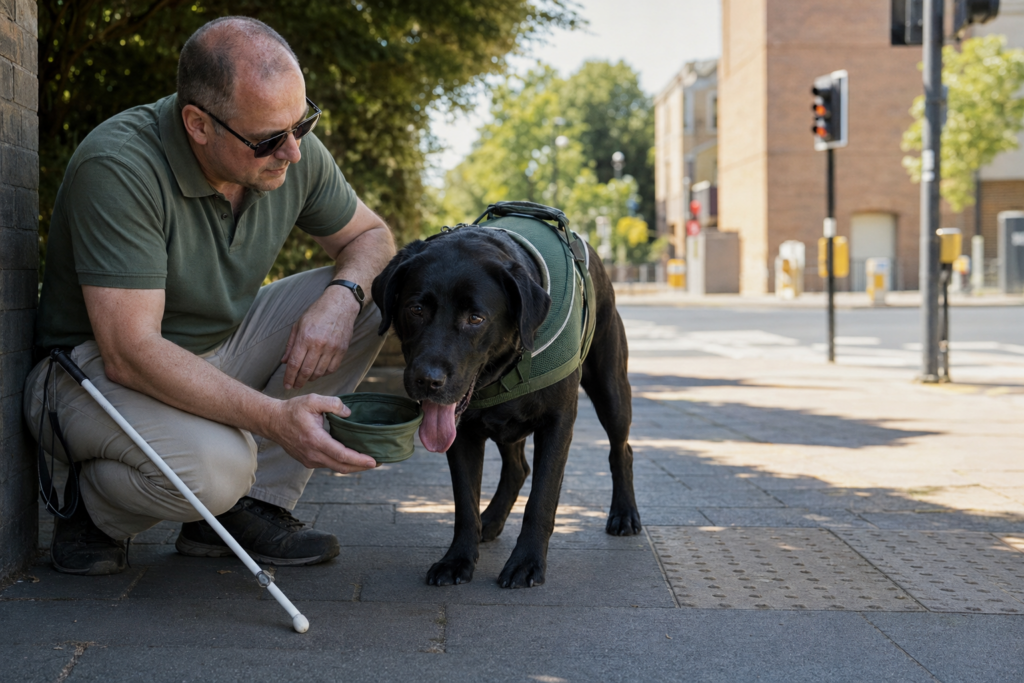
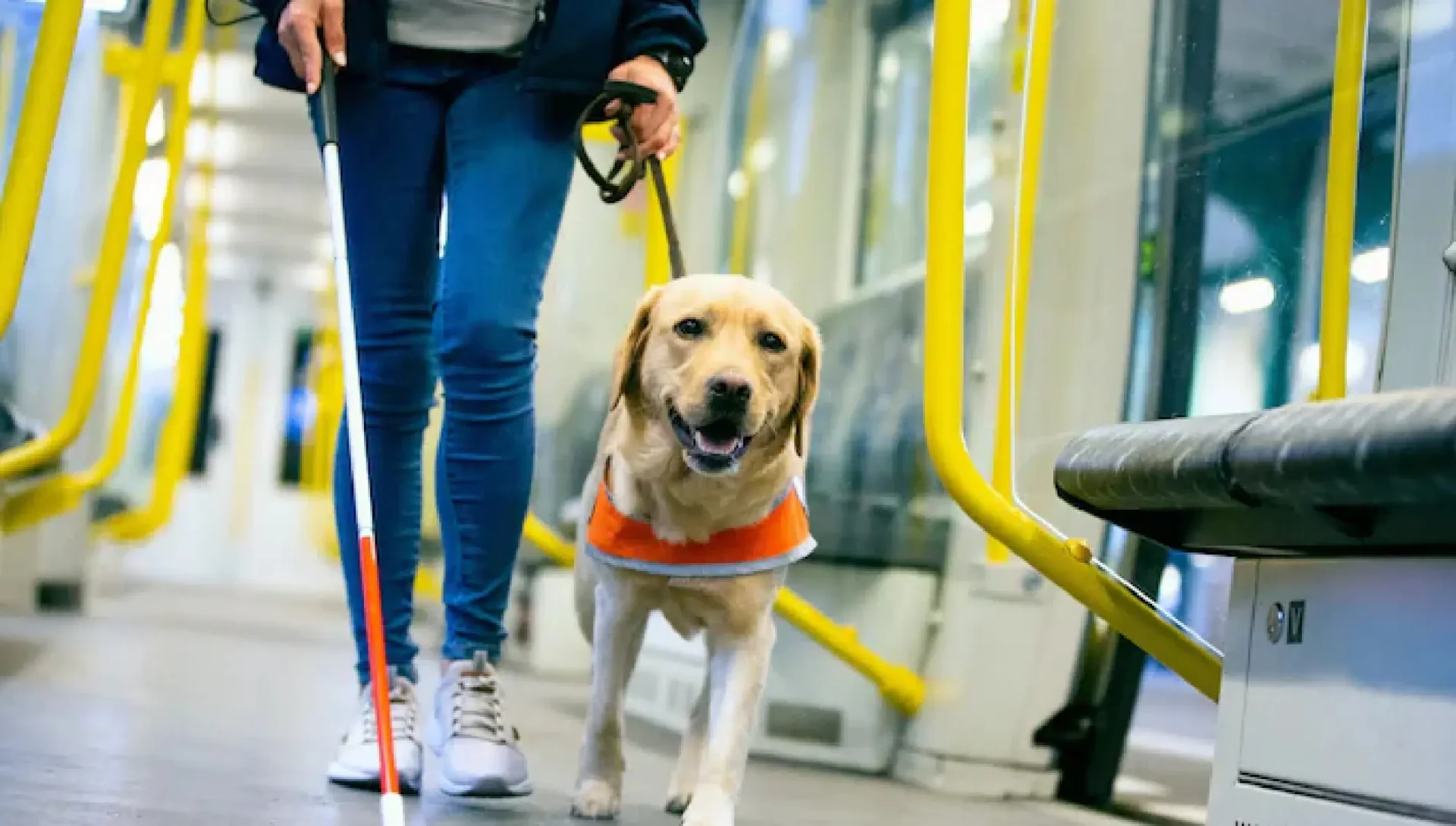
  • Guide Dogs: These dogs assist people who are visually impaired or blind by helping them navigate obstacles, cross streets, and travel independently.
  • Hearing Dogs: Hearing dogs are trained to alert individuals who are deaf or hard of hearing to important sounds, such as alarms, doorbells, or phone calls. They help their handlers become aware of their surroundings through touch cues.
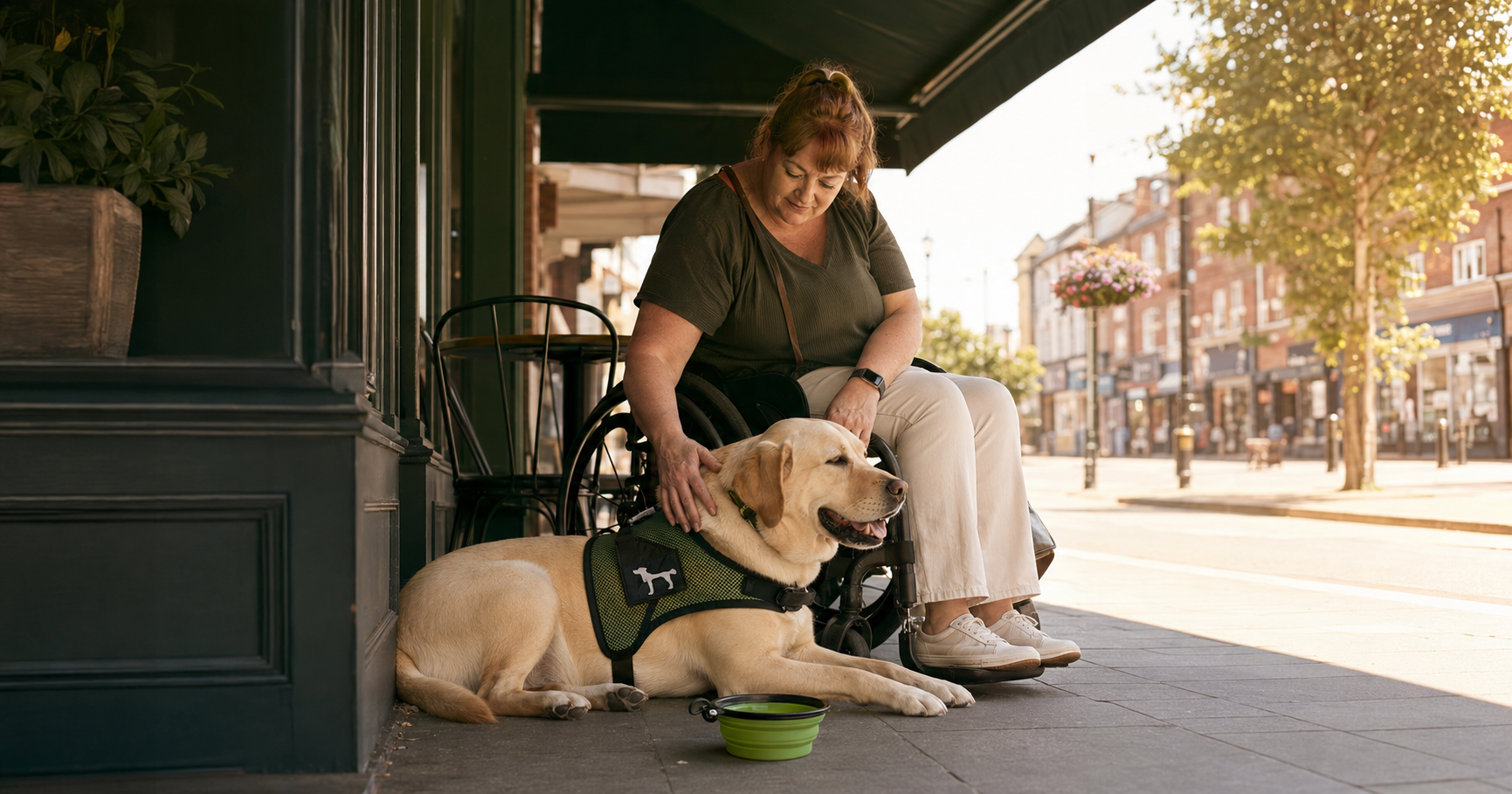
  • Mobility Assistance Dogs: These dogs help individuals with physical disabilities by performing tasks such as retrieving items, opening doors, helping with balance, and even assisting with dressing or undressing.
  • Medical Alert Dogs: Medical alert dogs are trained to detect changes in a person's health, such as blood sugar levels for people with diabetes or signs of an impending seizure for those with epilepsy. They alert their handlers to take action, such as administering medication or seeking help.
  • Psychiatric Service Dogs: These dogs provide support to individuals with mental health conditions, such as anxiety, PTSD, or depression. They are trained to perform tasks like interrupting panic attacks, providing deep pressure therapy, and creating a safe space for their handler in public.
  • Assistance Dog for Autism

Each of these types of assistance dogs is specifically trained to respond to the unique needs of their handler, ensuring that they can navigate daily life with fewer obstacles.
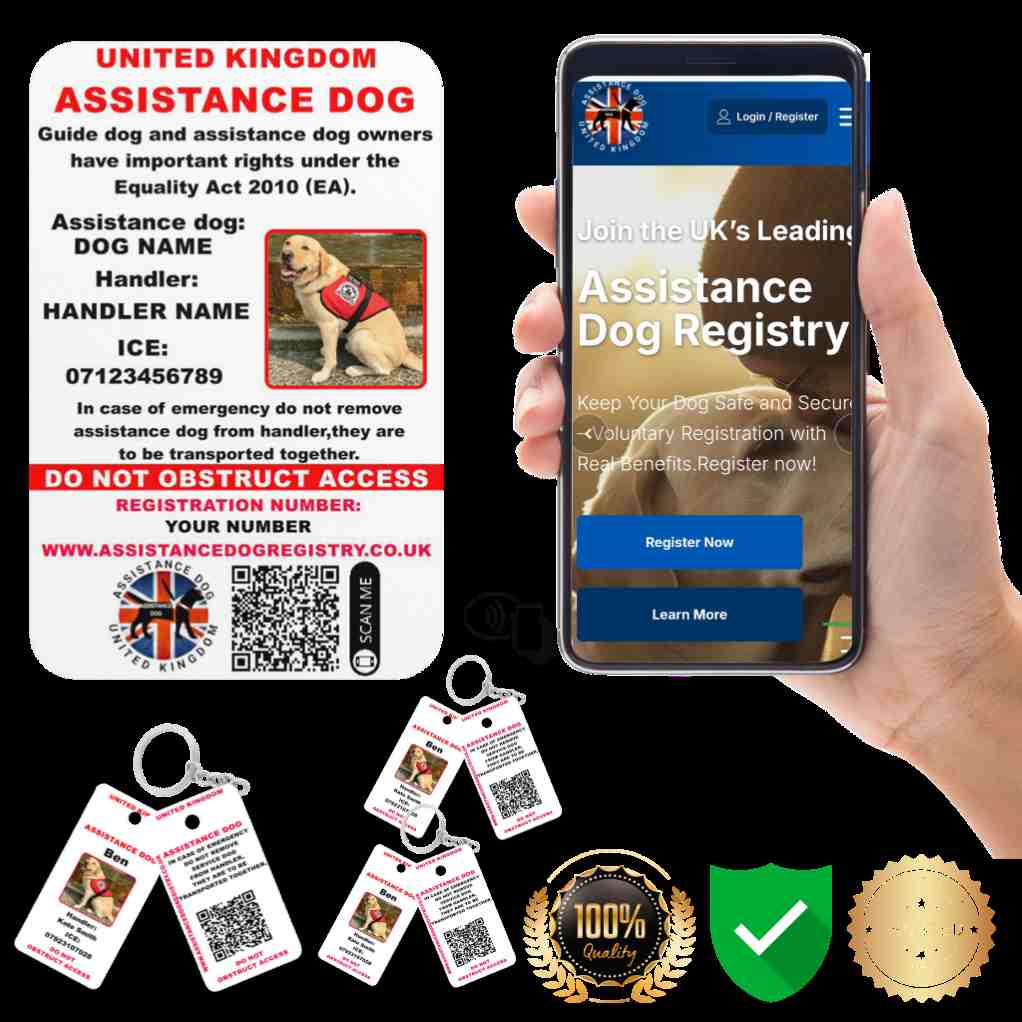
Assistance Dog Registration ID Card and Mobile Login Interface
Join the UK's Leading Assistance Dog Registry – Voluntary registration with premium features including personalized ID cards and easy online access

Tasks That Assistance Dogs Perform

Assistance dogs are trained to perform a variety of tasks that help their handlers manage day-to-day challenges. These tasks depend on the specific needs of the handler but often include:

  • Guidance and Navigation: Guide dogs help people who are visually impaired or blind avoid obstacles, navigate busy streets, and safely reach their destination.
  • Sound Alerting: Hearing dogs alert their handlers to important sounds, such as smoke alarms, doorbells, or approaching vehicles, by physically nudging or leading them toward the source of the sound.
  • Retrieving Items: Mobility assistance dogs can fetch objects for their handlers, such as dropped items, phones, or medication. They can also pull wheelchairs or assist with standing and walking.
  • Medical Alerts: Medical alert dogs can sense changes in their handler's body, such as a drop in blood sugar levels or the onset of a seizure, and alert them to take necessary precautions.
  • Emotional Support: Psychiatric service dogs provide emotional grounding during panic attacks, flashbacks, or periods of intense anxiety. They can also create physical space in crowded areas or offer comfort through touch.

These tasks are essential for individuals who rely on their assistance dog for physical, emotional, or medical support, making everyday tasks more manageable and helping to prevent accidents or medical emergencies.

Assistance Dogs and Independence

One of the greatest benefits of having an assistance dog is the increased independence it provides to people with disabilities. With an assistance dog by their side, individuals who might otherwise struggle with certain activities can confidently participate in everyday tasks such as shopping, traveling, and working.

For example, a guide dog can enable a person who is visually impaired to travel safely and independently, while a mobility assistance dog can help someone with limited mobility manage tasks that might otherwise require human assistance. Medical alert dogs can also provide peace of mind, knowing that their handler will be warned of impending health issues like seizures or hypoglycemia before they occur.

This newfound independence can have a profound impact on the lives of assistance dog handlers, allowing them to lead fuller, more active lives without relying as heavily on others for help.

Emotional and Psychological Support

Beyond the physical tasks they perform, assistance dogs also offer emotional and psychological support. For many handlers, an assistance dog provides companionship and reduces feelings of isolation, especially for those who may have difficulty leaving their homes or engaging with others due to their disability.

Psychiatric service dogs are particularly skilled at providing emotional grounding, helping individuals manage conditions like anxiety, depression, and PTSD. These dogs can recognize signs of distress and provide comfort by offering tactile stimulation, such as nudging or lying across their handler’s body, to reduce anxiety and improve emotional stability.

The bond between a handler and their assistance dog is often incredibly strong, offering a sense of comfort, safety, and emotional well-being that goes far beyond the tasks the dog is trained to perform.

Training and Standards for Assistance Dogs

In the UK, assistance dogs can be trained by accredited organizations or by their owners. Regardless of the training method, assistance dogs must meet certain behavior standards, particularly when in public spaces. They need to remain calm, focused, and well-behaved in various environments, from busy city streets to quiet cafes. This level of training ensures that the dog can perform its duties effectively without causing disruption.

While assistance dogs are not required to wear specific identification or certification, it is highly recommended that they wear vests or harnesses that signal their role as assistance animals. This helps avoid misunderstandings in public spaces and reinforces their right to access areas where pets are normally prohibited.

Legal Rights and Protections

In the UK, the Equality Act 2010 ensures that assistance dogs and their handlers have the legal right to access public spaces, services, and facilities without discrimination. Businesses and service providers must accommodate assistance dogs, even in places where pets are typically not allowed. Refusing entry to an assistance dog or treating the handler unfavorably due to the presence of the dog is considered unlawful discrimination.

Whether the dog is owner-trained or professionally trained, it plays a critical role in supporting the handler’s independence and well-being. Ensuring that assistance dogs are welcomed and treated appropriately in public spaces is key to upholding the rights and dignity of individuals with disabilities.

Conclusion

Assistance dogs are vital companions that enable individuals with disabilities to lead more independent, confident, and fulfilling lives. Whether they are trained to guide, alert, support, or provide emotional grounding, these dogs perform life-changing tasks that improve the quality of life for their handlers.

If you have an assistance dog, consider registering them through our free registration process to ensure they receive the recognition and support they deserve. Visit our website to learn more about how your dog can help you navigate the world with greater independence and peace of mind.


Related Post

More Helpful Guides for Handlers

Assistance dog sitting beside a desk in a modern UK office — UK Employer Guide to Assistance Dogs at Work 2026
Est. Reading: 7 minutes

The UK Employer's Guide to Assistance Dogs at Work (2026): Policy, Onboarding + Free Template

UK Employer Guide · 2026

A practical guide for HR teams, line managers, and equality leads — Equality Act 2010 duties, step-by-step onboarding, free template pack.

Updated April 2026. Free to use and adapt.

Most employers are not ready for this conversation

An employee walks in with an assistance dog. Nobody had a process. HR improvised. The manager asked the wrong question. The employee felt like a problem before they'd even sat down.

It happens in offices, warehouses, hospitals, councils, and shops across the UK every week. Not because employers are unkind. Because they never had to think about it before.

The legal starting point is not a "no dogs" building rule. It is the Equality Act 2010. Employers must not unlawfully discriminate against disabled applicants or employees, and they must consider reasonable adjustments where a disabled person would otherwise be placed at a substantial disadvantage. The EHRC Employment Statutory Code is the key reference.

Real employers are already formalising this. Cotswold District Council's Dogs at Work Policy (September 2025) treats assistance dogs separately from general workplace rules and links the approach explicitly to Equality Act reasonable adjustments.

1. The legal question every employer gets wrong

The Equality Act 2010 frame

Most employers ask the wrong question. They ask: "Do we allow dogs?"

The right question is: "What reasonable adjustment is needed here, and how can we implement it proportionately?"

Under the Equality Act 2010, employers must not discriminate against disabled people in recruitment or employment, and they have a duty to consider reasonable adjustments. Whether an adjustment is reasonable depends on practicality, effectiveness, cost, disruption, and the employer's size and resources.

A workplace "no dogs" rule does not automatically settle the issue. A blanket refusal carries legal risk. Employers need to assess the actual circumstances, avoid reflex refusal, and document the reasoning behind whatever arrangement they put in place.

The same principle applies in recruitment. Applicants are protected too. An employer should not use an assistance dog as a disguised reason to reject a disabled applicant.

2. Who counts as an assistance dog — the part most policies get wrong

Owner-trained dogs have equal legal standing

Many employers wrongly assume that only dogs from one familiar charity route "count." That is not a legally safe position. In the UK, there is no single official register or mandatory proof document for assistance dogs. As ADUK's own guidance on registration and proof acknowledges, no official or mandatory scheme exists.

Assistance dogs in UK workplaces may have been:

  • Trained and placed by an established charitable organisation
  • Trained with an independent trainer
  • Trained by a smaller specialist provider
  • Owner-trained by the disabled handler themselves

The important questions are: whether the disabled employee relies on the dog, what the dog is trained to do, and whether the arrangement can be managed safely and reasonably in that workplace.

3. The "proof" myth — what employers should stop doing

No official UK certificate exists

Many employers think they need to see a specific certificate, charity card, or official-looking document before they can proceed. There is no official registration or certification process for assistance dogs in the UK, so there is no single legal proof document employers can insist on as the gateway to workplace access.

Policies such as these are poor policy wording and create unnecessary legal risk:

  • "Charity ID only"
  • "Registration papers required"
  • "Approved provider only"
  • "No access without formal certification"

A better approach is to focus on what information is reasonably needed to plan the workplace arrangement: the dog's working role, how the dog assists the employee, what practical adjustments are needed, and expected behaviour standards.

Where ADR helps

Assistance Dog Registry provides optional practical tools that reduce friction: registration records, public profile pages, ID materials, and employer-facing documentation. These are not "official proof" — no such standard exists. They are practical planning tools that make workplace conversations easier and more structured.

4. Why employers need a written policy before they need it

A written policy does three important things. First, it stops HR and managers improvising under pressure. Second, it helps the organisation respond consistently. Third, it reduces the chance of the employee being challenged repeatedly by different people inside the organisation.

A good policy does not need to be long. It needs to say: what the general position on animals is, that assistance dogs are considered separately under equality obligations, how requests are handled, what the onboarding process looks like, what standards apply, and how concerns are managed. That is enough.

5. The onboarding process: seven steps that prevent most problems

Most workplace friction comes from ambiguity, not from the dog itself.

Step 01

Early notification from the employee

Where possible, the employee tells HR or their manager in advance that they rely on an assistance dog and that workplace arrangements will be needed — before a start date, during recruitment, after a role change, or when an existing employee begins working with a dog.

Step 02

Workplace discussion

Meet with the employee to discuss what the dog does, what the employee needs to work effectively, what practical arrangements are required, and whether any workplace-specific issues need to be planned for.

Step 03

Practical workplace assessment

Assess the workplace for operational issues: rest space, water access, toileting arrangements, movement through the building, meeting rooms, shared spaces, reception and security awareness, and emergency evacuation.

Step 04

Written individual plan

Record the agreed arrangement. A short assistance-dog plan is usually enough — daily working arrangements, interaction rules, emergency procedures, and a review date. The free template pack below includes a ready-to-use checklist.

Step 05

Team briefing before day one

Where colleagues need to know, tell them in advance. Brief, calm, factual. What colleagues should and should not do — and how to raise any genuine concerns privately. A template email is included in the free pack below.

Step 06

Day one — unremarkable, not dramatic

Reception, line managers, and relevant staff should be ready. The goal is not to create a performance around the dog. It is to make day one operationally smooth and unremarkable.

Step 07

Six-month review

A short review catches small issues early. Twenty minutes with the handler and HR is usually enough. Update the individual plan if anything has changed.

6. Allergies, fear of dogs, and colleague concerns

The two most common concerns are allergies and fear of dogs. Both should be taken seriously. Neither is an automatic reason to exclude the disabled employee.

EHRC guidance on assistance dogs supports a practical balancing approach. If there is a real allergy issue or another genuine concern, employers should look at proportionate ways to manage it rather than defaulting to refusal — seating in different areas, agreed routes through the building, keeping the dog's rest area away from a colleague's workstation, controlled introductions, or other practical separation measures.

Manage the conflict. Do not turn the disabled employee into the problem.

7. What if the dog is not behaving appropriately?

A dog should not be judged by who trained it. A dog should be judged by behaviour, control, hygiene, safety, and workplace practicality. That is the fair standard.

If a dog is repeatedly out of control, aggressive, not toilet-trained, creating a hygiene issue, or creating a genuine safety concern that cannot reasonably be managed, the employer may be justified in reviewing or withdrawing workplace access. Published assistance-dog workplace guidance supports that behaviour-and-risk-based approach. Employers should stay proportionate — one minor incident should not trigger automatic exclusion.

"The organisation will assess assistance dogs on behaviour, safety, hygiene, and workplace practicality — not on whether the dog was trained by a particular provider. Where a dog creates a genuine and unmanageable risk or serious operational issue, workplace access may be reviewed or withdrawn on a case-by-case basis."

Frequently asked questions

Can an employer insist on one specific certificate or ID?

No. There is no single official register or mandatory proof document for assistance dogs in the UK. Focus on the workplace arrangement and the employee's actual needs — not on invented paperwork thresholds.

Can an employer ask questions at all?

Yes. Employers can ask questions reasonably connected to planning adjustments, workplace safety, and practical implementation. What they should avoid is rigid gatekeeping based on one specific provider or document.

What if the office has a "no dogs" policy?

That does not automatically answer the Equality Act issue. Employers still need to consider reasonable adjustments in the actual circumstances. A blanket refusal carries legal risk.

What if the dog is owner-trained or independently trained?

That does not automatically make the dog invalid. Focus on the disabled employee's needs, the dog's function, and workplace practicality — not the training route.

Can an employer ask for the dog to be removed?

Potentially yes, but only where there is a genuine behaviour, hygiene, safety, or operational issue that cannot reasonably be managed. The decision should be based on actual risk and conduct — not on the dog's provider or paperwork.

Free Download

UK Employer Policy Pack — 2026

Assistance Dogs at Work policy template · Onboarding checklist · Manager briefing notes · Team announcement template. Four documents. Free. Adapt before use.

⬇ Download the free Policy Pack

4 documents · PDF · 213 KB · Adapt for your organisation before use

Why this matters for owner-trained and independently trained teams

Many of the people most affected are the very people most likely to be misunderstood. Owner-trained and independently trained assistance-dog handlers are often left explaining themselves repeatedly to employers who assume only one narrow route is valid. That creates delay, frustration, and unnecessary exclusion.

A good workplace policy fixes that without lowering standards. It does not say anything goes, any dog counts, or behaviour does not matter. It says: UK law matters, reasonable adjustments matter, genuine behaviour and workplace standards matter, and myths about "official-only" proof should not drive employer decisions. That is the fairer and more professional standard.

This article is provided as general guidance only and does not constitute legal advice. Employment cases are fact-specific. For advice on a specific situation, consult an employment solicitor or refer to the EHRC's employment guidance. Last updated: April 2026.

Assistance Dog Registry usertagcalendar-fullclock
linkedin facebook pinterest youtube rss twitter instagram facebook-blank rss-blank linkedin-blank pinterest youtube twitter instagram