Every day across the UK, thousands of disabled people rely on their assistance dogs for independence, support, and safety. These dogs are more than companions — they are a vital part of daily life. But too often, handlers face confusion or even discrimination from businesses that don’t understand the law.
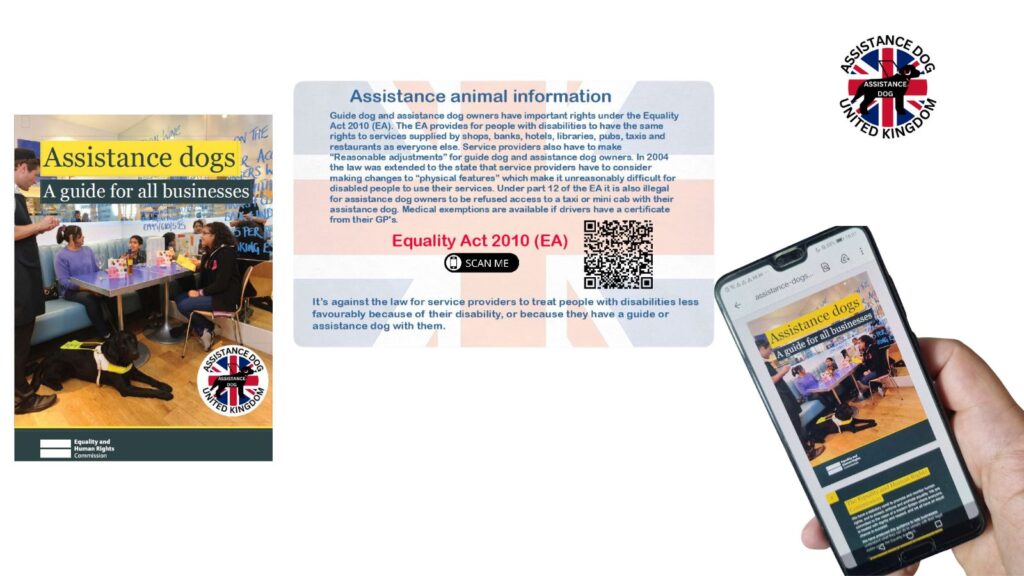
That’s why we’ve made an important upgrade to every Assistance Dog Registry ID card: a built-in QR code linking directly to the official Equality and Human Rights Commission guide, “Assistance Dogs: A Guide for All Businesses.”
This blog explains:
What’s inside that guide
Why we linked it to every card
How this empowers handlers
And why ID cards and vests — while not legally required — remain essential tools for real-world access
🧾 What Is the PDF Guide?
This downloadable PDF, created by the Equality and Human Rights Commission, explains in plain terms how businesses must treat assistance dog handlers under the Equality Act 2010.
It’s designed for staff at shops, restaurants, hotels, taxis, banks, and more. It explains their legal obligations and what happens when those aren’t met.
We know from experience that even well-trained assistance dogs are sometimes challenged in public spaces. Many business owners still falsely believe that:
Only guide dogs are legally recognized
Assistance dogs must be trained by a charity
An ID card or vest is required for legal access
All of this is incorrect. But we also know that the burden of educating others shouldn't fall on you in stressful moments.
That’s why we embedded this official guide into your card with a QR code. One quick scan — and you can show the business exactly what the law says.
🔍 What the Guide Actually Says
Let’s break down the most important sections of the Equality and Human Rights Commission’s official guide — and how they affect you.
✅ 1. Owner-Trained Assistance Dogs Are Legal
“Assistance dogs can also be owner trained and the owner selects their own dog to fit their own requirements.” (Page 5)
You are not legally required to use an Assistance Dogs UK (ADUK) member charity to train your dog. Owner-trained dogs — provided they are trained to behave properly in public — are equally protected under the Equality Act.
This is essential for people with non-visible disabilities, PTSD, mobility needs, or complex conditions not supported by charity waitlists.
✅ 2. ID Cards and Vests Are Optional — But Still Valuable
“The law does not require the dog to wear a harness or jacket... Some users carry ID books... Again, this is not a legal requirement and assistance dog users should not be refused a service simply because they do not possess an ID book.” (Page 5)
Here’s the truth: the law doesn’t require you to wear a vest or carry a card. But reality is different. Without visual identification, you may be challenged more often — leading to awkward or confrontational moments.
That’s why most handlers still choose to carry:
An ID card to show their rights
A high-visibility vest for clarity in public
Dog tags and QR links to make education easier
These aren’t legal requirements — they’re tools for smoother, stress-free experiences.
✅ 3. “No Dogs” Policies Are Not Valid
“A ‘no dogs’ policy will have a worse impact on disabled people using assistance dogs and could be indirect discrimination unless the policy can be objectively justified.” (Page 9)
This is one of the most misunderstood parts of the law. A business cannot use a “no dogs allowed” policy to refuse your entry. If they do, they could face legal claims under disability discrimination law.
Even if someone inside is allergic or has cultural concerns, the business must make reasonable adjustments — like separating seating — not banning you entirely
.
✅ 4. Emotional and Psychological Support Is Valid
“Assistance dogs... can also provide emotional and psychological wellbeing and improve the confidence of disabled people who use them.” (Page 12)
Mental health matters. Whether your dog helps with panic attacks, PTSD, autism, anxiety, or another condition — you are protected.
There is no law stating that emotional support is not valid if it relates to a diagnosed disability that impacts your daily life.
🛡️ How Our Cards and Vests Help
Limited Time: Save £30 on the Premium Assistance Dog Plan
Today, we honour the courage, sacrifice, and resilience of all who fought for freedom. VE Day reminds us that strength often comes in silence — and in the loyal companionship of those who walk beside us, human or canine. 🐾 To mark this important day, we're offering a special VE Day Discount for our Lifetime Assistance Dog Registration Package — a small way to honour big sacrifices. Use code VICTORY30 at checkout.
valid until:10thof May 2025
Now that you understand what’s legally required — here’s why thousands of handlers still choose our tools.
2. Why is socialization important for assistance dogs?
Proper socialization ensures assistance dogs remain calm, focused, and well-behaved in various public settings, enabling them to perform their duties effectively.
3. At what age should I start socializing my assistance dog?
It's beneficial to begin socialization during puppyhood; however, with patience and consistent training, dogs of any age can learn to navigate public environments confidently.
4. How long does it take to socialize an assistance dog?
The duration varies based on the dog's temperament, previous experiences, and the consistency of training. Regular, positive exposure to different environments is key.
5. Can I socialize my assistance dog if they are older?
Yes, older dogs can be socialized successfully. While it may require more time and patience, with positive reinforcement, they can adapt to new situations.
6. What should I do if my assistance dog shows fear in public?
If your dog exhibits fear, calmly remove them from the situation and gradually reintroduce the stimulus at a comfortable distance, rewarding calm behavior.
7. How do I handle public distractions during training?
Teach focus commands like "watch me" to redirect your dog's attention. Gradual exposure to distractions, paired with positive reinforcement, can improve focus.
8. Are there specific public places ideal for socialization?
Begin with quiet areas like parks, then progress to busier environments such as cafes, public transport, and shopping centres as your dog becomes more comfortable.
9. How can I ensure my assistance dog behaves appropriately around other animals?
Controlled introductions and rewarding calm behaviour are essential. Consistent training helps your dog remain focused on their tasks, even around other animals.
10. What are the legal requirements for assistance dogs in public places?
In many regions, assistance dogs are permitted in public areas to support their handlers. It's important to familiarize yourself with local laws and regulations regarding assistance dogs.
Learn More – Additional Assistance Dog Letter Templates
If you found this travel guide useful, you may also benefit from these other essential assistance dog letter templates we’ve published:
📌 Housing Accommodation Request Letter– Need to request reasonable accommodation from your landlord? This template ensures your rights under the Equality Act 2010 are respected.
📌 Workplace Assistance Dog Request Letter – If you need accommodations to bring your assistance dog to work, this letter outlines your legal rights and reasonable adjustments your employer should consider.
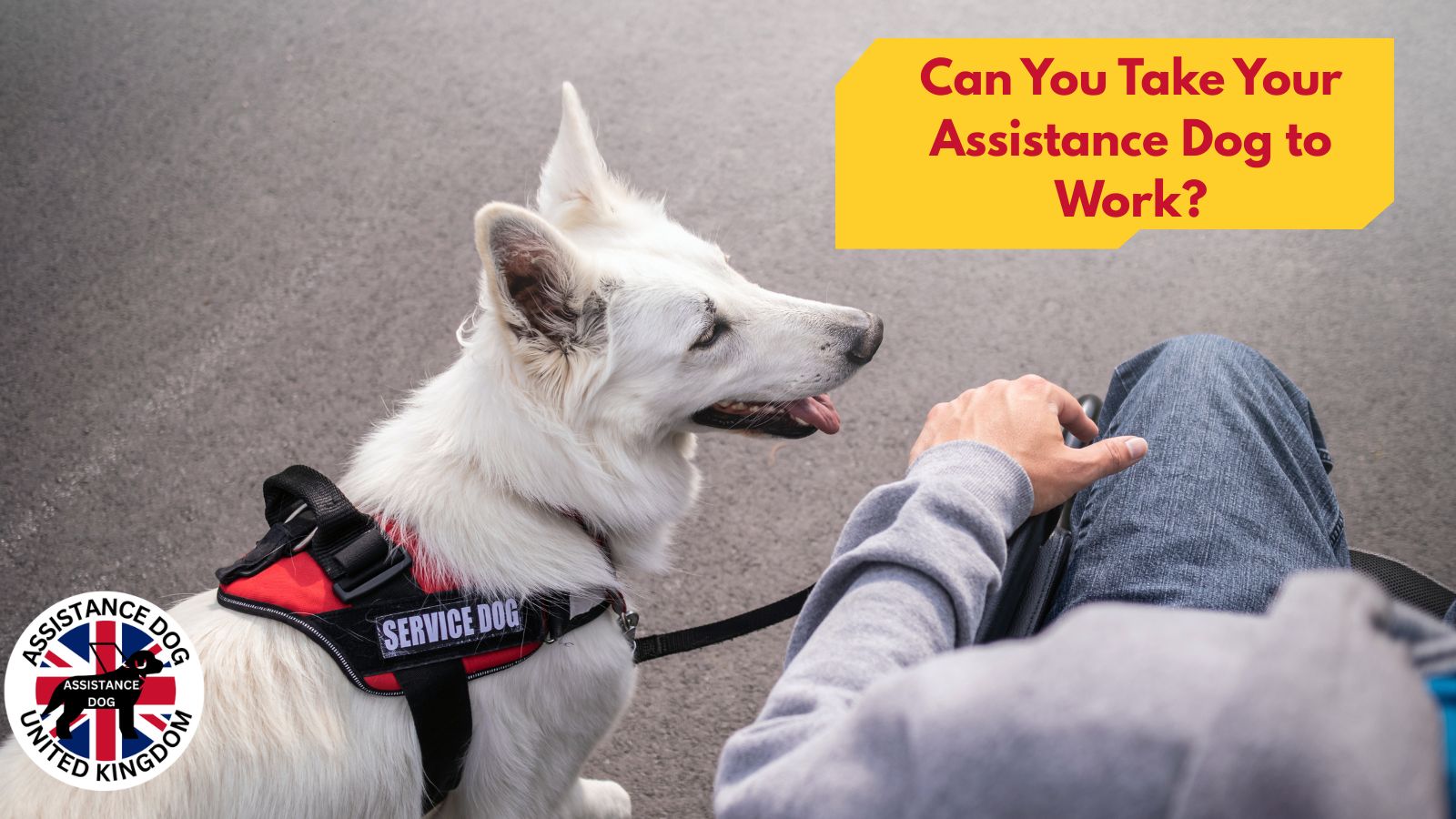
Can You Take Your Assistance Dog to Work in the UK? Your Legal Rights Explained.
Yes in most cases, you can take your assistance dog to work in the UK.
Under the Equality Act 2010, employers have a legal duty to make reasonable adjustments for disabled employees. If you rely on an assistance dog at work in the UK, a blanket “no dogs” policy cannot automatically override your rights.
This guide explains what the law says, what reasonable adjustments mean in practice, and what to do if your employer refuses your request.
What the Equality Act 2010 Says About Assistance Dogs at Work
The Equality Act 2010 protects disabled people from discrimination in the workplace. This protection applies to recruitment, employment terms, and working conditions.
If your disability means you rely on an assistance dog, your employer must consider allowing the dog as a reasonable adjustment.
Importantly, UK law does not distinguish between charity-trained and owner-trained assistance dogs. There is also no legal requirement for registration, a vest, or formal ID. However, many handlers choose to carry voluntary identification to reduce friction in workplace conversations.
What Are “Reasonable Adjustments” in the Workplace?
Reasonable adjustments are changes that remove barriers for disabled employees. The goal is to prevent disadvantage caused by disability.
In practice, adjustments involving an assistance dog may include:
Allowing the dog during working hours
Providing space for the dog to rest
Adjusting desk layout or seating arrangements
Allowing short breaks for water or toileting
Informing colleagues appropriately (without disclosing medical details)
What counts as “reasonable” depends on factors such as employer size, cost, and the nature of the work environment. However, refusing outright without consideration is unlikely to be lawful.
Can an Employer Refuse an Assistance Dog Because of Allergies?
Allergies are a common concern. However, one employee’s allergy does not automatically override another employee’s disability rights.
Employers must balance both needs.
Possible solutions include:
Adjusting seating arrangements
Separating workspaces
Improving ventilation
Using air purifiers
Adjusting schedules
The key point is that employers must explore alternatives before excluding the assistance dog completely.
What to Do If Your Employer Says No
If your employer refuses your request, take these steps:
1. Put Your Request in Writing
Reference the Equality Act 2010 and explain how your dog supports your disability.
2. Escalate Through HR
If informal discussions fail, request a formal review of reasonable adjustments.
2. Why is socialization important for assistance dogs?
Proper socialization ensures assistance dogs remain calm, focused, and well-behaved in various public settings, enabling them to perform their duties effectively.
3. At what age should I start socializing my assistance dog?
It's beneficial to begin socialization during puppyhood; however, with patience and consistent training, dogs of any age can learn to navigate public environments confidently.
4. How long does it take to socialize an assistance dog?
The duration varies based on the dog's temperament, previous experiences, and the consistency of training. Regular, positive exposure to different environments is key.
5. Can I socialize my assistance dog if they are older?
Yes, older dogs can be socialized successfully. While it may require more time and patience, with positive reinforcement, they can adapt to new situations.
6. What should I do if my assistance dog shows fear in public?
If your dog exhibits fear, calmly remove them from the situation and gradually reintroduce the stimulus at a comfortable distance, rewarding calm behavior.
7. How do I handle public distractions during training?
Teach focus commands like "watch me" to redirect your dog's attention. Gradual exposure to distractions, paired with positive reinforcement, can improve focus.
8. Are there specific public places ideal for socialization?
Begin with quiet areas like parks, then progress to busier environments such as cafes, public transport, and shopping centres as your dog becomes more comfortable.
9. How can I ensure my assistance dog behaves appropriately around other animals?
Controlled introductions and rewarding calm behaviour are essential. Consistent training helps your dog remain focused on their tasks, even around other animals.
10. What are the legal requirements for assistance dogs in public places?
In many regions, assistance dogs are permitted in public areas to support their handlers. It's important to familiarize yourself with local laws and regulations regarding assistance dogs.
Learn More – Additional Assistance Dog Letter Templates
If you found this travel guide useful, you may also benefit from these other essential assistance dog letter templates we’ve published:
📌 Housing Accommodation Request Letter– Need to request reasonable accommodation from your landlord? This template ensures your rights under the Equality Act 2010 are respected.
📌 Workplace Assistance Dog Request Letter – If you need accommodations to bring your assistance dog to work, this letter outlines your legal rights and reasonable adjustments your employer should consider.
Assistance dog handlers often face comments that sting, drain confidence, or create pressure to “prove” something they should never have to prove. If you’ve ever walked away replaying a sentence in your head, this guide is for you.
Below are five common remarks people search for online, plus real-world scenarios and calm, factual responses you can use without oversharing personal information.
Short, calm phrases can reduce conflict and protect your energy.
1) “You don’t look disabled.”
This often happens quietly. You’re in a queue, or walking into a shop, and someone looks from your dog to you and back again. Then it lands:
“You don’t look disabled.”
In that moment, many handlers feel exposed like their body has failed an invisible test. Invisible disability is real, and it is common.
A calm response you can use
“Not all disabilities are visible.”
If you want a slightly firmer version
“Disability isn’t always visible.”
2) “Is that a real assistance dog?”
This one usually arrives with suspicion. A stranger or staff member pauses, watches your dog, and asks “real” as if you’re being audited in public.
“Is that a real assistance dog?”
It can feel like you’re being forced to defend your life, especially when you’re already managing anxiety, overwhelm, or fatigue.
A calm response you can use
“Yes. My dog assists me with my disability.”
Keep it simple. You’re stating function, not inviting debate.
3) “We don’t allow dogs in here.”
This is the moment many handlers dread: you’ve already entered the space, you’re trying to stay regulated, and someone approaches with a rule meant for pets.
“Sorry, we don’t allow dogs.”
Even when you know your rights, being challenged can spike stress fast especially if the interaction is public, loud, or confrontational.
A calm response you can use
“Assistance dogs are legally allowed to accompany their handler.”
If the person seems open to learning, you can add one short line: “This is different from pet access.”
This one often comes from staff trying to “follow policy” — but it still creates pressure. You might hear it at a reception desk, a restaurant entrance, or during a tense moment at the till.
“Do you have ID?”
The hardest part isn’t the question. It’s the feeling that access depends on paperwork — when you’re already stretched thin.
A calm response you can use
“There’s no legal requirement for ID for assistance dogs in the UK.”
If you want to keep it cooperative: “I’m happy to explain the guidance if it helps.”
5) “That’s just an emotional support dog.”
This one can feel dismissive. Sometimes it’s said with a shrug, sometimes with an eye-roll, and it can instantly make a handler feel small.
“That’s just an emotional support dog.”
Labels get messy online. The simplest way to stay grounded is to bring the conversation back to what your dog does.
A calm response you can use
“My dog is trained to assist with my disability.”
No argument. No defence. Just function.
A calmer way to handle these moments
You are never required to share private medical details. Your rights exist regardless of whether you carry paperwork.
That said, many handlers choose optional support tools (like a short law summary card or profile) because it can reduce stressful back-and-forth and help the law speak for itself when words are hard to find.
It’s always optional. The goal is relief, not permission.
Wear your support gear with confidence (lanyard, dog tags, vest)
Enjoy the benefits of voluntary registration that supports your rights without replacing or contradicting the law
Stay Confident
You deserve peace of mind when you're out enjoying the sunshine. With proper registration and public-friendly ID tools, you can confidently navigate the spaces where others still need educating.
Register your assistance dog today and enjoy every sunny moment without setbacks.
2. Why is socialization important for assistance dogs?
Proper socialization ensures assistance dogs remain calm, focused, and well-behaved in various public settings, enabling them to perform their duties effectively.
3. At what age should I start socializing my assistance dog?
It's beneficial to begin socialization during puppyhood; however, with patience and consistent training, dogs of any age can learn to navigate public environments confidently.
4. How long does it take to socialize an assistance dog?
The duration varies based on the dog's temperament, previous experiences, and the consistency of training. Regular, positive exposure to different environments is key.
5. Can I socialize my assistance dog if they are older?
Yes, older dogs can be socialized successfully. While it may require more time and patience, with positive reinforcement, they can adapt to new situations.
6. What should I do if my assistance dog shows fear in public?
If your dog exhibits fear, calmly remove them from the situation and gradually reintroduce the stimulus at a comfortable distance, rewarding calm behavior.
7. How do I handle public distractions during training?
Teach focus commands like "watch me" to redirect your dog's attention. Gradual exposure to distractions, paired with positive reinforcement, can improve focus.
8. Are there specific public places ideal for socialization?
Begin with quiet areas like parks, then progress to busier environments such as cafes, public transport, and shopping centres as your dog becomes more comfortable.
9. How can I ensure my assistance dog behaves appropriately around other animals?
Controlled introductions and rewarding calm behaviour are essential. Consistent training helps your dog remain focused on their tasks, even around other animals.
10. What are the legal requirements for assistance dogs in public places?
In many regions, assistance dogs are permitted in public areas to support their handlers. It's important to familiarize yourself with local laws and regulations regarding assistance dogs.
Learn More – Additional Assistance Dog Letter Templates
If you found this travel guide useful, you may also benefit from these other essential assistance dog letter templates we’ve published:
📌 Housing Accommodation Request Letter– Need to request reasonable accommodation from your landlord? This template ensures your rights under the Equality Act 2010 are respected.
📌 Workplace Assistance Dog Request Letter – If you need accommodations to bring your assistance dog to work, this letter outlines your legal rights and reasonable adjustments your employer should consider.
Travelling overseas with an assistance dog requires careful preparation. Rules for documentation, airline policies and border requirements apply to all dogs, even highly trained assistance animals. This guide summarises the essential information from GoCompare’s 2025 pet travel update, adapted specifically for UK assistance dog handlers.
Why Assistance Dogs Need Their Own Travel Insurance
Your personal travel insurance does not cover your assistance dog’s medical needs abroad. Even the best-trained dogs can experience unexpected health issues while travelling, so having proper cover is important.
Travel insurance for dogs can help with:
Emergency vet treatment overseas
Changes to travel plans caused by illness or injury
Lost, stolen or damaged travel documents (e.g., Animal Health Certificate)
Emergency repatriation back to the UK
Extra accommodation and travel costs if your dog cannot travel as planned
Holiday cancellation if your assistance dog needs urgent treatment
While there is no legal requirement for pet travel insurance, it offers valuable protection and peace of mind.
Typical Travel Insurance Cover for Assistance Dogs
What is usually covered?
✔ Emergency vet bills abroad
✔ Quarantine fees if your dog becomes ill
✔ Replacement documents if lost or damaged
✔ Emergency flights or transport home
✔ Holiday cancellation due to your dog’s urgent medical needs
✔ Extra accommodation or transport if plans change unexpectedly
✔ Repeat tick or tapeworm treatment if your return is delayed
What is usually not covered?
✖ Travelling without correct documents (AHC, microchip, vaccinations)
✖ Pre-existing conditions not declared to the insurer
✖ Non-emergency treatment abroad
✖ Claims without proof of purchase or receipts
✖ Certain liability claims outside the UK
What Affects the Cost of Assistance Dog Travel Insurance?
Costs depend on:
Your dog’s breed and age
Existing medical conditions
Destination country
Length of trip
Policy limits and cover type
According to Defaqto data in the GoCompare report:
61% of pet insurance policies include overseas cover as standard
19% offer it as an optional add-on
Essential Preparation for Travelling With an Assistance Dog
1. Vaccinations at least 21 days before travel
Your dog must be microchipped and vaccinated against rabies.
2. Animal Health Certificate (AHC) within 10 days before entering the EU
An AHC is required for every journey from Great Britain to any EU country or Northern Ireland.
3. Pre-travel health check 1 month before travel
Your vet will assess whether your dog is fit to travel and whether any conditions need to be managed beforehand.
4. Review your insurance 1–2 months before departure
Check for:
Emergency vet fee limits
Quarantine cover
Emergency repatriation cover
Time limits for trips abroad
Pet Travel Scheme (PETS)
PETS allows dogs to travel without quarantine between participating countries.
Your assistance dog must have:
A microchip
A valid rabies vaccination
An Animal Health Certificate
Treatment for tapeworm/ticks depending on destination
Note: Great Britain pet passports are no longer valid for EU travel.
Airline Rules for Assistance Dogs
Most airlines allow registered assistance dogs to travel in the cabin at no additional cost. However, policies vary between carriers.
General airline rules:
Your dog may sit in the floor space by your feet
You must notify the airline before travelling
Additional seats may be required if extra space is needed
All health and travel documentation must be valid
Airlines that allow pets (and assistance dogs):
British Airways
Emirates
Lufthansa
TUI
Air France–KLM
Airlines that do not allow pets (but allow assistance dogs):
easyJet
Jet2
Ryanair
Eurostar, Ferry and Eurotunnel Travel
Eurostar
Pets not permitted
✔ Registered assistance dogs are allowed (book 24 hours in advance)
Ferries
Most allow assistance dogs free of charge
Dogs may stay with the handler in public areas
Some ferries provide pet lounges or kennels
Eurotunnel LeShuttle
Pets and assistance dogs allowed
Dogs stay in the car with you for the entire journey
Exercise areas available on both sides
Tips for Travelling With an Assistance Dog
Travelling by car
Keep your dog secure with a harness or crate
Ensure a comfortable temperature
Never leave your dog unattended in the vehicle
Travelling by plane
Use an airline-approved harness or lead
Book direct flights where possible
Avoid sedation unless your vet approves it
Stay calm — your dog senses your emotions
Travelling on public transport
Check each operator’s pet and assistance dog policy
Keep your dog close and under control
Choose quieter areas where possible
Special Considerations for Assistance Dogs
Assistance dogs are recognised differently from pets. Transport providers must make reasonable adjustments to support accessibility.
Most providers allow:
Free travel for your assistance dog
Access to public areas, cabins and lounges
Priority boarding or support if needed
Always notify the operator in advance for the smoothest experience.
Source Attribution
This article is an adapted summary tailored for assistance dog handlers. It is based on the original GoCompare guide:
Wear your support gear with confidence (lanyard, dog tags, vest)
Enjoy the benefits of voluntary registration that supports your rights without replacing or contradicting the law
Stay Confident
You deserve peace of mind when you're out enjoying the sunshine. With proper registration and public-friendly ID tools, you can confidently navigate the spaces where others still need educating.
Register your assistance dog today and enjoy every sunny moment without setbacks.
2. Why is socialization important for assistance dogs?
Proper socialization ensures assistance dogs remain calm, focused, and well-behaved in various public settings, enabling them to perform their duties effectively.
3. At what age should I start socializing my assistance dog?
It's beneficial to begin socialization during puppyhood; however, with patience and consistent training, dogs of any age can learn to navigate public environments confidently.
4. How long does it take to socialize an assistance dog?
The duration varies based on the dog's temperament, previous experiences, and the consistency of training. Regular, positive exposure to different environments is key.
5. Can I socialize my assistance dog if they are older?
Yes, older dogs can be socialized successfully. While it may require more time and patience, with positive reinforcement, they can adapt to new situations.
6. What should I do if my assistance dog shows fear in public?
If your dog exhibits fear, calmly remove them from the situation and gradually reintroduce the stimulus at a comfortable distance, rewarding calm behavior.
7. How do I handle public distractions during training?
Teach focus commands like "watch me" to redirect your dog's attention. Gradual exposure to distractions, paired with positive reinforcement, can improve focus.
8. Are there specific public places ideal for socialization?
Begin with quiet areas like parks, then progress to busier environments such as cafes, public transport, and shopping centres as your dog becomes more comfortable.
9. How can I ensure my assistance dog behaves appropriately around other animals?
Controlled introductions and rewarding calm behaviour are essential. Consistent training helps your dog remain focused on their tasks, even around other animals.
10. What are the legal requirements for assistance dogs in public places?
In many regions, assistance dogs are permitted in public areas to support their handlers. It's important to familiarize yourself with local laws and regulations regarding assistance dogs.
Learn More – Additional Assistance Dog Letter Templates
If you found this travel guide useful, you may also benefit from these other essential assistance dog letter templates we’ve published:
📌 Housing Accommodation Request Letter– Need to request reasonable accommodation from your landlord? This template ensures your rights under the Equality Act 2010 are respected.
📌 Workplace Assistance Dog Request Letter – If you need accommodations to bring your assistance dog to work, this letter outlines your legal rights and reasonable adjustments your employer should consider.
A straightforward solution for managing your assistance dog's profile online. Stay connected with easy access to essential details and updates whenever you need them.
Designed for handlers who want a balance between digital convenience and practical tools. Simplify your journey with features that make your life easier.
A premium offering for lifelong peace of mind. Ensure your assistance dog's recognition and support with tools and resources tailored for enduring confidence.
To provide the best experiences, we use technologies like cookies to store and/or access device information. Consenting to these technologies will allow us to process data such as browsing behavior or unique IDs on this site. Not consenting or withdrawing consent, may adversely affect certain features and functions.
Functional
Always active
The technical storage or access is strictly necessary for the legitimate purpose of enabling the use of a specific service explicitly requested by the subscriber or user, or for the sole purpose of carrying out the transmission of a communication over an electronic communications network.
Preferences
The technical storage or access is necessary for the legitimate purpose of storing preferences that are not requested by the subscriber or user.
Statistics
The technical storage or access that is used exclusively for statistical purposes.The technical storage or access that is used exclusively for anonymous statistical purposes. Without a subpoena, voluntary compliance on the part of your Internet Service Provider, or additional records from a third party, information stored or retrieved for this purpose alone cannot usually be used to identify you.
Marketing
The technical storage or access is required to create user profiles to send advertising, or to track the user on a website or across several websites for similar marketing purposes.