Why So Many Handlers Still Register with AssistanceDogRegistry.co.uk
Even though it’s not a legal requirement to register your assistance dog in the UK, thousands of handlers still choose to do it every year.
Here’s why:
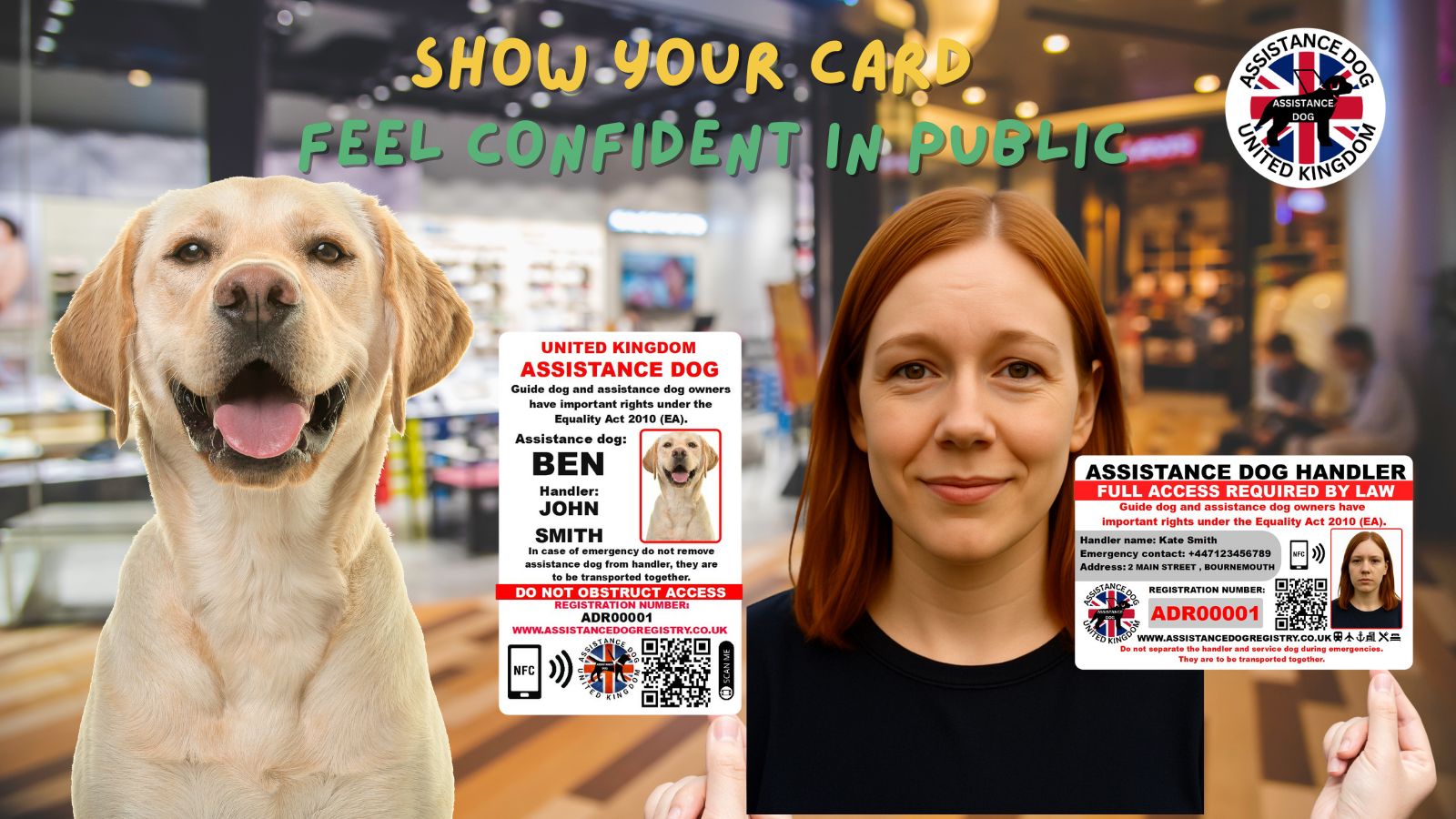
✅ Proof you can show instantly — With ID cards, dog tags, and NFC-enabled profiles, you never have to explain everything from scratch again.
✅ Feel more confident in public — Many handlers say that having a professionally printed ID card with legal references gives them peace of mind when questioned.
✅ No need to rely on a charity — Especially for owner-trained dogs, our voluntary registry gives you recognition and support.
✅ Linked to real legal rights — Every card references the Equality Act 2010 and comes with a QR profile that handlers can update anytime.
✅ Peace of mind for carers, parents, and vulnerable users — If anything happens, your dog's info and emergency contacts are accessible.
✅ It's voluntary, ethical, and transparent — We make it clear that this is not a legal requirement. We’re here to support, not mislead.
So no — you don’t have to register. But here’s why doing so can help you take control of difficult public situations and feel more prepared.
Let’s break it down:
🚫 Is Registration Legally Required in the UK?
The short answer: No.
Under the Equality Act 2010, disabled people in the UK have the right to be accompanied by their assistance dog without needing any certificate, license, or official registration.
Your rights are based on your need — not a piece of paper.
However, this law is often misunderstood — by shop staff, security, taxi drivers, and even some local councils.
So even if you're fully protected under the law, you may still be challenged.
That's where registration can help, even if it’s not legally required.
😕 Why So Much Confusion?
Many handlers report things like:
- “The restaurant manager asked for a certificate or ID card.”
- “The bus driver said my dog needed to be charity-trained.”
- “My GP said I need to register the dog with the council.”
These situations can be frustrating and emotionally draining.
And while you don’t have to show any proof, let’s be honest —
Sometimes it’s easier to show something than to argue your rights every single time.
That’s why so many people choose to register voluntarily — not to earn their rights, but to stand by them with more confidence.
✅ What You Get When You Register Voluntarily
At AssistanceDogRegistry.co.uk, we offer:
- Four high-quality ID cards (for the dog + handler)
- Three custom dog tags with QR codes
- Assistance dog lanyard and card holders
- HI viz vets for handler and assistance dog
- Online profile you can update any time
- NFC tap technology — show proof without logging in
- Your rights printed clearly on the cards (Equality Act 2010)
- Free replacement card if one is lost or damaged
- A clear record in case of emergency
This is all part of our Lifetime Package, designed for handler-trained dogs and their real-life needs.
🧠 Real Reasons Handlers Choose to Register
Here’s what our users often say:
🗣️ “People used to question me all the time. Now they just see the badge and move on.”
🗣️ “I trained my own dog. I didn’t go through a charity. This gives me something that feels official — and it’s backed by law.”
🗣️ “I’ve had issues at airports and shops. With the tag and card, I’ve had fewer problems.”
🗣️ “Even though I know the law, I get less anxiety when I carry something with me.”
🗣️ “Having the QR code means if anything happens to me, emergency staff know what to do.”
🔍 Watch Out: Not All ‘Registries’ Are Equal
Unfortunately, some websites:
🚫 Mislead people into thinking registration is mandatory
🚫 Sell generic “service dog” badges with no UK legal basis
🚫 Don’t offer any actual profile or data backup
🚫 Aren’t transparent about what you're getting
We’re different:
- We explain the law up front.
- We don’t use scare tactics.
- We offer real value — no gimmicks.
- We operate from the UK and follow UK laws.
✉️ Real-World Example
A recent customer wrote to us saying:
“I was told by a council officer I needed to register. When I challenged them, they backed down — but it left me shaken. I signed up here because it gives me confidence to walk into public spaces again.”
Others have shared similar stories:
- Denied access to taxis
- Confronted by shop staff
- Struggled to explain medical conditions
They didn’t need to register — but they’re glad they did.
🐾 Especially Useful for:
- Owner-trained assistance dogs (no charity paperwork)
- Autistic children and families needing quick recognition
- Handlers with PTSD or invisible disabilities
- People tired of being asked invasive questions
💬 In Summary: No, You Don’t Have To. But Here’s Why You Might Want To.
Registering your assistance dog with a voluntary service like ours is not about proving yourself.
It’s about protecting your peace.
It’s about avoiding confrontations.
And it’s about being ready, so your focus stays where it matters — on your own safety and wellbeing.
🎟️ Sign Up for the Lifetime Package Today
💡 Click here to learn more & register
FAQ
1. What is an assistance dog?
An assistance dog is trained to perform specific tasks to aid individuals with disabilities, enhancing their independence and quality of life.
2. Why is socialization important for assistance dogs?
Proper socialization ensures assistance dogs remain calm, focused, and well-behaved in various public settings, enabling them to perform their duties effectively.
3. At what age should I start socializing my assistance dog?
It's beneficial to begin socialization during puppyhood; however, with patience and consistent training, dogs of any age can learn to navigate public environments confidently.
4. How long does it take to socialize an assistance dog?
The duration varies based on the dog's temperament, previous experiences, and the consistency of training. Regular, positive exposure to different environments is key.
5. Can I socialize my assistance dog if they are older?
Yes, older dogs can be socialized successfully. While it may require more time and patience, with positive reinforcement, they can adapt to new situations.
6. What should I do if my assistance dog shows fear in public?
If your dog exhibits fear, calmly remove them from the situation and gradually reintroduce the stimulus at a comfortable distance, rewarding calm behavior.
7. How do I handle public distractions during training?
Teach focus commands like "watch me" to redirect your dog's attention. Gradual exposure to distractions, paired with positive reinforcement, can improve focus.
8. Are there specific public places ideal for socialization?
Begin with quiet areas like parks, then progress to busier environments such as cafes, public transport, and shopping centres as your dog becomes more comfortable.
9. How can I ensure my assistance dog behaves appropriately around other animals?
Controlled introductions and rewarding calm behaviour are essential. Consistent training helps your dog remain focused on their tasks, even around other animals.
10. What are the legal requirements for assistance dogs in public places?
In many regions, assistance dogs are permitted in public areas to support their handlers. It's important to familiarize yourself with local laws and regulations regarding assistance dogs.
Learn more about our Lifelong Partner Package
Learn More – Additional Assistance Dog Letter Templates
If you found this travel guide useful, you may also benefit from these other essential assistance dog letter templates we’ve published:
📌 Housing Accommodation Request Letter – Need to request reasonable accommodation from your landlord? This template ensures your rights under the Equality Act 2010 are respected.
📌 Workplace Assistance Dog Request Letter – If you need accommodations to bring your assistance dog to work, this letter outlines your legal rights and reasonable adjustments your employer should consider.
📌 Medical Confirmation of Need for an Assistance Dog – A doctor’s letter template to confirm your need for an assistance dog for public access, travel, and daily life.
🔹 More templates are coming soon! Let us know if you have specific needs, and we’ll create more resources to support assistance dog handlers.