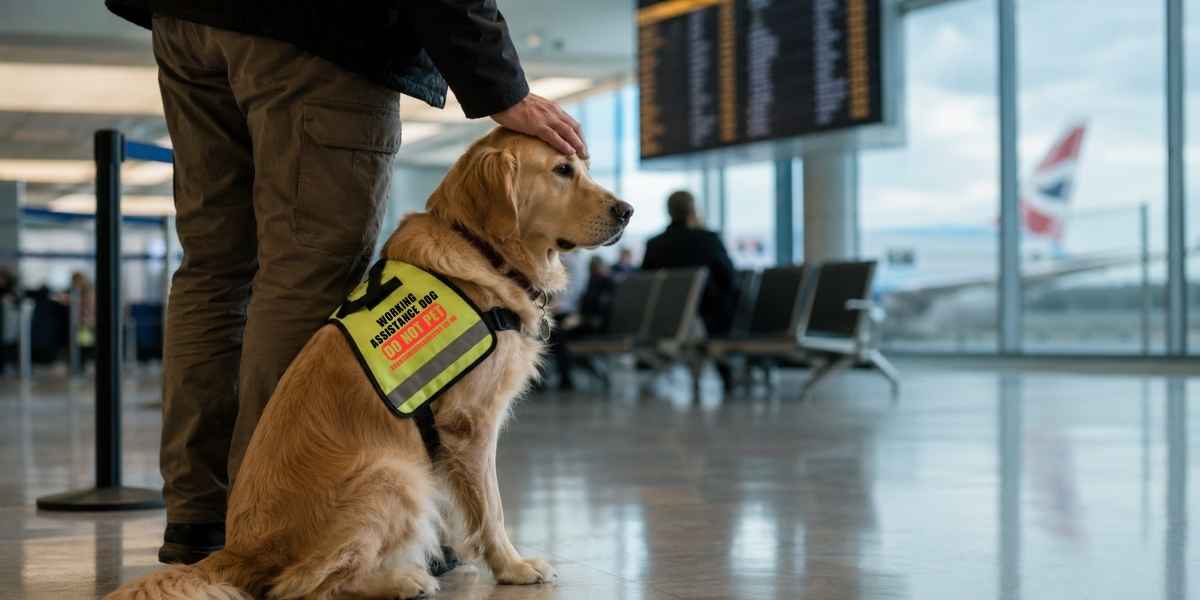
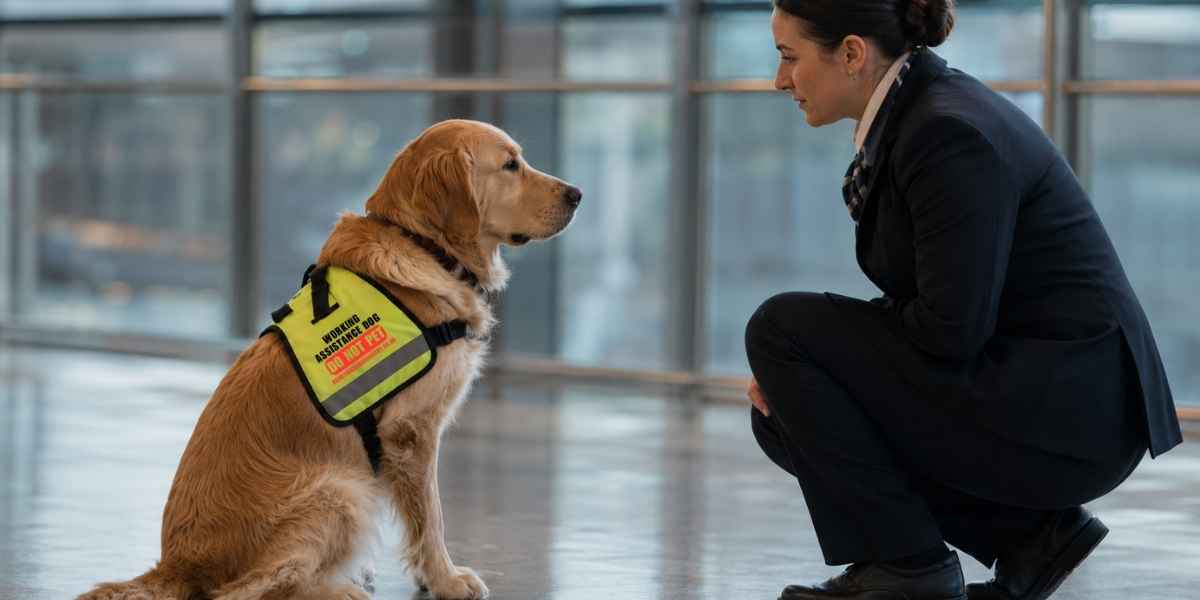
Empowering Handlers to Successfully Train Their Service Companions
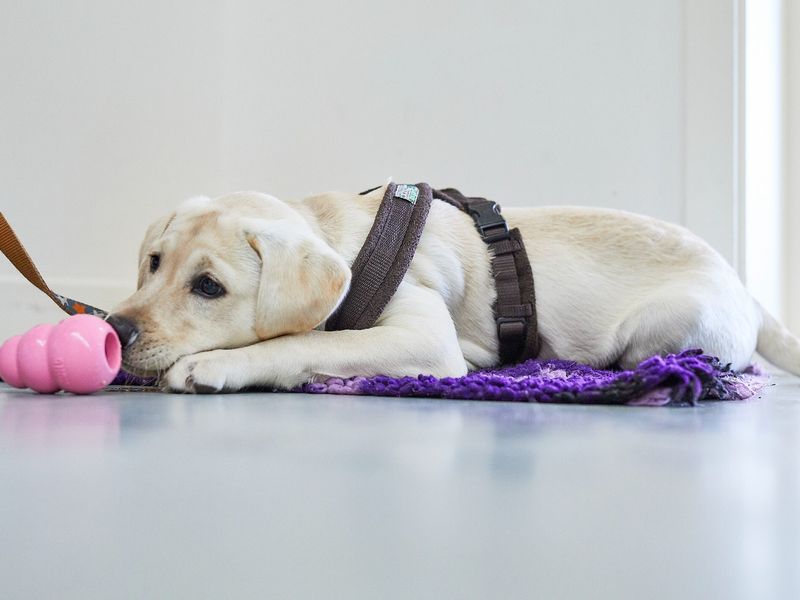
Introduction: Training an assistance dog on your own can be a rewarding yet challenging journey. This guide is designed to help handlers who choose to train their assistance dogs independently, providing them with essential tips and techniques to ensure their success. From basic obedience to specific task training, let’s explore how you can effectively train your future service companion.
Understanding the Basics: Before diving into training specifics, it’s crucial to understand what makes a good assistance dog. Traits such as calmness, intelligence, and a willingness to learn are foundational. Begin with basic obedience training, which is the cornerstone for any assistance dog. Commands like sit, stay, come, and heel should be mastered before moving on to more complex tasks.
Socialization and Exposure: One of the most important aspects of training an assistance dog is socialization. Expose your dog to different environments, people, and other animals as early and as often as possible. This exposure helps your dog become adaptable and comfortable in various situations, reducing anxiety or distraction in public spaces.
Task-Specific Training: Depending on your needs, your assistance dog will need to perform specific tasks. This could include retrieving objects, opening doors, or providing stability and support. Break down each task into small, manageable steps and train consistently. Use positive reinforcement such as treats, praise, and play to encourage and reward your dog.
Consistency and Patience: Consistency is key in any form of training. Set a regular training schedule and stick to it. Be patient and understanding—some days might be more challenging than others. Remember, training an assistance dog is a marathon, not a sprint, and building a strong, trusting relationship with your dog is essential.
Handling Distractions: Training your dog to handle distractions is crucial for an assistance dog. Gradually introduce distractions during training sessions, starting from minimal to more significant distractions. This teaches your dog to focus on you and the task at hand, regardless of the environment.
Health and Wellness: A healthy dog is a trainable dog. Ensure your assistance dog is well-cared for, with regular veterinary check-ups, a nutritious diet, and plenty of exercise. Mental health is just as important, so provide your dog with mental stimulation through toys, puzzles, and new challenges.
Record Keeping and Progress Tracking: Keep a training log to track your progress and any challenges you encounter. This can be invaluable for reviewing what works, what doesn’t, and adjusting your training methods accordingly.
Seeking Professional Help: While training your dog independently, don’t hesitate to seek professional help when needed. Attending workshops, consulting with professional trainers, or joining support groups can provide you with additional support and guidance.
Mastering the Recall Command: The recall command is one of the most important skills your assistance dog can learn. It ensures that your dog can return to you promptly in any situation, which is crucial for both safety and management. Effective training for recall includes:
Choosing a distinct command such as "come" or "here" and using a cheerful voice.
Starting in a controlled environment with few distractions and gradually introducing more.
Using positive reinforcements like treats, praise, or play when your dog comes to you.
Practicing with increasing distances and incorporating a long leash if needed.
Teaching 'Leave It' – A Vital Impulse Control Skill: "Leave it" is an essential command that helps prevent your dog from picking up dangerous or unwanted items. Steps to train this include:
Starting with a treat in your closed fist, say "leave it." Reward your dog from your other hand if they obey.
As your dog masters the skill, place the treat on the floor and cover it with your hand, continuing to use the "leave it" command.
Gradually move this practice to more realistic situations where you use the command to stop them from approaching real-life temptations.
Always reinforce the behavior with high-value rewards and ensure regular practice.
Conclusion: Training your own assistance dog is a profound journey that enhances the bond between you and your dog. By following these tips, you can equip your dog with the skills needed to assist you effectively. Remember, every dog is different, so adapt these strategies to suit your dog’s personality and capabilities.
2. Why is socialization important for assistance dogs?
Proper socialization ensures assistance dogs remain calm, focused, and well-behaved in various public settings, enabling them to perform their duties effectively.
3. At what age should I start socializing my assistance dog?
It's beneficial to begin socialization during puppyhood; however, with patience and consistent training, dogs of any age can learn to navigate public environments confidently.
4. How long does it take to socialize an assistance dog?
The duration varies based on the dog's temperament, previous experiences, and the consistency of training. Regular, positive exposure to different environments is key.
5. Can I socialize my assistance dog if they are older?
Yes, older dogs can be socialized successfully. While it may require more time and patience, with positive reinforcement, they can adapt to new situations.
6. What should I do if my assistance dog shows fear in public?
If your dog exhibits fear, calmly remove them from the situation and gradually reintroduce the stimulus at a comfortable distance, rewarding calm behavior.
7. How do I handle public distractions during training?
Teach focus commands like "watch me" to redirect your dog's attention. Gradual exposure to distractions, paired with positive reinforcement, can improve focus.
8. Are there specific public places ideal for socialization?
Begin with quiet areas like parks, then progress to busier environments such as cafes, public transport, and shopping centres as your dog becomes more comfortable.
9. How can I ensure my assistance dog behaves appropriately around other animals?
Controlled introductions and rewarding calm behaviour are essential. Consistent training helps your dog remain focused on their tasks, even around other animals.
10. What are the legal requirements for assistance dogs in public places?
In many regions, assistance dogs are permitted in public areas to support their handlers. It's important to familiarize yourself with local laws and regulations regarding assistance dogs.
Important Assistance Dog Letter Templates
📌 Housing Accommodation Request Letter– Need to request reasonable accommodation from your landlord? This template ensures your rights under the Equality Act 2010 are respected.
📌 Workplace Assistance Dog Request Letter – If you need accommodations to bring your assistance dog to work, this letter outlines your legal rights and reasonable adjustments your employer should consider.
Written & reviewed by the ADR Team Assistance Dog Registry, supporting UK assistance dog handlers since 2020
We're a UK-based team dedicated to assistance dog handlers. Since 2020 we've supplied 20,000+ assistance dog ID cards and supported thousands of handlers, owner-trained and charity-trained alike. Our guidance on the Equality Act 2010 and assistance dog access rights is referenced in UK public-sector accessibility policy and relied on by NHS staff, employers and carers. We're not a government body: registration is voluntary, and we'll always tell you so honestly. Learn more about us → | [email protected]
Nobody can. Not the government, not ADUK, and not us. Here is who actually has authority over assistance dogs in the UK, why the yellow booklet became a myth, and what the law really asks of you at a door.
📖 5 min read·By the ADR Team·Updated August 2026
Key takeaways
There is no official register of assistance dogs in the UK. No government body licenses them and no certificate carries legal weight.
ADUK is a coalition of charities, not a regulator. It has no statutory role and no authority over any handler.
The legal test is what your dog does, not who trained it. Owner-trained assistance dogs have the same rights as charity-trained ones.
A voluntary registry cannot give you rights, but it can give you a fast way to show them. That is the whole of what it is for.
We cannot certify your dog either. Nothing we issue creates a right you did not already have under the Equality Act 2010.
Somebody stops you at a door and asks to see proof that your dog is an assistance dog. You reach for something. The question is what, and who decided it counts.
The short answer is that nobody decided, because nobody can. There is no organisation in the United Kingdom with the authority to certify an assistance dog. Not a government department, not a charity, not a coalition of charities, and not us.
That sentence surprises people, so it is worth going through slowly.
There is no official register of assistance dogs in the UK
No government body licenses assistance dogs. No department maintains a list. There is no application, no inspection, and no certificate that carries legal weight, because Parliament never created one.
What Parliament created instead was a right. The Equality Act 2010 protects disabled people who use assistance dogs, and it places duties on service providers, employers and landlords. Those duties exist whether or not anyone has ever seen a piece of paper.
This matters more than it sounds. If the law required certification, whoever issued the certificates would hold enormous power over disabled people. The law does not work that way, and that is deliberate.
So what is a voluntary registry actually for?
If nobody can certify your dog, the fair question is what any registry is for. The honest answer is that it is not there to give you rights. You already have those.
What the Equality Act does not give you is a quick way to demonstrate those rights while somebody is standing in front of you and a queue is building behind you. That moment is the problem. You are being asked to explain your disability to a stranger, in public, while your dog waits and people watch.
Do not take our word for it. The Equality Act 2010 is free to read in full on the government's own website. Shops, restaurants and other service providers have a duty to make reasonable adjustments under section 20, and subsection 5 of it covers what the Act calls an auxiliary aid.
The Equality Act is free to read in full. You do not need anyone's permission to check what it says about you and your dog.
A voluntary registry gives you something to hand over instead. A card, a tag, a profile the other person can look at and check for themselves. It does not make your dog more legitimate than it already was. It ends the conversation in seconds rather than minutes, and it moves the burden off you.
Put simply, the card is not for you. It is for them. You already know your dog is an assistance dog. The card exists so the person at the door can stop asking.
Assistance Dogs UK, usually shortened to ADUK, is a coalition of assistance dog charities. It is a membership body. Organisations join it, and it sets standards that its member organisations agree to work to.
That is a legitimate and useful thing to be. What it is not is a regulator.
ADUK has no statutory role. It was not created by legislation, it has no powers granted by Parliament, and it has no authority over anyone who is not a member of it. It cannot license a dog, it cannot refuse to license a dog, and it cannot rule on whether any particular animal is or is not an assistance dog in law. It is an association of charities, not a licensing authority.
So when a business asks to see an ADUK booklet, they are asking for something that a handful of charities issue to people who trained through those charities. They are not asking for a legal document, because no legal document exists.
Why so many people believe otherwise
The belief did not appear from nowhere, and the people who hold it are not being unreasonable.
Most assistance dogs that the public encounters were trained by large, well known charities. Those dogs often carry a distinctive booklet or an identity card. Over time, staff in shops, restaurants and taxis learned to look for that booklet, because in their experience the dogs that had one were the genuine article.
That is a reasonable pattern to notice. The mistake is turning a pattern into a rule. The booklet became, in the public mind, the thing that made the dog real, when in law it was only ever evidence that one particular charity had trained one particular dog.
Everyone who does not fit that route gets caught by the gap. That includes people who trained their own dog, which is entirely lawful in the UK, and people whose disability is served by a task no charity currently trains for.
What the law actually asks
This is the actual test. A dog that settles quietly and stays out of the way in a busy room is showing exactly what the law cares about, and no paperwork can demonstrate it for them.
The test in UK law is about what the dog does, not who trained it or who vouched for it. An assistance dog is trained to perform tasks that mitigate the effects of a person's disability. The training route is not the test. The paperwork is not the test.
A business is entitled to form a view about whether a dog is under control and whether it appears to be a working animal. That is very different from demanding a document, and in practice a great many refusals come down to a member of staff asking for something the law never required.
The part where we hold ourselves to the same test
It would be easy to stop here, having explained that the other lot cannot certify your dog. That would be dishonest by omission, so let us be plain about our own position.
The Assistance Dog Registry cannot certify your assistance dog either. Nobody can. We are a private registry. We are not a regulator, we are not appointed by anyone, and nothing we issue creates a legal right that you did not already have.
What we do is the narrower thing described above. Our cards, tags and profiles are not evidence of authority, because there is no authority to be evidence of. They are a practical tool for a difficult moment, and they should be judged on whether they work in that moment rather than on anything they claim to prove.
That is why our most used resources cost nothing. The UK Assistance Dog Rights Pocket Guide, the letter templates and the refusal kit all work perfectly well whether or not anyone ever buys anything from us. A business selling fake official status would have no reason to give away the thing that makes official status unnecessary.
What to do when you are asked for proof
Being right does not always help in the moment, so here is what tends to work.
Stay on the task, not the paperwork. Explain what your dog is trained to do for you. That is the legal test, and it is also the thing most likely to be understood.
Do not accept the premise. If someone asks for a certificate, it is fair and calm to say that no such certificate exists in UK law, and that assistance dogs are not licensed in this country.
Have something to hand. Not because you are obliged to, but because producing something ends the exchange faster than arguing does.
Ask for the decision, politely. If you are being refused, ask whether you are being refused entry, and ask for the person's name. Most refusals evaporate at that point.
Things worth having to hand, none of which cost anything
The UK Assistance Dog Rights Pocket Guide, with the wording to use when you are challenged. The Access Refusal Kit, step by step. Six letter templates for landlords, employers, schools, colleges, hotels and businesses. A free printable ID card and certificate with your dog's name and photo.
No payment, no card details, nothing that turns into a bill later.
The short version
No government body certifies assistance dogs in the UK. ADUK is a coalition of charities, not a regulator, and it has no authority over handlers or over anyone else. We are a private registry and we have no authority either. Your rights come from the Equality Act 2010, they depend on what your dog is trained to do, and they belong to you whether or not anybody has approved of them.
Anyone who tells you differently is either mistaken or selling something. Including, if we ever tell you differently, us.
Asked for an ADUK Yellow Booklet at Wetherspoon? What Owner-Trained Assistance Dog Handlers Should Know
Not all assistance dogs are ADUK-trained, and an ADUK yellow booklet is not the only way handlers organise their information. Here is what the guidance actually says.
This is no longer just a doorway dispute. The Equality and Human Rights Commission has written to JD Wetherspoon, saying it is concerned the policy may not comply with UK law. A spokesperson said the Commission is “aware that a significant number of disabled people with assistance dogs have been refused entry from JD Wetherspoon venues because they aren’t carrying formal identification.”
Assistance Dogs UK — the charity whose booklet the policy relies on — has said it believes the policy is discriminatory, and that its identification is not a legal requirement. Its chief executive said Wetherspoon approached the charity for guidance before introducing the policy, but “sadly they didn’t take on board any of the advice we provided.”
The charity Guide Dogs said it had received 27 complaints about Wetherspoon from people challenged or refused entry. An MP, Steve Darling, was challenged for ID last August. Wetherspoon maintains its position, saying it considers requiring ADUK-accredited training “a reasonable adjustment,” and citing an increase in dog bites.
What this means for owner-trained handlers
Most coverage has focused on guide dog owners who had the booklet and were still stopped. There is a second group barely mentioned: handlers of owner-trained assistance dogs, who cannot obtain an ADUK booklet at all, because ADUK accredits dogs trained by its member organisations. Under a policy that accepts only ADUK accreditation, a lawful owner-trained team is excluded by design, not by behaviour.
Being straight about the law: it is genuinely unsettled. The Equality Act 2010 requires service providers to make reasonable adjustments and not to treat disabled people less favourably, but it does not set training standards for assistance dogs, and it does not state outright that they must be admitted. Only a court can decide whether a specific policy is unlawful. What is clear is that no UK law requires you to carry ID for an assistance dog.
And straight about us: an ADR card is not ADUK accreditation and will not satisfy this policy. We are a voluntary register, not a government body and not an accreditation scheme. What we can help with is being prepared and knowing exactly what to say, which is why the refusal kit on this page is free and needs no sign-up.
Key takeaways
ADUK has publicly said JD Wetherspoon misrepresented its position (statement, 11 February 2026), and that the Equality Act 2010 does not require disabled people to carry ID or documentation for an assistance dog.
An ADUK yellow booklet is not a legal requirement. ADUK itself states the booklet is not proof required by law, and not every assistance dog is ADUK-trained.
Owner-trained assistance dogs are recognised in UK guidance. An assistance dog does not have to be trained by a charity or an Assistance Dogs UK member organisation.
EHRC guidance says a dog needs no jacket, harness or ID book by law. A handler should not be refused simply for lacking documentation.
Refusing access only because there is no ADUK booklet may raise Equality Act 2010 concerns, but the dog's behaviour still matters in every case.
Ask for the reason in writing. A calm written request turns a doorway misunderstanding into a complaint a venue must answer.
Uses your device's voice. No data sent to anyone.
Asked for a yellow booklet? 3 steps
A calm reply when a venue asks for ADUK ID.
1
Explain calmly
"Not all assistance dogs are ADUK-trained, and an ADUK booklet is not a legal requirement."
2
Ask the right question
"Are you refusing access only because I don't have an ADUK booklet? Please confirm in writing."
3
Record it and follow up
Note venue, time, staff and words. Ask for their assistance dog policy afterwards.
If you have ever been stopped at a pub door and asked to produce an "ADUK yellow booklet" for your assistance dog, you are not alone, and you have not done anything wrong. It is one of the most common access problems UK handlers report to us, and it lands hardest on people with invisible disabilities and owner-trained assistance dogs, who often have no charity paperwork to wave at a doorway.
This guide explains, calmly and factually, what an ADUK yellow booklet actually is, what Assistance Dogs UK and the Equality and Human Rights Commission (EHRC) really say about it, and exactly what to say if a member of staff insists on seeing one. We are not here to attack any pub chain. We are here to make sure you walk in knowing the facts.
Why this issue keeps happening
Most front-of-house and security staff have a simple mental model: guide dog equals "real" assistance dog, everything else is a pet. That model is decades out of date, but it is sticky, and it causes the same painful scene to play out again and again.
Many pubs and venues understand guide dogs but genuinely misunderstand owner-trained assistance dogs, which are trained by the disabled handler rather than a charity.
Handlers report being asked specifically for an ADUK yellow booklet, as if it were a national licence, which it is not.
This creates real fear and humiliation for people with invisible disabilities such as PTSD, autism, epilepsy or anxiety, whose need for an assistance dog is not visible at a glance.
The result is that a lawful, well-trained assistance dog team can be turned away at the door for the sole reason that they do not carry a particular charity's booklet. Understanding why staff get this wrong is the first step to correcting it without a confrontation.
What Wetherspoon said, and how ADUK replied
In early 2026 this stopped being a quiet doorway-by-doorway problem and became a national talking point. JD Wetherspoon introduced a policy that, in practice, can ask assistance dog handlers for evidence of training before granting access, and its wording referred to Assistance Dogs UK (ADUK). Assistance Dogs UK then published a statement responding directly to it.
Update · 11 February 2026
ADUK has publicly stated that JD Wetherspoon misrepresented ADUK and its position. In its statement, ADUK says Wetherspoon implied that its new policy reflects ADUK policy and legal advice, and that "this is not the case". ADUK also restates that, under the Equality Act 2010, disabled people are not required to carry identification or documentation for their assistance dog, and that ADUK does not tell service providers to restrict access only to dogs trained by ADUK member organisations.
This matters for you as a handler. The very body whose booklet staff so often demand has now said, in public, that requiring proof of training as a condition of entry does not reflect its policy or the law. We are still not making our own finding that any single refusal was unlawful, because policies vary and individual staff get things wrong. But you no longer have to take our word for the central point: ADUK has said it too.
Always check a venue's current published accessibility statement for yourself, because these policies are updated over time, sometimes in response to exactly this kind of feedback.
A venue expecting an ADUK booklet is common. It does not change the fact that, under UK guidance, the booklet is not a legal requirement.
What ADUK says about yellow booklets
Here is the part that surprises most people, including the staff asking for it. The yellow booklet comes from Assistance Dogs UK (ADUK), an umbrella body for a group of assistance dog charities. ADUK-trained handlers may be issued a yellow booklet, an ID card or an app as a courtesy, to make day-to-day life smoother.
But ADUK's own guidance is clear on two things that matter enormously here:
The yellow booklet is not a legal requirement and is not legally required "proof". It is a convenience for handlers trained by ADUK member charities.
ADUK guidance recognises that not every assistance dog is trained by an ADUK member organisation or a charity. Owner-trained assistance dogs exist and are legitimate.
In other words, the very organisation whose booklet staff are demanding does not claim that the booklet is compulsory, nor that its absence means a dog is not a genuine assistance dog. That is a powerful, fair point to make calmly at a doorway.
What EHRC guidance says about owner-trained assistance dogs
The Equality and Human Rights Commission (EHRC) is the body that publishes official guidance for businesses on the Equality Act 2010. Its guidance for businesses is helpful and clear on the points handlers most often need:
EHRC guidance recognises owner-trained assistance dogs. A dog does not have to be trained by a particular charity to be an assistance dog.
EHRC states that assistance dogs do not legally need to wear a harness or jacket.
EHRC says a disabled person should not be refused simply because they cannot produce an identification book.
Read together with ADUK's own position, the picture is consistent: documentation can be handy, but it is not the legal test. Refusing a disabled handler purely because they have no ADUK booklet is exactly the kind of situation that may raise Equality Act 2010 concerns.
What to say if asked for an ADUK booklet
You do not need to argue or quote statutes. One calm, complete sentence does most of the work. Say it slowly and only once, then ask your question.
Use this wording
"I understand you may be used to seeing ADUK yellow booklets. However, not all assistance dogs are ADUK-trained or charity-trained, and an ADUK booklet is not a legal requirement. My dog is trained to assist with my disability and is calm and under control. Please can you confirm whether you are refusing access because I do not have an ADUK booklet?"
That final question does something important: it gently asks the staff member to state, out loud, that the refusal is based on missing paperwork rather than on anything your dog has done. Most reasonable staff will pause at that point, and many will let you in. If they do not, you now have a clear, fair account of what happened.
What to ask for if refused
If the conversation does not resolve and you are still being refused, switch into record-and-follow-up mode. Stay polite, protect yourself, and gather what you need for a written complaint. Ask the venue to:
Bring the duty manager to the conversation.
Provide a copy of their assistance dog policy.
Confirm whether owner-trained assistance dogs were considered.
Confirm whether the refusal was based on your dog's actual behaviour or only on a lack of ADUK documentation.
Join 4,600+ UK handlers. We email when the law or guidance changes. No spam.
The behaviour and safety point
A credible guide has to be honest about the other side, and being clear about this actually strengthens your hand. None of the above gives any dog a free pass on behaviour. An assistance dog is expected to be calm, clean and under control in public, and no booklet, card, registry or profile changes that.
If a dog is unsafe, disruptive, aggressive, not toilet trained or genuinely out of control, that is a separate issue from disability discrimination, and a venue may need to act. When you make a complaint, the fact that your dog was settled and well-behaved removes the most common defence a business will reach for, so a well-trained dog is your strongest evidence as well as your right.
The booklet question is about paperwork. Behaviour is about safety. Keep the two separate, and never let a paperwork dispute become a behaviour dispute.
Where ADR fits
Let us be completely clear about what the Assistance Dog Registry (ADR) is and is not. ADR does not replace ADUK, ADAA, the EHRC or legal advice. It is not a government register, it is not legally required, and it does not certify disability or training or guarantee access anywhere.
What ADR is, is a voluntary information platform for handlers who simply want their assistance dog details organised and ready, especially owner-trained handlers who have no charity booklet to show. A membership gives you a live online profile, an ADR number, a QR and NFC lookup that a nervous manager can scan to see your information presented neutrally, plus an ID card, dog tags and optional vest. It is a tidy way to present information, not a substitute for the law. You can read more about your protections on our assistance dog rights page.
📄
Free download: Assistance Dog Access Refusal Kit
What to say, what to ask, and what to record if you are challenged for an ADUK booklet or refused entry. Keep it on your phone, ready for the doorway.
A permanent live profile, smart ID card, dog tags and QR-linked information you can present at the door: voluntary, handler-controlled, and especially useful for owner-trained teams.
☐ Stay calm; an ADUK booklet is not legally required
☐ Say the one calm line; ask if refusal is only about the booklet
☐ Ask for the duty manager and the assistance dog policy
☐ Ask whether owner-trained dogs were considered
☐ Ask for the refusal reason in writing
☐ Keep your dog calm; behaviour is a separate issue
Copy-paste complaint email
Dear [Venue] team,On [date] at approximately [time], I was challenged / refused entry at [venue, address] with my trained assistance dog because I did not have an ADUK yellow booklet. The staff member involved was [name/description]. My dog was calm and under control throughout.I understand an ADUK booklet is not a legal requirement, and that not all assistance dogs are ADUK-trained or charity-trained. Please could you: (1) review this incident; (2) send me a copy of your assistance dog policy; (3) confirm whether owner-trained assistance dogs were considered; and (4) confirm whether the refusal was based on my dog's behaviour or only on the lack of an ADUK booklet.I would welcome confirmation that staff will receive assistance dog awareness training. I look forward to your reply.Kind regards,
[Your name]
About this guide
This guide was written by the Assistance Dog Registry UK team and checked against current EHRC guidance for businesses, Assistance Dogs UK (ADUK) public information, and the Equality Act 2010. It reflects the ADUK-booklet refusals UK handlers most often report to us, particularly owner-trained teams.
If you spot anything that needs updating, contact us.
ADR
The Assistance Dog Registry UK TeamVerified
Founded by Norbert Szeverenyi · Thousands of UK handlers supported · Materials reviewed against UK statute and official EHRC, Shelter and GOV.UK guidance.
This article is general information, not legal advice. ADR registration is voluntary and does not, by itself, create a legal right of access. References to any named venue describe common handler experiences and publicly available positions, not a finding of unlawful conduct.
An umbrella body for a group of UK assistance dog charities. ADUK-trained handlers may carry a yellow booklet, but it is not a legal requirement.
ADUK yellow booklet
A courtesy identification booklet issued to some ADUK-trained handlers. It is not government-issued and not legally required proof of an assistance dog.
Owner-trained assistance dog
An assistance dog trained by its disabled handler rather than a charity. It is recognised in UK guidance and need not be ADUK-trained.
Equality Act 2010
The UK law protecting disabled people from discrimination in services, work and housing across England, Scotland and Wales.
Reasonable adjustment
A change a business must reasonably consider so a disabled person is not disadvantaged, including admitting an assistance dog.
The Aviation Exception: How UK Airlines Created a Barrier the Equality Act Never Required
Owner-trained assistance dogs are legally protected on every UK street, in every shop, restaurant and taxi. So why do most UK airlines treat them as second-class? The answer is a narrow safety exception in the Equality Act, stretched until it broke.
📖 9 min read·By the ADR Team·Updated June 2026
Key takeaways
The Equality Act 2010 makes no distinction between charity-trained and owner-trained assistance dogs. The EHRC's own business guidance is explicit: owner-trained dogs have the same access rights as guide dogs.
Most UK airlines require ADI or IGDF accreditation, two private accreditation networks with no statutory authority over UK aviation. ADI is a US non-profit. IGDF is a UK charity. Neither sets UK law.
Airlines invoke a narrow "safety" exception in Schedule 3, Part 7 of the Equality Act that was written for genuine aircraft-specific risks, not for blanket paperwork requirements.
Behavioural assessment is the proportionate alternative. It is already standard in every UK café, taxi, train, hotel, NHS surgery and even American airlines. Airlines could adopt it for an estimated £20,000-£50,000 in cabin crew training.
Even Assistance Dogs UK (ADUK), the umbrella body for the airlines' own preferred accreditation networks, has publicly called for reform that includes dogs trained outside member organisations.
Get UK assistance dog law updates
Join 4,600+ UK handlers. We email when the law changes. No spam.
Uses your device's built-in voice. No data sent externally.
Three steps if a UK airline refuses your owner-trained assistance dog
No special qualifications needed. The law is on your side.
1
Document the refusal in writing
Get the staff member's name, the reason given, the exact wording of the policy invoked. Photograph any signage. Note the time and location. This becomes evidence.
2
File a formal complaint within 14 days
Write to the airline's accessibility officer citing Equality Act 2010 Sections 20 and 29. Copy in the Civil Aviation Authority. Request written justification for the safety carve-out being invoked.
3
Contact the Equality Advisory and Support Service
EASS provides free advice on disability discrimination claims. They can guide you through the County Court claim process and help calculate compensation. The deadline is 6 months from the incident.
USE THIS WORDING
When asked at the gate, state calmly: "This is my assistance dog, working under the Equality Act 2010. I am happy for you to assess his behaviour. Please confirm in writing why you are refusing boarding."
✉Copy-paste: complaint letter to the airline
Adjust the bracketed fields. Send to the airline's accessibility officer, copy in CAA-PACT.
Dear Accessibility Officer,

On [DATE] I was refused boarding flight [FLIGHT NUMBER] at [AIRPORT] with my assistance dog. The stated reason was that my dog is not accredited by Assistance Dogs International or the International Guide Dog Federation.

I am a disabled person under the Equality Act 2010. My dog is owner-trained to perform specific tasks that mitigate the effects of my disability and meets the behavioural standard expected of any working assistance dog in a public setting.

The Equality and Human Rights Commission business guidance confirms that owner-trained assistance dogs have the same access rights as charity-trained dogs. ADI/IGDF accreditation is a private quality mark, not a statutory requirement in UK law.

I therefore consider your refusal to amount to discrimination contrary to sections 20 and 29 of the Equality Act 2010. The safety exception in Schedule 3, Part 7 does not extend to blanket documentation requirements applied by ground staff before any aircraft-specific risk has been considered.

Please confirm in writing within 14 days:
1. The exact policy under which I was refused.
2. Why a behavioural assessment of my dog was not offered as a less discriminatory alternative.
3. Your formal proposal for resolution, including refund of [AMOUNT] and compensation for distress.

A copy of this letter has been sent to the Civil Aviation Authority Passenger Advice and Complaints Team (CAA-PACT).

Yours,
[YOUR NAME]
[YOUR CONTACT DETAILS]
Sarah can take her owner-trained assistance dog into a supermarket. She can take the same dog into a restaurant. She can board a train. She can stay in a hotel. She can visit her GP. She can enter a shopping centre.
Yet when she arrives at an airport, she may suddenly be told that her dog is no longer recognised.
Nothing about Sarah's disability has changed.
Nothing about the dog's behaviour has changed.
Nothing about the law protecting disabled people has changed.
Only the industry has changed.
That contradiction sits at the heart of one of the most overlooked disability-rights disputes in modern Britain.
This is the story of how UK aviation came to require something the law has never required, and why, if it ever ends up in court, the result is genuinely difficult to predict.
What the law actually says
Under the Equality Act 2010, service providers cannot discriminate against disabled people. Section 29 covers the provision of services. Section 20 imposes a positive duty to make reasonable adjustments. The Equality and Human Rights Commission's own business guidance, published in 2017 and still in force, is explicit on the question of assistance dogs:
"Assistance dogs can also be owner trained and the owner selects their own dog to fit their own requirements."
That single sentence, in the official guidance from the UK's statutory equality regulator, settles the question for every café, every taxi, every shop, every hotel, every hospital, every train, every bus, and every dentist in the country. An owner-trained assistance dog has the same access rights as a guide dog trained by Guide Dogs UK, a hearing dog trained by Hearing Dogs for Deaf People, or a mobility partner trained by Canine Partners. The law does not look at who trained the dog. It looks at whether the dog assists a disabled person, and whether the dog is under control.
This isn't a quirk of British law. The Americans with Disabilities Act, under regulation 28 CFR 36.302(c), is equally explicit: service animals may be owner-trained, and service providers may ask only two questions before granting access. No certification. No registry. No paperwork. Two of the most established disability legal frameworks in the world, both saying the same thing.
Why most disabled people own-train
Charity-trained assistance dogs are extraordinary animals, produced by extraordinary organisations doing genuinely vital work. But for the average disabled person seeking an assistance dog in the UK today, charity training isn't a choice. It's a queue:
Pathway
Reality
Guide Dogs UK
Free, but 18 to 24 months of assessment and waitlist
Hearing Dogs for Deaf People
Free, but 2 to 3 year waitlist
Canine Partners
Free, but 3 to 5 year waitlist, narrow disability eligibility
Dogs for Good
Variable, often 2 years or more
Private trainers
£15,000 to £40,000+ per dog
Owner-trained, owner-funded
£500 to £3,000 in equipment + classes
For the disabilities that don't fit any charity's eligibility criteria, chronic illness, epilepsy, mental health conditions, certain autoimmune disorders, there is no charity waitlist at all. The choice is between paying a private trainer £15,000 to £40,000, or training the dog yourself for a fraction of that cost.
Owner-training, then, isn't a fringe preference. It is the realistic and often the only path for the majority of disabled people in the UK who need a working dog. The law recognises this. Civil society recognises this. Every UK ground service from the corner shop to the NHS recognises this. And then the customer reaches the airport.
The aviation carve-out, and how it's being stretched
The Equality Act 2010 contains a narrow exception. Schedule 3, Part 7 allows aviation services to treat disabled people less favourably where it is necessary for safety, or required to comply with international aviation agreements, or compelled by the physical limitations of the aircraft.
That exception was written for genuine aircraft-specific safety risks: turbulence, cabin pressure, evacuation procedures, weight limits. It was not written as a blanket licence to demand particular paperwork from particular handlers.
Yet that is what has happened. Most UK-based airlines now require, as a condition of carriage, that an assistance dog be accredited by Assistance Dogs International or the International Guide Dog Federation, two respected private accreditation networks that together cover roughly 100 to 140 member training organisations worldwide. ADI is a US non-profit headquartered in Ohio. IGDF is a UK-registered charity based in Reading. Neither is a government body. Neither sets UK law. Neither has any statutory authority over UK aviation.
What they have, from the airline's perspective, is something more useful: a piece of paper. And the moment an airline accepts that paper as the only acceptable proof of an assistance dog's status, the airline has created an extra-legal entry barrier that the Equality Act 2010 was specifically designed to prevent.
What the airlines would say
Airlines would argue that their policies exist for safety, consistency and operational practicality. Cabin crew are not dog trainers. Boarding decisions often need to be made quickly. Airlines may also point to liability concerns if an animal behaves unpredictably in a confined aircraft cabin.
These concerns are not trivial. An aircraft is not a café. A poorly-behaved dog at 35,000 feet cannot be asked to leave. Cabin crew already manage a substantial workload under safety-critical conditions, and adding individual animal assessment to that workload is a genuine operational question.
The question, however, is whether excluding every owner-trained assistance dog is a proportionate response to those concerns, particularly when the Equality Act requires service providers to consider reasonable adjustments wherever possible, and particularly when comparable industries have found ways to manage exactly the same risk.
The behavioural-assessment alternative
The safety exception in equality law is not a blank cheque. To rely on it, a service provider has to show that the restriction is proportionate, that it is necessary, and that there is no less discriminatory alternative.
There is a less discriminatory alternative. It is the same alternative used by every café, every taxi, every hotel, every train, every hospital, every restaurant, every NHS surgery, and every American airline operating under federal DOT rules: observe the dog's behaviour.
A working assistance dog can be assessed in minutes by a trained member of cabin crew at the boarding gate. Sit. Down. Stay. Settle at the handler's feet. Quiet voice control by the owner. No barking, no aggression, no soiling indoors. Every other industry that hosts assistance dogs uses this assessment, because behaviour is what matters. Behaviour is the actual safety variable. Behaviour is observable, on the spot, by anyone with four hours of training.
A modest training programme for cabin crew would cost airlines an estimated £20,000 to £50,000 to roll out across an entire workforce. That cost is small enough that the courts have repeatedly held similar measures to be reasonable adjustments that service providers must make under Section 20 of the Equality Act.
Whether current airline policies would survive judicial scrutiny remains largely untested. No UK court has yet been asked to directly examine whether blanket ADI/IGDF requirements are a proportionate response to genuine aviation safety concerns. However, disability-rights lawyers may argue that less discriminatory alternatives already exist, particularly where a dog's behaviour can be assessed individually rather than assumed from documentation alone.
That question remains open. But it is increasingly difficult to ignore.
And the discrimination happens on land
There is a further point that legal observers find compelling. The moment of refusal, the moment a handler is told their dog cannot fly, happens at a check-in counter, or a boarding gate, or a service desk. It happens on the ground, before any aircraft is involved. It is a decision made by ground staff, in a building, looking at a dog, applying a written policy.
There is nothing aviation-specific about that decision. The same conditions that apply to a hotel reception apply to a check-in desk. The safety carve-out in the Equality Act was written to cover constraints inherent to the aircraft itself, not the discretion of a member of ground staff applying an internal policy. Whether the carve-out reaches that far is a question the courts have never been asked to decide.
Even the establishment is calling for reform
This isn't a fringe complaint from owner-trainers. Assistance Dogs UK, the umbrella body for the fourteen British charities all accredited by ADI or IGDF, has itself publicly stated:
"ADUK believes that we urgently need clearer definitions in law of assistance dogs, alongside consistent standards for training and welfare that all working assistance dogs can aim to meet, whether trained by ADUK members or otherwise."
When the umbrella body for the airlines' own preferred accreditation networks publicly calls for reform that would explicitly include dogs trained outside that network, the policy position of the airlines has been overtaken by the consensus of the sector. The airlines are now defending a standard that the standard-setters themselves no longer think is acceptable.
Were you refused boarding?
Assistance Dog Registry UK is collecting first-hand accounts from handlers refused, questioned or delayed at UK airports because their assistance dog was owner-trained. Your story may be quoted anonymously in our follow-up reporting.
First, government needs to clarify that the safety carve-out in the Equality Act applies only to genuine aircraft-specific risks, not to ground-staff documentation requirements. The Department for Transport and the Equality and Human Rights Commission could resolve this with a single piece of guidance.
Second, airlines need to do what every other comparable industry already does: train their staff to assess assistance dog behaviour individually, and accept any dog that meets a behavioural standard, regardless of who trained it.
Third, disabled handlers need to know their rights. A refused boarding is not necessarily a verdict. It may be the start of a discrimination claim that, on current legal grounds, has a real chance of succeeding.
Until one of these things happens, the gap between what UK law says about owner-trained assistance dogs and what UK aviation does about them will remain one of the quietest, longest-running pieces of unequal treatment in British disability rights. It is time it ended.
🐾 Lifelong Partner package
A permanent profile, smart ID cards, dog tags and clear QR-linked information for airlines, landlords, agents and public access situations. The fastest way to evidence your dog's assistance role.
Are UK airlines legally allowed to refuse my owner-trained assistance dog?
Airlines rely on a narrow safety exception in Schedule 3, Part 7 of the Equality Act 2010. Whether that exception genuinely covers blanket ADI/IGDF requirements has never been tested in a UK court. In practice, most refusals are based on policy interpretation rather than settled law. A refused handler with a well-behaved dog and a clear paper trail has a real prospect of bringing a successful discrimination claim.
What's the difference between ADI/IGDF accreditation and UK assistance dog rights?
ADI and IGDF accredit training organisations, not individual dogs. UK assistance dog rights under the Equality Act 2010 apply to the dog and handler regardless of who trained the dog. ADI/IGDF accreditation is a private quality mark, not a legal requirement for assistance dog status in the UK.
Can I claim compensation if a UK airline refuses my owner-trained assistance dog?
Yes, potentially. Compensation under the Equality Act 2010 typically covers injury to feelings (£900 to £49,300 under the current Vento bands), out-of-pocket costs (rebooked flights, accommodation), and in some cases aggravated damages. Claims are usually filed in the County Court within six months of the incident. The Equality Advisory and Support Service offers free guidance.
Will I have problems flying back to the UK from abroad?
Possibly. Many non-UK airlines apply similar ADI/IGDF requirements, and destination country animal-import rules add another layer. The Equality Act 2010 generally applies only to UK-based airlines or to services provided in the UK. For inbound flights, you may need to rely on the carrier's own accessibility policy, the destination country's disability law, or international aviation rules.
Where do I report a refused boarding incident?
Three places. First, the airline's own accessibility complaints process. Second, the Civil Aviation Authority's Passenger Advice and Complaints Team (CAA-PACT), which oversees airline accessibility complaints in the UK. Third, the Equality Advisory and Support Service (EASS) for disability discrimination guidance. Documenting the refusal in writing within 24 hours is essential.
Found this useful? Share it with someone who needs it.
This article is the first in an ADR investigative series examining structural barriers facing UK owner-trained assistance dog handlers. It draws on the Equality Act 2010, current EHRC business guidance, the Civil Aviation Authority Code of Practice, the public statements of Assistance Dogs UK, and published accreditation policies of ADI and IGDF. Last updated June 2026.</p>
</div><!-- ============================================================
AUTHOR BIO
============================================================ -->
<div style="background:#fff;border:1px solid #d7e4dd;border-radius:14px;padding:22px 26px;margin:2em 0;display:flex;gap:18px;align-items:flex-start;flex-wrap:wrap"><div style="width:72px;height:72px;border-radius:50%;background:linear-gradient(135deg,#12342b,#2f8f7a);display:flex;align-items:center;justify-content:center;font-size:30px;color:#f0c36a;font-weight:800;flex-shrink:0">ADR</div><div style="flex:1;min-width:240px"><div style="display:flex;align-items:center;gap:8px;margin-bottom:4px"><strong style="color:#12342b;font-size:1.05em">The Assistance Dog Registry UK Team</strong><span style="background:#f0c36a;color:#12342b;font-size:10px;font-weight:800;letter-spacing:.08em;padding:3px 8px;border-radius:999px;text-transform:uppercase">Verified
Founded by Norbert Szeverenyi. Thousands of UK handlers supported. Materials reviewed against UK statute and official EHRC, Shelter and GOV.UK guidance.
To provide the best experiences, we use technologies like cookies to store and/or access device information. Consenting to these technologies will allow us to process data such as browsing behavior or unique IDs on this site. Not consenting or withdrawing consent, may adversely affect certain features and functions.
Functional
Always active
The technical storage or access is strictly necessary for the legitimate purpose of enabling the use of a specific service explicitly requested by the subscriber or user, or for the sole purpose of carrying out the transmission of a communication over an electronic communications network.
Preferences
The technical storage or access is necessary for the legitimate purpose of storing preferences that are not requested by the subscriber or user.
Statistics
The technical storage or access that is used exclusively for statistical purposes.The technical storage or access that is used exclusively for anonymous statistical purposes. Without a subpoena, voluntary compliance on the part of your Internet Service Provider, or additional records from a third party, information stored or retrieved for this purpose alone cannot usually be used to identify you.
Marketing
The technical storage or access is required to create user profiles to send advertising, or to track the user on a website or across several websites for similar marketing purposes.