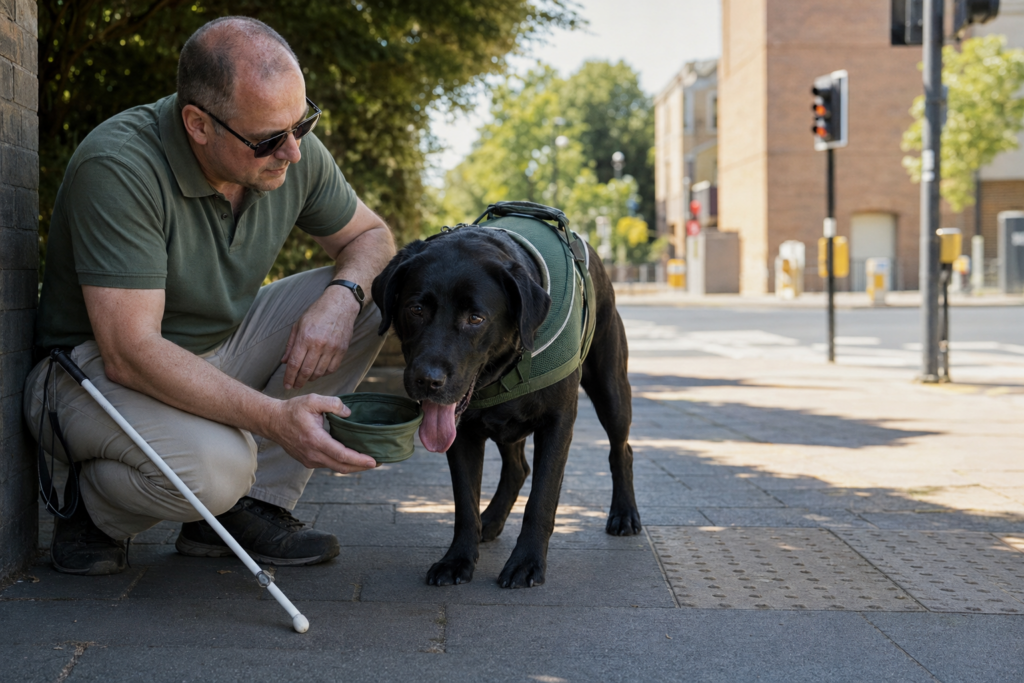
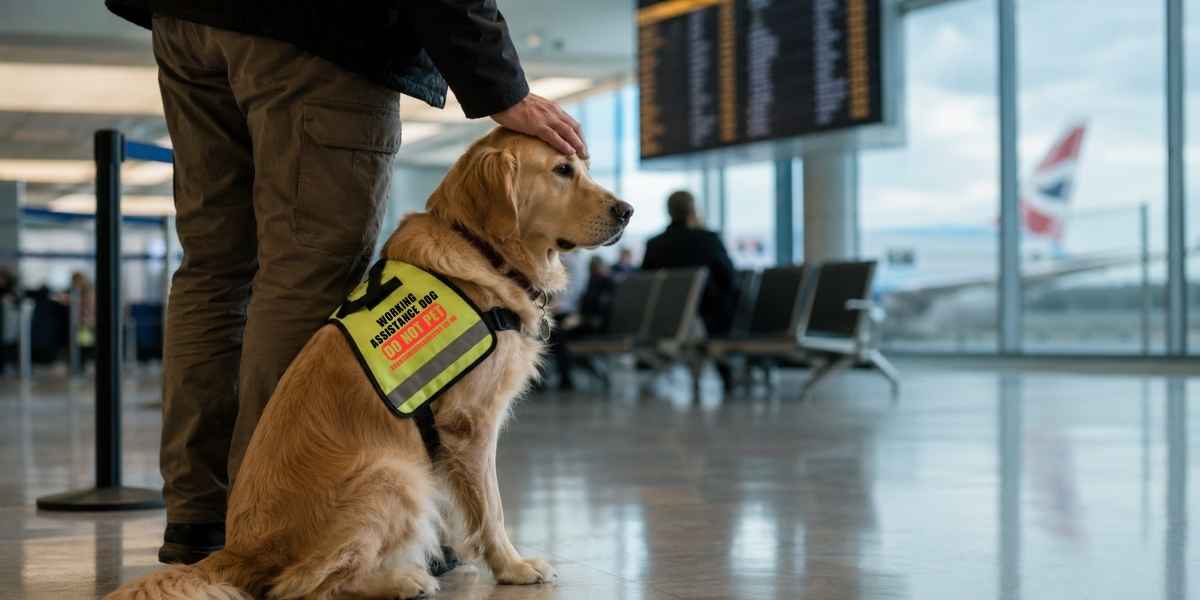
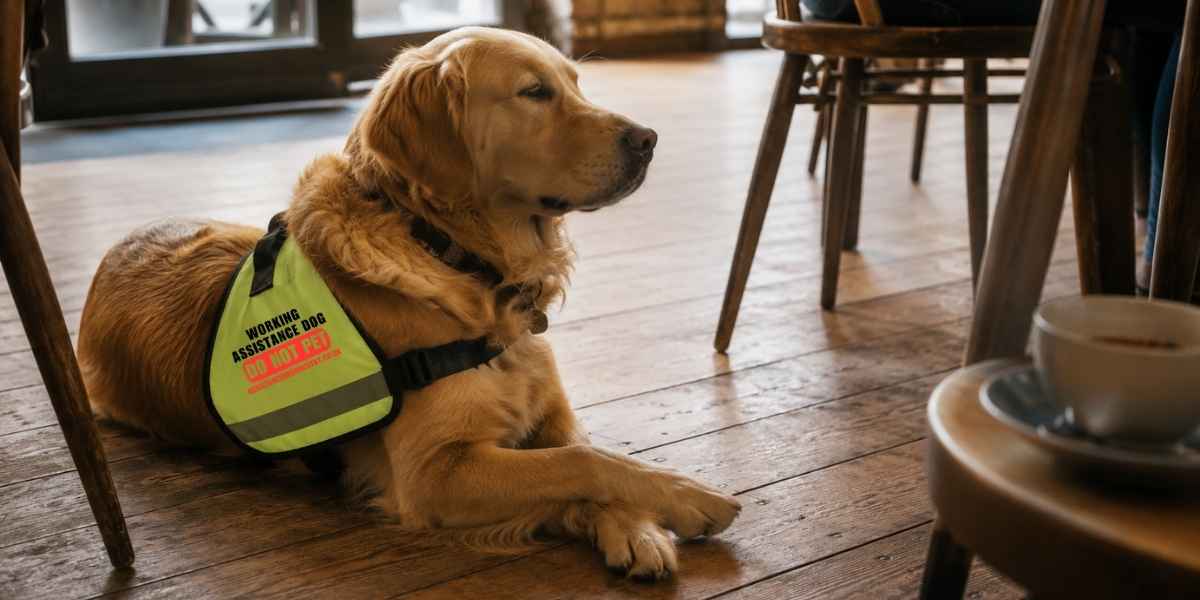
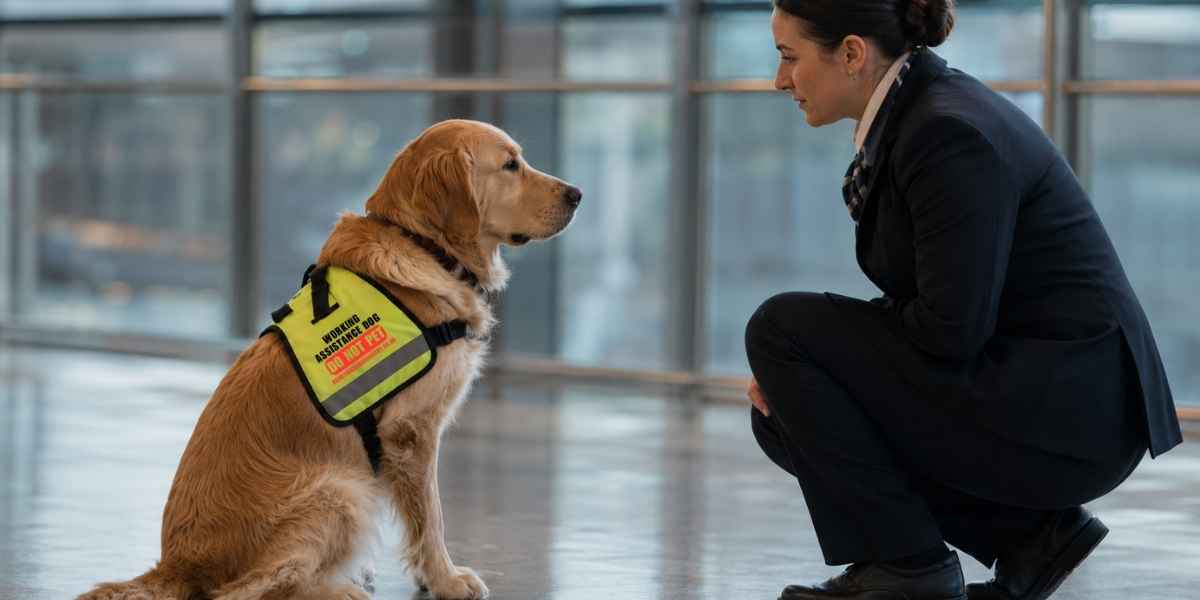
Imagine relying on your assistance dog to manage daily life, only to be refused entry to a pub. Sadly, this scenario happens more often than it should — and recent incidents involving Wetherspoon pubs have highlighted a troubling pattern. But what does the law actually say? When is a refusal illegal? And most importantly, what can you do if this happens to you?
In this post, we’ll break down the legal rights of assistance dog owners, use Wetherspoon as a case study, and give you practical steps to take when you're faced with an unlawful refusal.
What the Equality Act 2010 Says The Equality Act 2010 is the main piece of legislation protecting disabled individuals in the UK. It clearly states that service providers — including pubs, shops, and restaurants — must make "reasonable adjustments" to ensure people with disabilities can access their services. This includes allowing assistance dogs.
Crucially, the law does not require assistance dogs to be trained by a charity or Assistance Dogs UK (ADUK) member. Owner-trained assistance dogs are equally protected under the Equality Act. Denying access based on where a dog was trained is legally irrelevant.
Refusing entry to someone with a legitimate assistance dog can be classed as disability discrimination, which is illegal. In most cases, there are no valid exceptions.
Wetherspoon's Policy: Where They Get It Wrong Wetherspoon’s official website claims they only allow assistance dogs trained by ADUK-accredited charities. They state:
"The exceptions to the policy are trained guide dogs and also assistance dogs with Assistance Dogs UK-accredited training."
This wording is problematic because it excludes a significant number of owner-trained assistance dogs — dogs that are fully protected under UK law. This has led to multiple incidents where handlers have been refused service, even after explaining their rights.
One reported case involved a 13-year-old with fibromyalgia and PTSD being denied entry while using a registered assistance dog. In another case, a mental health support dog was refused and the handler was escorted out. These are not just unfortunate mistakes — they may be illegal actions.
How a Refusal Affects Assistance Dog Handlers Being denied access can be deeply distressing for someone who relies on an assistance dog. It can:
Trigger anxiety or PTSD symptoms
Cause public humiliation
Limit social inclusion
Reinforce stigma and misunderstanding
More than that, it shows a complete lack of understanding of the Equality Act. These refusals suggest that some businesses prioritize internal policy over legal rights — a dangerous and discriminatory approach.
What You Can Do If You Are Refused If you’re ever refused entry to a pub, including a Wetherspoon location, follow these steps:
Stay calm and ask to speak to a manager.
Explain that your dog is an assistance dog and the refusal may be unlawful under the Equality Act.
Carry supporting proof.
While not legally required, an ID card, QR code linked to your online profile, or vest that says "Assistance Dog" can help clarify things.
Ask the manager to review the Equality Act.
Many are simply uninformed, and a polite reminder of the law may resolve the situation.
Document the refusal.
Record names, times, and what was said. Take photos if needed. Ask for written confirmation of the refusal.
File a formal complaint.
Contact the head office of the company in writing. Detail the event and cite the Equality Act.
Report it to the Equality Advisory Support Service (EASS).
The EASS provides free legal advice and may help escalate the issue.
Seek public support if necessary.
Social media attention often prompts quicker responses. Use it strategically, not emotionally.
Your Rights as an Owner-Trained Assistance Dog Handler Wetherspoon’s reliance on ADUK accreditation is misleading. Many owner-trained dogs meet or exceed the standards of charity-trained dogs. They are trained to assist with real disabilities and have the same public access rights.
You do not need a dog trained by Guide Dogs UK, Dogs for Good, or any other charity to have legal protection.
You do not need to carry a license, registration, or official certificate. The law is based on need and function, not paperwork.
Our Position at Assistance Dog Registry We believe every legitimate handler should be treated with dignity and equality. That’s why our registration platform supports owner-trained teams with:
Smart ID cards with QR code links to a secure handler profile
Custom dog tags, lanyards, and vest options
Educational content on public access laws
Our goal is not to “police” access, but to empower you with tools that promote understanding and reduce conflict.
Final Thoughts: It’s Time for Change When big brands like Wetherspoon misinterpret the law, they put vulnerable individuals at risk. Refusing an assistance dog is not just an inconvenience. It’s discriminatory and potentially unlawful.
If you’ve experienced a refusal, know that you have rights. Use your voice, document your experience, and demand better. The Equality Act is on your side — and so are we.
Can a pub refuse entry to an assistance dog in the UK?
In almost all cases, no. Pubs are service providers under the Equality Act 2010, so refusing a disabled person with an assistance dog is usually unlawful discrimination.
Does food hygiene law let pubs ban assistance dogs?
No. Food hygiene rules do not require assistance dogs to be excluded from areas where customers eat and drink; they can accompany their handler.
What if the pub has a “no dogs” sign?
A general no dogs policy does not apply to assistance dogs. The Equality Act 2010 overrides such signs for trained assistance dogs.
What should I do if a pub refuses my assistance dog?
Politely explain your rights, ask for the manager, and note the details. You can complain afterwards and seek advice from the EHRC or Citizens Advice.
Do I have to prove my dog is an assistance dog?
No. There is no legal requirement to carry proof, although voluntary ID can make access smoother.
Learn More – Additional Assistance Dog Letter Templates
If you found this travel guide useful, you may also benefit from these other essential assistance dog letter templates we’ve published:
📌 Housing Accommodation Request Letter– Need to request reasonable accommodation from your landlord? This template ensures your rights under the Equality Act 2010 are respected.
📌 Workplace Assistance Dog Request Letter – If you need accommodations to bring your assistance dog to work, this letter outlines your legal rights and reasonable adjustments your employer should consider.
🔹 More templates are coming soon! Let us know if you have specific needs, and we’ll create more resources to support assistance dog handlers.
ADR
Written & reviewed by the ADR Team Assistance Dog Registry, supporting UK assistance dog handlers since 2020
We're a UK-based team dedicated to assistance dog handlers. Since 2020 we've supplied 20,000+ assistance dog ID cards and supported thousands of handlers, owner-trained and charity-trained alike. Our guidance on the Equality Act 2010 and assistance dog access rights is referenced in UK public-sector accessibility policy and relied on by NHS staff, employers and carers. We're not a government body: registration is voluntary, and we'll always tell you so honestly. Learn more about us → | [email protected]
UK Heatwave Warning: Keeping Your Assistance Dog Safe Without Losing Your Independence
Your assistance dog may be willing to keep working. In this heat, that is exactly the problem. What every handler should know while amber alerts cover England.
By the ADR Team · Updated 15 July 2026 · 9 min read
Key takeaways
Amber heat health alerts cover most of England until 9pm on Friday 18 July, with temperatures of 34 to 35°C in places. This is the third UK heatwave of 2026.
Assistance dogs are trained to keep working, which means they often hide the early signs of overheating. Slowing down, lagging or lying down in heat is information, not disobedience.
Roughly 1 in 7 dogs that develop heatstroke die, and during heat-alert periods that has risen to around 1 in 4. Exercise triggers about three quarters of cases.
Your legal rights do not depend on a vest. In extreme heat you can remove or swap heavy kit for lightweight ID without losing Equality Act 2010 protection.
You can ask shops, cafés and venues for somewhere cool to wait. That is a reasonable request from a disabled customer, and most staff will help when asked clearly.
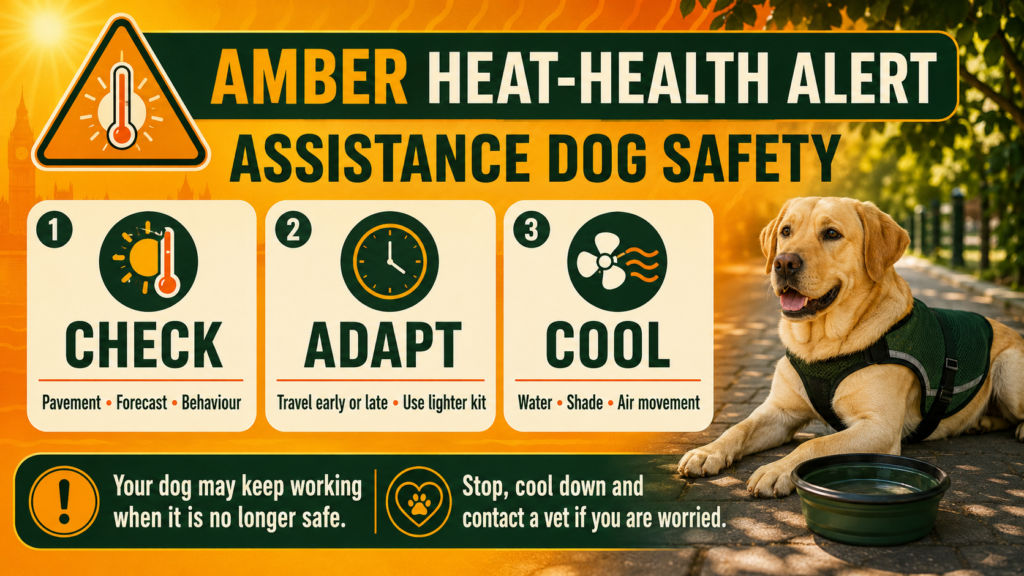
The three-step heatwave routine: check, adapt, cool. Save or screenshot this for your phone.Table of contents
If the pavement fails the seven-second test, if your dog is slowing down, or if the UKHSA alert for your region is amber or red, your assistance dog should not be working outside in the middle of the day.
That is hard advice to follow when your dog is your independence. This guide is not the usual "keep pets cool" checklist. It is about the specific problem handlers face this week: what to do when the dog you rely on cannot safely do its job, how to adapt essential journeys, and how to handle an emergency where both of you are struggling in the heat.
This is general information, not legal or veterinary advice. If your dog shows signs of heatstroke, contact a vet immediately. If you feel unwell in the heat, call 111, or 999 in an emergency.
Why this heatwave is different for assistance dog handlers
The UK Health Security Agency has issued amber heat health alerts for the East Midlands, East of England, London, the North West, the South East, the South West and the West Midlands, running until 9pm on Friday 18 July. Parts of southern England are forecast to reach 34 to 35°C before thunderstorms break the heat over the weekend, according to the Met Office.
An amber alert means the whole population may be at risk, not just people who are already vulnerable. For handlers there is a double exposure. Many disabilities that lead people to work with an assistance dog, including heart conditions, POTS and other forms of dysautonomia, MS, diabetes and some medications, also make the handler less heat tolerant. So the handler is at higher risk at exactly the moment the dog is too.
The British Veterinary Association reports that vets see around five times more heatstroke cases during extremely hot weather, and warns that animals can develop heatstroke even at rest in hot rooms, conservatories and vehicles. Research from the Royal Veterinary College's VetCompass programme found that about 1 in 7 dogs presenting with heat-related illness die, rising to around 1 in 4 during official heat-alert periods, and that exercise triggers roughly 75% of cases. Flat-faced breeds are around four times more likely to be affected.
Working is exercise. A guide, medical alert or mobility dog walking to the shops in 33°C heat is inside that 75%.
How do I spot overheating in a dog that is trained to keep going?
This is the part generic advice misses. Assistance dogs are selected and trained for persistence. Many will keep tasking well past the point a pet dog would have flopped in the shade. You cannot wait for your dog to quit, because a good assistance dog often will not.
Watch for the early signals:
Heavy, continuous panting with a wide, spatula-shaped tongue
Lagging behind you, breaking pace, or drifting toward shade when normally glued to position
Excessive drooling, or thick sticky saliva
Seeking any pause: sitting at kerbs longer, lying down at stops
Gums or tongue turning dark red
Glassy eyes, reduced responsiveness to cues it normally never misses
Later signs are an emergency: wobbling or weakness, vomiting or diarrhoea, confusion, collapse, or seizures. At that point cool the dog and get to a vet urgently.
Treat any deviation from normal working behaviour in heat as data. A dog that "misbehaves" at 2pm in July is usually a dog telling you something.
Hot pavements, buses and waiting outside shops
Asphalt in direct sun can be 20°C or more hotter than the air. On a 30°C day, tarmac can exceed 50°C, hot enough to burn paw pads during a normal walking pace. Use the RSPCA-recommended check: press the back of your hand on the pavement for seven seconds. If you cannot hold it there comfortably, it is too hot for your dog's pads.
Three situations catch handlers out:
Public transport. Buses and older trains can run several degrees hotter than the street, and dogs lie on the floor where ventilation is worst. Travel outside peak hours, choose the coolest part of the carriage, carry water, and book Passenger Assist for rail journeys so you are not left standing on an exposed platform.
Waiting outside. Never leave your assistance dog tied outside a shop in this weather, and remember you almost never have to. Your dog has the right to come in with you under the Equality Act 2010.
Standing on hot ground. Queues are worse than walking, because pads stay in contact with the same hot spot. Stand on painted lines, grass or shaded paving where you can, or ask to wait inside.
Should I remove my assistance dog's vest in extreme heat?
Yes, if the vest is contributing to heat load, take it off. Nothing in UK law requires an assistance dog to wear a vest, harness cape or any identifying kit. Your rights under the Equality Act 2010 come from your disability and your dog's training, not from what the dog is wearing.
Practical options for heatwave working:
Swap a padded cape for a lightweight mesh or hi-vis strip that identifies the dog without insulating it
Keep ID at hand instead of on the dog: a digital assistance dog law card on your phone, or a physical ID card, answers questions a vest would normally pre-empt
If your dog is registered with ADR, the QR profile on its tag does the explaining even when the vest is at home in a drawer
If a member of staff challenges you because the dog "doesn't look like an assistance dog" without its jacket, stay calm and explain: "Assistance dogs are not required to wear a vest. In this heat it isn't safe. Here is my dog's ID." You can show your card or QR profile page if it helps the conversation.
What cooling kit should a handler actually carry?
Small amounts of water, often, in the shade. The whole kit below fits in one bag.
Keep it light, because you are carrying it in a heatwave too:
Affiliate note: some links below go to Amazon. As an Amazon Associate, Assistance Dog Registry earns from qualifying purchases at no extra cost to you. We only link products that match the advice in this article.
A spray bottle or a small towel you can wet. Cooling the belly, groin, armpits and paws helps. Recent RVC guidance is clear that cool or even cold water is safe and effective for conscious dogs; the old "cold water causes shock" myth has been debunked. Cool first, then transport to a vet if needed.
Cooling mat or cooling coat, used correctly. A cooling coat only works while it is wet. A dry, warm cooling coat becomes insulation. Re-wet it regularly or take it off. Our picks: the Pecute gel self-cooling mat for rest stops and the car, the Petface cooling summer dog coat as a lighter alternative to a working vest, and the All For Paws Chill Out cooling bandana when a full coat is too much.
A cheap foldable umbrella. Instant portable shade at bus stops and in queues, for both of you.
Your own heat kit. Electrolyte sachets or tablets (we like HIGH5 ZERO electrolyte tablets, sugar-free and light to carry), your medication, and a card or phone lock screen that says you have an assistance dog, in case you become unwell.
Skip dog boots for heat. They protect pads from contact burns but trap heat, and dogs lose heat through their paws. The better answer is not walking on ground that fails the seven-second test.
Your heatwave kit: six things worth carrying
The picks from this guide in one place. Affiliate links: as an Amazon Associate, ADR earns from qualifying purchases at no extra cost to you.
COTOP Portable Dog Water Bottle
★★★★½ 4.6
One-hand water on the move, so you can offer small drinks often without unclipping the lead.
Can I ask a shop or café for somewhere cool to wait?
Yes, and you should. Service providers have a duty under the Equality Act 2010 to make reasonable adjustments for disabled customers. In a heatwave, "somewhere cooler for my assistance dog and me to wait" is about as reasonable as requests get: a seat away from the window, a spot near the air conditioning, a bowl of water, or being served while seated instead of queueing.
Use this wording
"I'm disabled and this is my assistance dog. The heat is dangerous for both of us today. Could we wait somewhere cooler, and could I trouble you for a bowl of water for the dog?"
Most staff say yes immediately. If somewhere refuses both entry and any adjustment, note the time and place, stay polite, and see our membership plans for the ID and support resources that make these conversations easier.
How do I plan essential journeys around the temperature?
Go early or late. The BVA advises restricting exercise to cooler times of day. Below roughly 20°C is comfortable for most dogs; be cautious above 25°C and treat 28°C and higher as high risk for working outside.
Check the forecast the night before and front-load your week. The Met Office expects this heat to break around 18 to 19 July; anything that can wait until next week probably should.
Shorten the exposed segments. A taxi or a lift for the sun-baked mile to the station, then the dog works normally indoors, is a smart trade.
Map your cool points. Supermarkets, libraries, shopping centres and places of worship are air-conditioned refuges where your dog has the right to accompany you.
If in doubt, do not go out. No routine errand is worth heatstroke.
What if my dog cannot safely work at all today?
Some days this week, the safest decision is that the dog stays home in a cool room with water and airflow. That does not have to cost you the whole day:
Move what you can online: repeat prescriptions, click-and-collect, grocery delivery, video GP appointments
Ask for human help for one specific leg: a neighbour, family member, or the shop's own staff ("Could someone help me find these three items? My assistance dog can't work in this heat.")
Rearrange non-urgent appointments and say why; "my assistance dog cannot safely travel in the heat alert" is a reason services should accommodate
If your dog performs safety-critical tasks such as medical alert, tighten your backup measures for the day: extra monitoring, check-in calls with someone you trust, and staying somewhere cool yourself
A rest day in a heatwave is not lost training. It is what keeps your dog able to work for the next ten summers.
Emergency: your dog is overheating and you are unwell too
Heat emergencies rarely pick one of you. Decide the plan now, not on the pavement:
Get both of you out of the sun and stop all activity. Shade, or better, any air-conditioned building. This is an emergency; ask for help loudly and specifically: "I'm disabled, my assistance dog has heatstroke, I need water and somewhere cool."
Cool the dog immediately. Pour cool water over its body, soak the belly and paws, and get air moving over wet fur. Offer small drinks. Cool first, transport second.
If you are the one deteriorating, you come first. Call 999 and tell the operator you have an assistance dog with you, so responders plan for the dog. Your dog's ADR tag and QR profile let anyone helping you identify the dog and your emergency contact when you cannot speak; that is exactly the situation the Lifelong Partner profile was designed for.
Call the nearest vet as you cool the dog, not after. Signs like collapse, vomiting or confusion need veterinary treatment even if the dog seems to recover.
Handler checklist: before you leave the house this week
☐ Checked UKHSA alert level and today's peak temperature
☐ Journey planned for before 9am or after 7pm where possible
☐ Seven-second pavement test at the door
☐ Water bottle and collapsible bowl packed (for both of you)
☐ Heavy vest swapped for lightweight ID, law card or QR profile ready
☐ Cool waiting points identified along the route
☐ Emergency contact visible on dog tag and your phone lock screen
☐ Honest answer to: "Would I make my dog do this if it could refuse?"
Missing something from the kit? The heat breaks this weekend, but there will be more. Amazon next-day delivery covers everything on this list. (Affiliate links, see note above.)
Handlers are used to pushing through. Most of us have worked our dogs on days we should not have worked ourselves. This week, the bravest decision is often the boring one: go at 7am, take the taxi, ask for the seat by the air conditioning, or stay home and let the dog sleep on the cold kitchen floor.
Your dog would work for you at 35°C without complaint. That is exactly why it must be you who says no.
Disclaimer: This article is general information, not legal advice and not veterinary advice. If your dog shows signs of heatstroke, contact a vet immediately. For heat-related health concerns of your own, call NHS 111 or 999 in an emergency. For disability rights questions, contact Citizens Advice, the EHRC or a qualified solicitor. This article contains Amazon affiliate links; as an Amazon Associate, Assistance Dog Registry earns from qualifying purchases.
Key terms explained
Heat health alert
A UKHSA warning system for England rating heat risk yellow, amber or red by region.
Heatstroke (heat-related illness)
A dangerous rise in body temperature that overwhelms a dog's ability to cool itself.
Seven-second test
Pressing the back of your hand to the pavement for seven seconds to check it is safe for paws.
Reasonable adjustment
A change a service provider must consider making so a disabled person is not disadvantaged, under the Equality Act 2010.
Assistance dog
A dog trained to perform tasks that mitigate a person's disability. UK law does not require it to wear a vest or be registered.
The Aviation Exception: How UK Airlines Created a Barrier the Equality Act Never Required
Owner-trained assistance dogs are legally protected on every UK street, in every shop, restaurant and taxi. So why do most UK airlines treat them as second-class? The answer is a narrow safety exception in the Equality Act, stretched until it broke.
📖 9 min read·By the ADR Team·Updated June 2026
Key takeaways
The Equality Act 2010 makes no distinction between charity-trained and owner-trained assistance dogs. The EHRC's own business guidance is explicit: owner-trained dogs have the same access rights as guide dogs.
Most UK airlines require ADI or IGDF accreditation, two private accreditation networks with no statutory authority over UK aviation. ADI is a US non-profit. IGDF is a UK charity. Neither sets UK law.
Airlines invoke a narrow "safety" exception in Schedule 3, Part 7 of the Equality Act that was written for genuine aircraft-specific risks, not for blanket paperwork requirements.
Behavioural assessment is the proportionate alternative. It is already standard in every UK café, taxi, train, hotel, NHS surgery and even American airlines. Airlines could adopt it for an estimated £20,000-£50,000 in cabin crew training.
Even Assistance Dogs UK (ADUK), the umbrella body for the airlines' own preferred accreditation networks, has publicly called for reform that includes dogs trained outside member organisations.
Get UK assistance dog law updates
Join 4,600+ UK handlers. We email when the law changes. No spam.
Uses your device's built-in voice. No data sent externally.
Three steps if a UK airline refuses your owner-trained assistance dog
No special qualifications needed. The law is on your side.
1
Document the refusal in writing
Get the staff member's name, the reason given, the exact wording of the policy invoked. Photograph any signage. Note the time and location. This becomes evidence.
2
File a formal complaint within 14 days
Write to the airline's accessibility officer citing Equality Act 2010 Sections 20 and 29. Copy in the Civil Aviation Authority. Request written justification for the safety carve-out being invoked.
3
Contact the Equality Advisory and Support Service
EASS provides free advice on disability discrimination claims. They can guide you through the County Court claim process and help calculate compensation. The deadline is 6 months from the incident.
USE THIS WORDING
When asked at the gate, state calmly: "This is my assistance dog, working under the Equality Act 2010. I am happy for you to assess his behaviour. Please confirm in writing why you are refusing boarding."
✉Copy-paste: complaint letter to the airline
Adjust the bracketed fields. Send to the airline's accessibility officer, copy in CAA-PACT.
Dear Accessibility Officer,

On [DATE] I was refused boarding flight [FLIGHT NUMBER] at [AIRPORT] with my assistance dog. The stated reason was that my dog is not accredited by Assistance Dogs International or the International Guide Dog Federation.

I am a disabled person under the Equality Act 2010. My dog is owner-trained to perform specific tasks that mitigate the effects of my disability and meets the behavioural standard expected of any working assistance dog in a public setting.

The Equality and Human Rights Commission business guidance confirms that owner-trained assistance dogs have the same access rights as charity-trained dogs. ADI/IGDF accreditation is a private quality mark, not a statutory requirement in UK law.

I therefore consider your refusal to amount to discrimination contrary to sections 20 and 29 of the Equality Act 2010. The safety exception in Schedule 3, Part 7 does not extend to blanket documentation requirements applied by ground staff before any aircraft-specific risk has been considered.

Please confirm in writing within 14 days:
1. The exact policy under which I was refused.
2. Why a behavioural assessment of my dog was not offered as a less discriminatory alternative.
3. Your formal proposal for resolution, including refund of [AMOUNT] and compensation for distress.

A copy of this letter has been sent to the Civil Aviation Authority Passenger Advice and Complaints Team (CAA-PACT).

Yours,
[YOUR NAME]
[YOUR CONTACT DETAILS]
Sarah can take her owner-trained assistance dog into a supermarket. She can take the same dog into a restaurant. She can board a train. She can stay in a hotel. She can visit her GP. She can enter a shopping centre.
Yet when she arrives at an airport, she may suddenly be told that her dog is no longer recognised.
Nothing about Sarah's disability has changed.
Nothing about the dog's behaviour has changed.
Nothing about the law protecting disabled people has changed.
Only the industry has changed.
That contradiction sits at the heart of one of the most overlooked disability-rights disputes in modern Britain.
This is the story of how UK aviation came to require something the law has never required, and why, if it ever ends up in court, the result is genuinely difficult to predict.
What the law actually says
Under the Equality Act 2010, service providers cannot discriminate against disabled people. Section 29 covers the provision of services. Section 20 imposes a positive duty to make reasonable adjustments. The Equality and Human Rights Commission's own business guidance, published in 2017 and still in force, is explicit on the question of assistance dogs:
"Assistance dogs can also be owner trained and the owner selects their own dog to fit their own requirements."
That single sentence, in the official guidance from the UK's statutory equality regulator, settles the question for every café, every taxi, every shop, every hotel, every hospital, every train, every bus, and every dentist in the country. An owner-trained assistance dog has the same access rights as a guide dog trained by Guide Dogs UK, a hearing dog trained by Hearing Dogs for Deaf People, or a mobility partner trained by Canine Partners. The law does not look at who trained the dog. It looks at whether the dog assists a disabled person, and whether the dog is under control.
This isn't a quirk of British law. The Americans with Disabilities Act, under regulation 28 CFR 36.302(c), is equally explicit: service animals may be owner-trained, and service providers may ask only two questions before granting access. No certification. No registry. No paperwork. Two of the most established disability legal frameworks in the world, both saying the same thing.
Why most disabled people own-train
Charity-trained assistance dogs are extraordinary animals, produced by extraordinary organisations doing genuinely vital work. But for the average disabled person seeking an assistance dog in the UK today, charity training isn't a choice. It's a queue:
Pathway
Reality
Guide Dogs UK
Free, but 18 to 24 months of assessment and waitlist
Hearing Dogs for Deaf People
Free, but 2 to 3 year waitlist
Canine Partners
Free, but 3 to 5 year waitlist, narrow disability eligibility
Dogs for Good
Variable, often 2 years or more
Private trainers
£15,000 to £40,000+ per dog
Owner-trained, owner-funded
£500 to £3,000 in equipment + classes
For the disabilities that don't fit any charity's eligibility criteria, chronic illness, epilepsy, mental health conditions, certain autoimmune disorders, there is no charity waitlist at all. The choice is between paying a private trainer £15,000 to £40,000, or training the dog yourself for a fraction of that cost.
Owner-training, then, isn't a fringe preference. It is the realistic and often the only path for the majority of disabled people in the UK who need a working dog. The law recognises this. Civil society recognises this. Every UK ground service from the corner shop to the NHS recognises this. And then the customer reaches the airport.
The aviation carve-out, and how it's being stretched
The Equality Act 2010 contains a narrow exception. Schedule 3, Part 7 allows aviation services to treat disabled people less favourably where it is necessary for safety, or required to comply with international aviation agreements, or compelled by the physical limitations of the aircraft.
That exception was written for genuine aircraft-specific safety risks: turbulence, cabin pressure, evacuation procedures, weight limits. It was not written as a blanket licence to demand particular paperwork from particular handlers.
Yet that is what has happened. Most UK-based airlines now require, as a condition of carriage, that an assistance dog be accredited by Assistance Dogs International or the International Guide Dog Federation, two respected private accreditation networks that together cover roughly 100 to 140 member training organisations worldwide. ADI is a US non-profit headquartered in Ohio. IGDF is a UK-registered charity based in Reading. Neither is a government body. Neither sets UK law. Neither has any statutory authority over UK aviation.
What they have, from the airline's perspective, is something more useful: a piece of paper. And the moment an airline accepts that paper as the only acceptable proof of an assistance dog's status, the airline has created an extra-legal entry barrier that the Equality Act 2010 was specifically designed to prevent.
What the airlines would say
Airlines would argue that their policies exist for safety, consistency and operational practicality. Cabin crew are not dog trainers. Boarding decisions often need to be made quickly. Airlines may also point to liability concerns if an animal behaves unpredictably in a confined aircraft cabin.
These concerns are not trivial. An aircraft is not a café. A poorly-behaved dog at 35,000 feet cannot be asked to leave. Cabin crew already manage a substantial workload under safety-critical conditions, and adding individual animal assessment to that workload is a genuine operational question.
The question, however, is whether excluding every owner-trained assistance dog is a proportionate response to those concerns, particularly when the Equality Act requires service providers to consider reasonable adjustments wherever possible, and particularly when comparable industries have found ways to manage exactly the same risk.
The behavioural-assessment alternative
The safety exception in equality law is not a blank cheque. To rely on it, a service provider has to show that the restriction is proportionate, that it is necessary, and that there is no less discriminatory alternative.
There is a less discriminatory alternative. It is the same alternative used by every café, every taxi, every hotel, every train, every hospital, every restaurant, every NHS surgery, and every American airline operating under federal DOT rules: observe the dog's behaviour.
A working assistance dog can be assessed in minutes by a trained member of cabin crew at the boarding gate. Sit. Down. Stay. Settle at the handler's feet. Quiet voice control by the owner. No barking, no aggression, no soiling indoors. Every other industry that hosts assistance dogs uses this assessment, because behaviour is what matters. Behaviour is the actual safety variable. Behaviour is observable, on the spot, by anyone with four hours of training.
A modest training programme for cabin crew would cost airlines an estimated £20,000 to £50,000 to roll out across an entire workforce. That cost is small enough that the courts have repeatedly held similar measures to be reasonable adjustments that service providers must make under Section 20 of the Equality Act.
Whether current airline policies would survive judicial scrutiny remains largely untested. No UK court has yet been asked to directly examine whether blanket ADI/IGDF requirements are a proportionate response to genuine aviation safety concerns. However, disability-rights lawyers may argue that less discriminatory alternatives already exist, particularly where a dog's behaviour can be assessed individually rather than assumed from documentation alone.
That question remains open. But it is increasingly difficult to ignore.
And the discrimination happens on land
There is a further point that legal observers find compelling. The moment of refusal, the moment a handler is told their dog cannot fly, happens at a check-in counter, or a boarding gate, or a service desk. It happens on the ground, before any aircraft is involved. It is a decision made by ground staff, in a building, looking at a dog, applying a written policy.
There is nothing aviation-specific about that decision. The same conditions that apply to a hotel reception apply to a check-in desk. The safety carve-out in the Equality Act was written to cover constraints inherent to the aircraft itself, not the discretion of a member of ground staff applying an internal policy. Whether the carve-out reaches that far is a question the courts have never been asked to decide.
Even the establishment is calling for reform
This isn't a fringe complaint from owner-trainers. Assistance Dogs UK, the umbrella body for the fourteen British charities all accredited by ADI or IGDF, has itself publicly stated:
"ADUK believes that we urgently need clearer definitions in law of assistance dogs, alongside consistent standards for training and welfare that all working assistance dogs can aim to meet, whether trained by ADUK members or otherwise."
When the umbrella body for the airlines' own preferred accreditation networks publicly calls for reform that would explicitly include dogs trained outside that network, the policy position of the airlines has been overtaken by the consensus of the sector. The airlines are now defending a standard that the standard-setters themselves no longer think is acceptable.
Were you refused boarding?
Assistance Dog Registry UK is collecting first-hand accounts from handlers refused, questioned or delayed at UK airports because their assistance dog was owner-trained. Your story may be quoted anonymously in our follow-up reporting.
First, government needs to clarify that the safety carve-out in the Equality Act applies only to genuine aircraft-specific risks, not to ground-staff documentation requirements. The Department for Transport and the Equality and Human Rights Commission could resolve this with a single piece of guidance.
Second, airlines need to do what every other comparable industry already does: train their staff to assess assistance dog behaviour individually, and accept any dog that meets a behavioural standard, regardless of who trained it.
Third, disabled handlers need to know their rights. A refused boarding is not necessarily a verdict. It may be the start of a discrimination claim that, on current legal grounds, has a real chance of succeeding.
Until one of these things happens, the gap between what UK law says about owner-trained assistance dogs and what UK aviation does about them will remain one of the quietest, longest-running pieces of unequal treatment in British disability rights. It is time it ended.
🐾 Lifelong Partner package
A permanent profile, smart ID cards, dog tags and clear QR-linked information for airlines, landlords, agents and public access situations. The fastest way to evidence your dog's assistance role.
Are UK airlines legally allowed to refuse my owner-trained assistance dog?
Airlines rely on a narrow safety exception in Schedule 3, Part 7 of the Equality Act 2010. Whether that exception genuinely covers blanket ADI/IGDF requirements has never been tested in a UK court. In practice, most refusals are based on policy interpretation rather than settled law. A refused handler with a well-behaved dog and a clear paper trail has a real prospect of bringing a successful discrimination claim.
What's the difference between ADI/IGDF accreditation and UK assistance dog rights?
ADI and IGDF accredit training organisations, not individual dogs. UK assistance dog rights under the Equality Act 2010 apply to the dog and handler regardless of who trained the dog. ADI/IGDF accreditation is a private quality mark, not a legal requirement for assistance dog status in the UK.
Can I claim compensation if a UK airline refuses my owner-trained assistance dog?
Yes, potentially. Compensation under the Equality Act 2010 typically covers injury to feelings (£900 to £49,300 under the current Vento bands), out-of-pocket costs (rebooked flights, accommodation), and in some cases aggravated damages. Claims are usually filed in the County Court within six months of the incident. The Equality Advisory and Support Service offers free guidance.
Will I have problems flying back to the UK from abroad?
Possibly. Many non-UK airlines apply similar ADI/IGDF requirements, and destination country animal-import rules add another layer. The Equality Act 2010 generally applies only to UK-based airlines or to services provided in the UK. For inbound flights, you may need to rely on the carrier's own accessibility policy, the destination country's disability law, or international aviation rules.
Where do I report a refused boarding incident?
Three places. First, the airline's own accessibility complaints process. Second, the Civil Aviation Authority's Passenger Advice and Complaints Team (CAA-PACT), which oversees airline accessibility complaints in the UK. Third, the Equality Advisory and Support Service (EASS) for disability discrimination guidance. Documenting the refusal in writing within 24 hours is essential.
Found this useful? Share it with someone who needs it.
This article is the first in an ADR investigative series examining structural barriers facing UK owner-trained assistance dog handlers. It draws on the Equality Act 2010, current EHRC business guidance, the Civil Aviation Authority Code of Practice, the public statements of Assistance Dogs UK, and published accreditation policies of ADI and IGDF. Last updated June 2026.
ADR
The Assistance Dog Registry UK TeamVerified
Founded by Norbert Szeverenyi. Thousands of UK handlers supported. Materials reviewed against UK statute and official EHRC, Shelter and GOV.UK guidance.
Travelling overseas with an assistance dog requires careful preparation. Rules for documentation, airline policies and border requirements apply to all dogs, even highly trained assistance animals. This guide summarises the essential information from GoCompare’s 2025 pet travel update, adapted specifically for UK assistance dog handlers.
Why Assistance Dogs Need Their Own Travel Insurance
Your personal travel insurance does not cover your assistance dog’s medical needs abroad. Even the best-trained dogs can experience unexpected health issues while travelling, so having proper cover is important.
Travel insurance for dogs can help with:
Emergency vet treatment overseas
Changes to travel plans caused by illness or injury
Lost, stolen or damaged travel documents (e.g., Animal Health Certificate)
Emergency repatriation back to the UK
Extra accommodation and travel costs if your dog cannot travel as planned
Holiday cancellation if your assistance dog needs urgent treatment
While there is no legal requirement for pet travel insurance, it offers valuable protection and peace of mind.
Typical Travel Insurance Cover for Assistance Dogs
What is usually covered?
✔ Emergency vet bills abroad
✔ Quarantine fees if your dog becomes ill
✔ Replacement documents if lost or damaged
✔ Emergency flights or transport home
✔ Holiday cancellation due to your dog’s urgent medical needs
✔ Extra accommodation or transport if plans change unexpectedly
✔ Repeat tick or tapeworm treatment if your return is delayed
What is usually not covered?
✖ Travelling without correct documents (AHC, microchip, vaccinations)
✖ Pre-existing conditions not declared to the insurer
✖ Non-emergency treatment abroad
✖ Claims without proof of purchase or receipts
✖ Certain liability claims outside the UK
What Affects the Cost of Assistance Dog Travel Insurance?
Costs depend on:
Your dog’s breed and age
Existing medical conditions
Destination country
Length of trip
Policy limits and cover type
According to Defaqto data in the GoCompare report:
61% of pet insurance policies include overseas cover as standard
19% offer it as an optional add-on
Essential Preparation for Travelling With an Assistance Dog
1. Vaccinations at least 21 days before travel
Your dog must be microchipped and vaccinated against rabies.
2. Animal Health Certificate (AHC) within 10 days before entering the EU
An AHC is required for every journey from Great Britain to any EU country or Northern Ireland.
3. Pre-travel health check 1 month before travel
Your vet will assess whether your dog is fit to travel and whether any conditions need to be managed beforehand.
4. Review your insurance 1–2 months before departure
Check for:
Emergency vet fee limits
Quarantine cover
Emergency repatriation cover
Time limits for trips abroad
Pet Travel Scheme (PETS)
PETS allows dogs to travel without quarantine between participating countries.
Your assistance dog must have:
A microchip
A valid rabies vaccination
An Animal Health Certificate
Treatment for tapeworm/ticks depending on destination
Note: Great Britain pet passports are no longer valid for EU travel.
Airline Rules for Assistance Dogs
Most airlines allow registered assistance dogs to travel in the cabin at no additional cost. However, policies vary between carriers.
General airline rules:
Your dog may sit in the floor space by your feet
You must notify the airline before travelling
Additional seats may be required if extra space is needed
All health and travel documentation must be valid
Airlines that allow pets (and assistance dogs):
British Airways
Emirates
Lufthansa
TUI
Air France–KLM
Airlines that do not allow pets (but allow assistance dogs):
easyJet
Jet2
Ryanair
Eurostar, Ferry and Eurotunnel Travel
Eurostar
Pets not permitted
✔ Registered assistance dogs are allowed (book 24 hours in advance)
Ferries
Most allow assistance dogs free of charge
Dogs may stay with the handler in public areas
Some ferries provide pet lounges or kennels
Eurotunnel LeShuttle
Pets and assistance dogs allowed
Dogs stay in the car with you for the entire journey
Exercise areas available on both sides
Tips for Travelling With an Assistance Dog
Travelling by car
Keep your dog secure with a harness or crate
Ensure a comfortable temperature
Never leave your dog unattended in the vehicle
Travelling by plane
Use an airline-approved harness or lead
Book direct flights where possible
Avoid sedation unless your vet approves it
Stay calm — your dog senses your emotions
Travelling on public transport
Check each operator’s pet and assistance dog policy
Keep your dog close and under control
Choose quieter areas where possible
Special Considerations for Assistance Dogs
Assistance dogs are recognised differently from pets. Transport providers must make reasonable adjustments to support accessibility.
Most providers allow:
Free travel for your assistance dog
Access to public areas, cabins and lounges
Priority boarding or support if needed
Always notify the operator in advance for the smoothest experience.
Source Attribution
This article is an adapted summary tailored for assistance dog handlers. It is based on the original GoCompare guide:
Wear your support gear with confidence (lanyard, dog tags, vest)
Enjoy the benefits of voluntary registration that supports your rights without replacing or contradicting the law
Stay Confident
You deserve peace of mind when you're out enjoying the sunshine. With proper registration and public-friendly ID tools, you can confidently navigate the spaces where others still need educating.
Register your assistance dog today and enjoy every sunny moment without setbacks.
2. Why is socialization important for assistance dogs?
Proper socialization ensures assistance dogs remain calm, focused, and well-behaved in various public settings, enabling them to perform their duties effectively.
3. At what age should I start socializing my assistance dog?
It's beneficial to begin socialization during puppyhood; however, with patience and consistent training, dogs of any age can learn to navigate public environments confidently.
4. How long does it take to socialize an assistance dog?
The duration varies based on the dog's temperament, previous experiences, and the consistency of training. Regular, positive exposure to different environments is key.
5. Can I socialize my assistance dog if they are older?
Yes, older dogs can be socialized successfully. While it may require more time and patience, with positive reinforcement, they can adapt to new situations.
6. What should I do if my assistance dog shows fear in public?
If your dog exhibits fear, calmly remove them from the situation and gradually reintroduce the stimulus at a comfortable distance, rewarding calm behavior.
7. How do I handle public distractions during training?</strong></p><p class="wp-block-paragraph">Teach focus commands like "watch me" to redirect your dog's attention. Gradual exposure to distractions, paired with positive reinforcement, can improve focus.</p><p class="wp-block-paragraph"><strong>8. Are there specific public places ideal for socialization?</strong></p><p class="wp-block-paragraph">Begin with quiet areas like parks, then progress to busier environments such as cafes, public transport, and shopping centres as your dog becomes more comfortable.</p><p class="wp-block-paragraph"><strong>9. How can I ensure my assistance dog behaves appropriately around other animals?
Controlled introductions and rewarding calm behaviour are essential. Consistent training helps your dog remain focused on their tasks, even around other animals.
10. What are the legal requirements for assistance dogs in public places?
In many regions, assistance dogs are permitted in public areas to support their handlers. It's important to familiarize yourself with local laws and regulations regarding assistance dogs.
To provide the best experiences, we use technologies like cookies to store and/or access device information. Consenting to these technologies will allow us to process data such as browsing behavior or unique IDs on this site. Not consenting or withdrawing consent, may adversely affect certain features and functions.
Functional
Always active
The technical storage or access is strictly necessary for the legitimate purpose of enabling the use of a specific service explicitly requested by the subscriber or user, or for the sole purpose of carrying out the transmission of a communication over an electronic communications network.
Preferences
The technical storage or access is necessary for the legitimate purpose of storing preferences that are not requested by the subscriber or user.
Statistics
The technical storage or access that is used exclusively for statistical purposes.The technical storage or access that is used exclusively for anonymous statistical purposes. Without a subpoena, voluntary compliance on the part of your Internet Service Provider, or additional records from a third party, information stored or retrieved for this purpose alone cannot usually be used to identify you.
Marketing
The technical storage or access is required to create user profiles to send advertising, or to track the user on a website or across several websites for similar marketing purposes.