

Spread the cost with Klarna or Clearpay at checkout.

Registering your assistance dog ensures they are recognised and protected under the Equality Act. Gain access to personalised ID cards, NFC‑enabled tags, and support for public access issues. Premium members enjoy additional benefits such as documentation and certification uploads, emergency contacts, and exclusive discounts on accessories.

Make your dog easily accessible with our QR Codes

Scan the QR code on the tag to instantly retrieve the owner’s contact information

Unlock additional Features and benefits with our Pro Account.
As a registered assistance dog handler, you are protected under the Equality Act. Our registry helps ensure your rights are recognized in public spaces, housing, and travel. We provide resources and support to help you navigate any legal challenges.



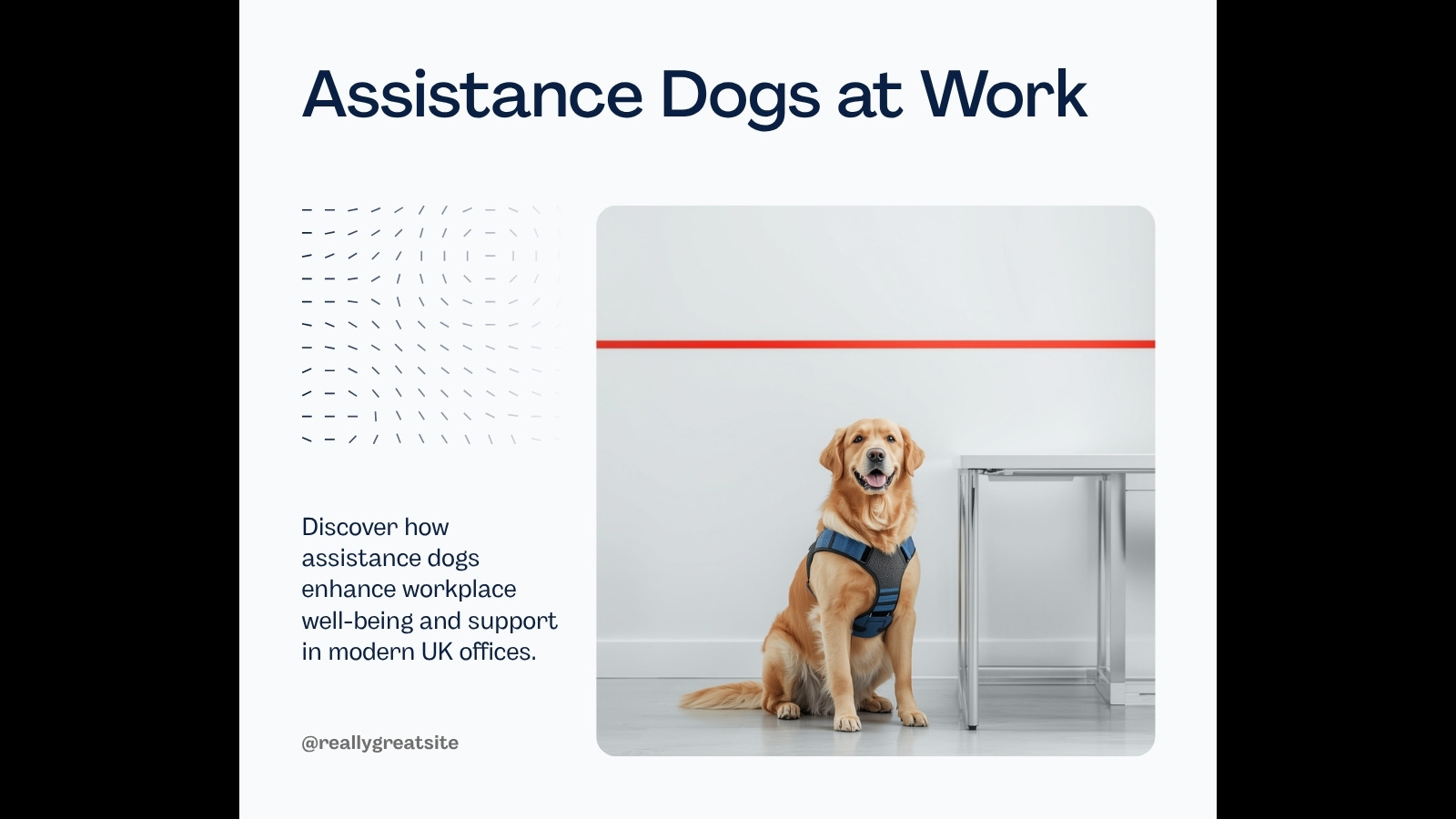
A practical guide for HR teams, line managers, and equality leads — Equality Act 2010 duties, step-by-step onboarding, free template pack.
Updated April 2026. Free to use and adapt.
An employee walks in with an assistance dog. Nobody had a process. HR improvised. The manager asked the wrong question. The employee felt like a problem before they'd even sat down.
It happens in offices, warehouses, hospitals, councils, and shops across the UK every week. Not because employers are unkind. Because they never had to think about it before.
The legal starting point is not a "no dogs" building rule. It is the Equality Act 2010. Employers must not unlawfully discriminate against disabled applicants or employees, and they must consider reasonable adjustments where a disabled person would otherwise be placed at a substantial disadvantage. The EHRC Employment Statutory Code is the key reference.
Real employers are already formalising this. Cotswold District Council's Dogs at Work Policy (September 2025) treats assistance dogs separately from general workplace rules and links the approach explicitly to Equality Act reasonable adjustments.
The Equality Act 2010 frame
Most employers ask the wrong question. They ask: "Do we allow dogs?"
The right question is: "What reasonable adjustment is needed here, and how can we implement it proportionately?"
Under the Equality Act 2010, employers must not discriminate against disabled people in recruitment or employment, and they have a duty to consider reasonable adjustments. Whether an adjustment is reasonable depends on practicality, effectiveness, cost, disruption, and the employer's size and resources.
A workplace "no dogs" rule does not automatically settle the issue. A blanket refusal carries legal risk. Employers need to assess the actual circumstances, avoid reflex refusal, and document the reasoning behind whatever arrangement they put in place.
The same principle applies in recruitment. Applicants are protected too. An employer should not use an assistance dog as a disguised reason to reject a disabled applicant.
Owner-trained dogs have equal legal standing
Many employers wrongly assume that only dogs from one familiar charity route "count." That is not a legally safe position. In the UK, there is no single official register or mandatory proof document for assistance dogs. As ADUK's own guidance on registration and proof acknowledges, no official or mandatory scheme exists.
Assistance dogs in UK workplaces may have been:
The important questions are: whether the disabled employee relies on the dog, what the dog is trained to do, and whether the arrangement can be managed safely and reasonably in that workplace.
No official UK certificate exists
Many employers think they need to see a specific certificate, charity card, or official-looking document before they can proceed. There is no official registration or certification process for assistance dogs in the UK, so there is no single legal proof document employers can insist on as the gateway to workplace access.
Policies such as these are poor policy wording and create unnecessary legal risk:
A better approach is to focus on what information is reasonably needed to plan the workplace arrangement: the dog's working role, how the dog assists the employee, what practical adjustments are needed, and expected behaviour standards.
Where ADR helps
Assistance Dog Registry provides optional practical tools that reduce friction: registration records, public profile pages, ID materials, and employer-facing documentation. These are not "official proof" — no such standard exists. They are practical planning tools that make workplace conversations easier and more structured.
A written policy does three important things. First, it stops HR and managers improvising under pressure. Second, it helps the organisation respond consistently. Third, it reduces the chance of the employee being challenged repeatedly by different people inside the organisation.
A good policy does not need to be long. It needs to say: what the general position on animals is, that assistance dogs are considered separately under equality obligations, how requests are handled, what the onboarding process looks like, what standards apply, and how concerns are managed. That is enough.
Most workplace friction comes from ambiguity, not from the dog itself.
Where possible, the employee tells HR or their manager in advance that they rely on an assistance dog and that workplace arrangements will be needed — before a start date, during recruitment, after a role change, or when an existing employee begins working with a dog.
Meet with the employee to discuss what the dog does, what the employee needs to work effectively, what practical arrangements are required, and whether any workplace-specific issues need to be planned for.
Assess the workplace for operational issues: rest space, water access, toileting arrangements, movement through the building, meeting rooms, shared spaces, reception and security awareness, and emergency evacuation.
Record the agreed arrangement. A short assistance-dog plan is usually enough — daily working arrangements, interaction rules, emergency procedures, and a review date. The free template pack below includes a ready-to-use checklist.
Where colleagues need to know, tell them in advance. Brief, calm, factual. What colleagues should and should not do — and how to raise any genuine concerns privately. A template email is included in the free pack below.
Reception, line managers, and relevant staff should be ready. The goal is not to create a performance around the dog. It is to make day one operationally smooth and unremarkable.
A short review catches small issues early. Twenty minutes with the handler and HR is usually enough. Update the individual plan if anything has changed.
The two most common concerns are allergies and fear of dogs. Both should be taken seriously. Neither is an automatic reason to exclude the disabled employee.
EHRC guidance on assistance dogs supports a practical balancing approach. If there is a real allergy issue or another genuine concern, employers should look at proportionate ways to manage it rather than defaulting to refusal — seating in different areas, agreed routes through the building, keeping the dog's rest area away from a colleague's workstation, controlled introductions, or other practical separation measures.
Manage the conflict. Do not turn the disabled employee into the problem.
A dog should not be judged by who trained it. A dog should be judged by behaviour, control, hygiene, safety, and workplace practicality. That is the fair standard.
If a dog is repeatedly out of control, aggressive, not toilet-trained, creating a hygiene issue, or creating a genuine safety concern that cannot reasonably be managed, the employer may be justified in reviewing or withdrawing workplace access. Published assistance-dog workplace guidance supports that behaviour-and-risk-based approach. Employers should stay proportionate — one minor incident should not trigger automatic exclusion.
"The organisation will assess assistance dogs on behaviour, safety, hygiene, and workplace practicality — not on whether the dog was trained by a particular provider. Where a dog creates a genuine and unmanageable risk or serious operational issue, workplace access may be reviewed or withdrawn on a case-by-case basis."
Can an employer insist on one specific certificate or ID?
No. There is no single official register or mandatory proof document for assistance dogs in the UK. Focus on the workplace arrangement and the employee's actual needs — not on invented paperwork thresholds.
Can an employer ask questions at all?
Yes. Employers can ask questions reasonably connected to planning adjustments, workplace safety, and practical implementation. What they should avoid is rigid gatekeeping based on one specific provider or document.
What if the office has a "no dogs" policy?
That does not automatically answer the Equality Act issue. Employers still need to consider reasonable adjustments in the actual circumstances. A blanket refusal carries legal risk.
What if the dog is owner-trained or independently trained?
That does not automatically make the dog invalid. Focus on the disabled employee's needs, the dog's function, and workplace practicality — not the training route.
Can an employer ask for the dog to be removed?
Potentially yes, but only where there is a genuine behaviour, hygiene, safety, or operational issue that cannot reasonably be managed. The decision should be based on actual risk and conduct — not on the dog's provider or paperwork.
Free Download
Assistance Dogs at Work policy template · Onboarding checklist · Manager briefing notes · Team announcement template. Four documents. Free. Adapt before use.
⬇ Download the free Policy Pack
4 documents · PDF · 213 KB · Adapt for your organisation before use
Many of the people most affected are the very people most likely to be misunderstood. Owner-trained and independently trained assistance-dog handlers are often left explaining themselves repeatedly to employers who assume only one narrow route is valid. That creates delay, frustration, and unnecessary exclusion.
A good workplace policy fixes that without lowering standards. It does not say anything goes, any dog counts, or behaviour does not matter. It says: UK law matters, reasonable adjustments matter, genuine behaviour and workplace standards matter, and myths about "official-only" proof should not drive employer decisions. That is the fairer and more professional standard.
Further reading and sources
This article is provided as general guidance only and does not constitute legal advice. Employment cases are fact-specific. For advice on a specific situation, consult an employment solicitor or refer to the EHRC's employment guidance. Last updated: April 2026.
Last week, a handler wrote to us about a trip to her local coffee shop. She'd been going there for months. Same staff, same routine. Her dog, Bailey, curled quietly at her feet while she worked on her laptop.
Then a new manager started.
"Sorry — no pets." That was the first line. Then came the harder one: "Is that a real assistance dog?"
She froze. She knew her rights. She'd read the Equality Act. But in the moment, with other customers looking, she couldn't find the words. She packed up and left.
That evening, she sat in her car and cried. Not because of the coffee shop. Because she thought she'd been prepared, and she wasn't.
If you've ever had a version of that day, this guide is for you.
Five new sections for 2026. Everything else from 2025, updated where the law moved.
One side lists your protections under the Equality Act 2010 in plain English. The other side gives you the exact wording to use if someone challenges you. Sized to fit any card wallet or lanyard holder. Print once. Stop remembering.
We asked handlers across the UK what they wished they'd said. Then we wrote it down. Specific scripts for:
Each script is short. Kind. Firm. You can read it straight off your phone if you need to.
If your dog helps you with anxiety, PTSD, autism, or another mental health condition, the conversation at the door is often harder. The new guide has a section just for you, with task-training notes specific to mental health assistance — deep pressure therapy, interruption, perimeter scanning, sensory support, meltdown prevention.
If your current landlord is pushing back, there's a copy-paste letter in the guide. It cites the Equality Act 2010 and the Housing Act. It's polite. It's firm. It's designed to end the conversation.
For when you need to bring your assistance dog to work and HR doesn't know what to do. Includes the reasonable-adjustment framing, the escalation path through ACAS, and what to do if your employer refuses.
A4 PDF. Print at home or keep it on your phone. No sign-up required.
5.8 MB · Print-ready · Works on phone or desktop
It's for you if any of these sound familiar:
Under the Equality Act 2010, your assistance dog is protected in almost every setting where the public has access. Shops, cafés, restaurants, pubs, hotels, taxis, buses, trains, planes, workplaces, hospitals, schools, GP surgeries, dentists, hairdressers. The law doesn't distinguish between a charity-trained dog and one you've trained yourself.
But knowing the law and using the law are two different things. Most handlers lose the argument at the door not because they're wrong — but because the staff are faster. Staff are trained to ask certain questions. Most handlers don't have a script.
This guide gives you the counter-script. It's not a replacement for a registration card — it's the words to go with the card. The combination stops most conversations in ten seconds.
Registration is voluntary and separate from the guide. The guide is free whether you register or not.
£29.50/year
Digital-only. Your dog's profile, a registered ADR ID number, and a public verification page. No physical kit.
£59.50/year
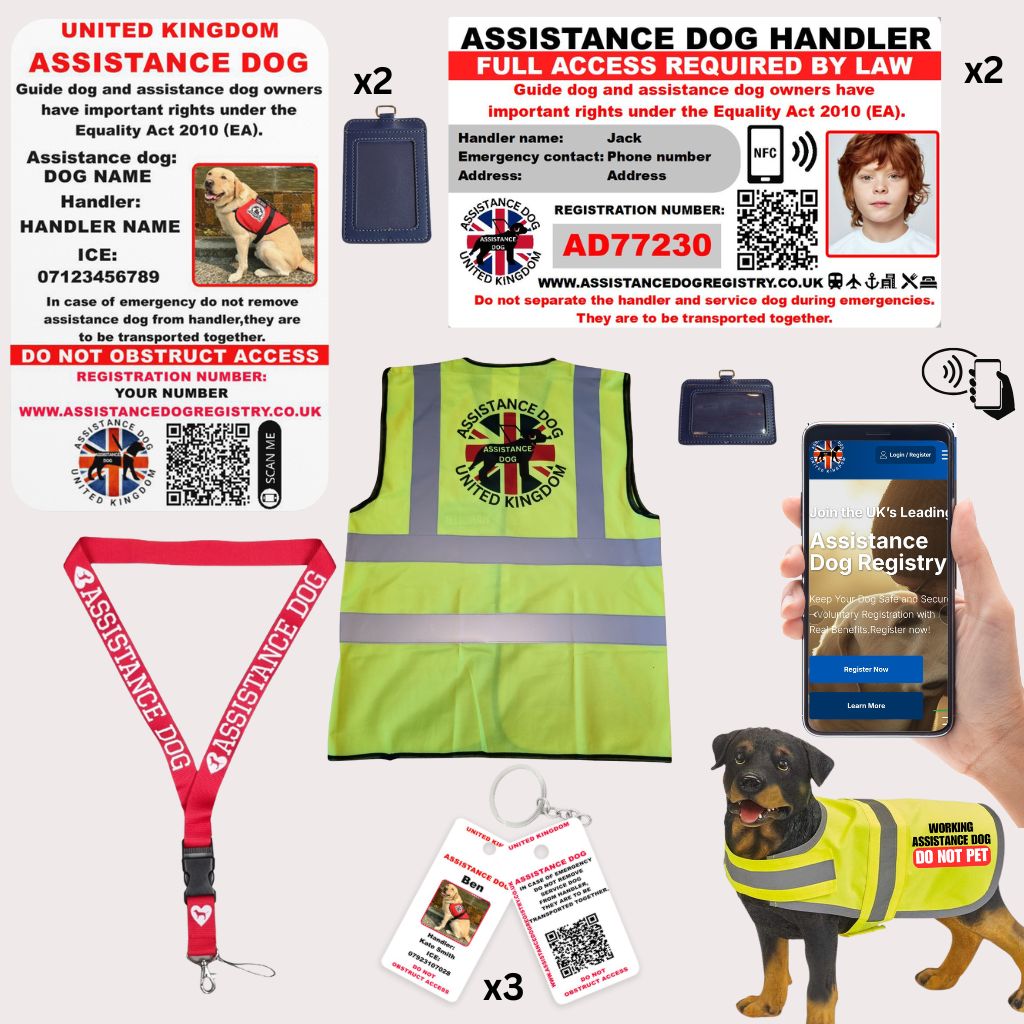
Membership plus the full physical kit — 2× NFC Smart ID cards, 3× personalised plastic ID tags, hi-vis "Do Not Pet" vest, leather card holder, branded lanyard. Free replacements if lost.
£129.50 once
Everything in Premium, plus a dedicated handler card and handler hi-vis vest. You pay once. You never renew.
We've registered thousands of UK dogs since we started. Many were trained by the handlers themselves — at home, with patience, sometimes over years. Handlers come to us with a wide range of disabilities, visible and invisible. Most have been questioned at least once in public. Some of them have cried in a car park afterwards.
None of that is fair. The law is clear. The reality, sometimes, isn't.
What we can do is make it harder for the reality to win. That's what this guide exists for.
Your dog works for you. We're here to make sure the rest of the world knows it.
— The team at the Assistance Dog Registry

If you rely on an assistance dog, one of the most stressful situations you can experience is being challenged in public.
You walk into a café, shop, or restaurant and a member of staff suddenly says:
“Sorry, no dogs allowed.”
People look at you. You feel embarrassed, frustrated, and unsure how to respond.
Many assistance dog handlers experience this at some point. The problem is that many businesses simply do not understand the law.
So the question is:
Can a business legally refuse an assistance dog in the UK?
In most situations, the answer is no.
Understanding your legal rights can make these situations much easier to handle.
The legal protection for assistance dog handlers in the UK comes from the Equality Act 2010.
Under this law, businesses must make reasonable adjustments so disabled people can access services in the same way as everyone else.
For many disabled people, an assistance dog is an essential part of daily life. These dogs perform important tasks such as:
Because of this, refusing entry to someone simply because they are accompanied by an assistance dog can amount to disability discrimination.
This means businesses should usually allow assistance dogs into places such as:
Even if a business normally has a “no dogs” policy, assistance dogs are generally an exception.
This is one of the most common misunderstandings.
Under the Equality Act 2010, assistance dogs do not need to be officially registered with any government organisation.
The law does not require:
Many assistance dogs in the UK are owner-trained, and they can still be protected under the Equality Act as long as they assist a disabled person with tasks related to their disability.
However, misunderstandings still happen because many businesses are not fully aware of how the law works.
Although businesses should not refuse access simply because of the dog, staff may ask reasonable questions to understand the situation.
For example, they may ask:
These questions help staff understand that the dog is working and not simply a pet.
However, businesses should not demand medical proof or detailed personal information about your disability.
You are not required to disclose private medical details in order to access services.
If a business refuses your assistance dog, the situation can feel upsetting and confrontational. However, staying calm often helps resolve the issue quickly.
Here are some practical steps you can take.
Many staff members simply do not understand the law. Calmly explaining that your dog is an assistance dog protected under the Equality Act can often resolve the situation.
Managers are usually more familiar with policies and may resolve the issue quickly.
You can explain that refusing access because of an assistance dog may be considered disability discrimination under the Equality Act 2010.
If the problem continues, you may wish to note the business name, location, and what happened. This information can be useful if you decide to make a complaint later.
Most situations resolve quickly once staff understand the legal position.
Although identification is not legally required, many assistance dog handlers choose to carry tools that help avoid misunderstandings.
These may include:
These tools can help staff quickly understand the situation and often prevent uncomfortable confrontations.
Many handlers find that clear identification helps make everyday interactions smoother.
Some handlers choose to create a profile in the Assistance Dog Registry to make communication easier when questions arise.
A registry profile can include:
While registration is not required by law, many handlers find that having clear information available helps avoid misunderstandings in public places.
For handlers who want long-term access to their registry profile and identification tools, the Lifetime Partner Membership offers a permanent option.
This can include:
To make this easier for handlers, the Lifetime membership can also be purchased using payment plan options such as Klarna or Clearpay. This allows the cost to be split into smaller payments rather than paying everything upfront.
Being challenged in public with an assistance dog can be frustrating, especially when you know your dog is helping you live independently.
The important thing to remember is that under the Equality Act 2010, businesses are generally required to make reasonable adjustments for disabled people. This usually includes allowing assistance dogs to enter premises even if pets are normally not allowed.
Understanding your rights can help you handle these situations calmly and confidently.
At the same time, many handlers choose to carry identification or maintain a registry profile to make everyday interactions easier and avoid unnecessary conflict.
As awareness improves, situations like these should become less common. Until then, having clear information available can make a big difference.
This article is provided for general informational purposes only and does not constitute legal advice.
While every effort has been made to ensure the information is accurate at the time of writing, laws and regulations may change and individual circumstances can vary.
Nothing in this article should be taken as professional legal advice. If you require advice regarding your specific situation, you should contact a qualified legal professional or a relevant support organisation.
For independent guidance on disability rights in the UK, you may contact the Citizens Advice consumer service or seek advice from a qualified solicitor specialising in disability discrimination law.
ACAS Helpline:
📱 0300 123 1100 — Monday to Friday, 8am–6pm (standard UK call rates apply)
Text Relay (for people who are deaf or have speech impairments):
☎️ 18001 0300 123 1100
Register your assistance dog today and enjoy every sunny moment without setbacks.
💡 Click here to learn more & register
FAQ
1. What is an assistance dog?
An assistance dog is trained to perform specific tasks to aid individuals with disabilities, enhancing their independence and quality of life.
2. Why is socialization important for assistance dogs?
Proper socialization ensures assistance dogs remain calm, focused, and well-behaved in various public settings, enabling them to perform their duties effectively.
3. At what age should I start socializing my assistance dog?
It's beneficial to begin socialization during puppyhood; however, with patience and consistent training, dogs of any age can learn to navigate public environments confidently.
4. How long does it take to socialize an assistance dog?
The duration varies based on the dog's temperament, previous experiences, and the consistency of training. Regular, positive exposure to different environments is key.
5. Can I socialize my assistance dog if they are older?
Yes, older dogs can be socialized successfully. While it may require more time and patience, with positive reinforcement, they can adapt to new situations.
6. What should I do if my assistance dog shows fear in public?
If your dog exhibits fear, calmly remove them from the situation and gradually reintroduce the stimulus at a comfortable distance, rewarding calm behavior.
7. How do I handle public distractions during training?
Teach focus commands like "watch me" to redirect your dog's attention. Gradual exposure to distractions, paired with positive reinforcement, can improve focus.
8. Are there specific public places ideal for socialization?
Begin with quiet areas like parks, then progress to busier environments such as cafes, public transport, and shopping centres as your dog becomes more comfortable.
9. How can I ensure my assistance dog behaves appropriately around other animals?
Controlled introductions and rewarding calm behaviour are essential. Consistent training helps your dog remain focused on their tasks, even around other animals.
10. What are the legal requirements for assistance dogs in public places?
In many regions, assistance dogs are permitted in public areas to support their handlers. It's important to familiarize yourself with local laws and regulations regarding assistance dogs.
Learn more about our Lifelong Partner Package
If you found this travel guide useful, you may also benefit from these other essential assistance dog letter templates we’ve published:
📌 Housing Accommodation Request Letter – Need to request reasonable accommodation from your landlord? This template ensures your rights under the Equality Act 2010 are respected.
📌 Workplace Assistance Dog Request Letter – If you need accommodations to bring your assistance dog to work, this letter outlines your legal rights and reasonable adjustments your employer should consider.
📌 Medical Confirmation of Need for an Assistance Dog – A doctor’s letter template to confirm your need for an assistance dog for public access, travel, and daily life.
🔹 More templates are coming soon! Let us know if you have specific needs, and we’ll create more resources to support assistance dog handlers.