No, the law does not require one. Here is what the law says, why most handlers wear one anyway, and what to look for if you are buying.
📖 5 min read·By the ADR Team·Updated October 2026
If you have ever been stopped in a shop and heard “where is his jacket?” as though it were a rule, you are not alone. It is one of the most common things handlers are told, and it is one of the easiest to answer.
The official guidance for businesses, published by the Equality and Human Rights Commission, states that “the law does not require the dog to wear a harness or jacket” and that “assistance dog users should not be refused a service simply because they do not possess an ID book.” You can read how we summarise that guidance, with the sources, on our UK assistance dog rights page.
A shop, pub or taxi firm may have its own preferences, but it has no legal power to demand a jacket, a harness or a booklet before it serves you. Refusing you on that basis alone is on weak legal ground.
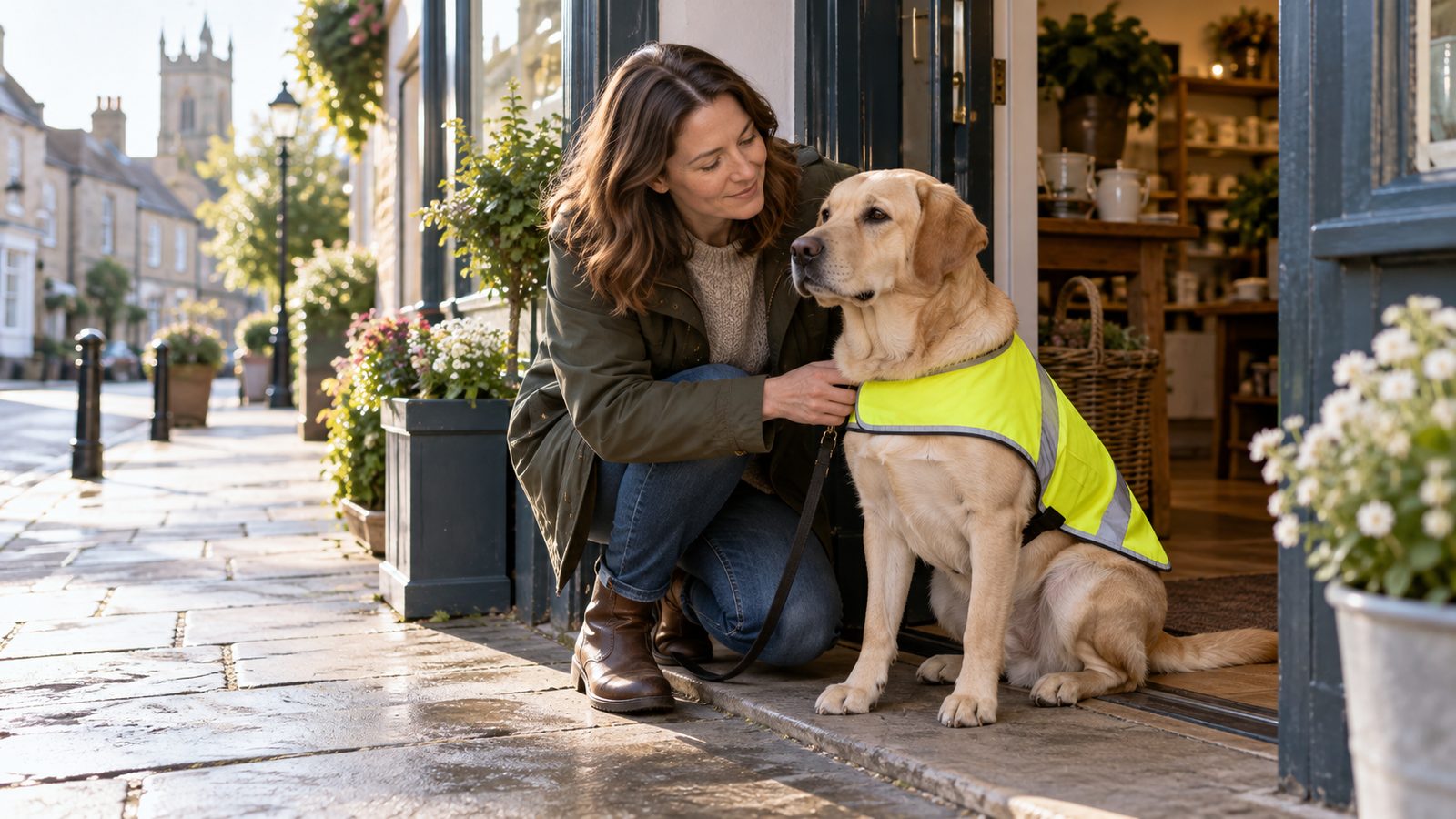
If the law does not require it, why do so many handlers use a vest? Because of what happens in the ten seconds after you walk in.
A vest does not give you rights. Your rights come from being a disabled person with a trained assistance dog, and they exist whether or not the dog wears anything. It also does not prove training, and it does not register the dog anywhere. Anyone can buy a vest from any website, which is why some businesses still ask for more.
That is the honest reason we think a vest works best alongside something with a name and a number on it. A card or registry profile attaches a real identity to the dog, which is something a bought vest never can. It is voluntary, and it is what people who have nothing to hide are happy to offer. Our guide to who can certify an assistance dog explains what exists and what does not.
A vest that says “assistance dog in training” asks people to respect a dog that is still learning. It is useful, but a dog in training is not in the same legal position as a trained assistance dog working with its handler. Our guide to assistance dogs in training and your rights goes through the detail.
Think of three moments. The vest stops most challenges from starting. An ID card or lanyard ends the ones that do start, in seconds. A registry profile is the name on the record if anyone wants to check. Each does a different job, and none of them is a legal requirement.
Our hi-vis assistance dog vest
Reflective strips, adjustable velcro straps, lightweight 100% polyester, and a clear “working assistance dog, do not pet” print. Sizes S, M and L, £20. Also available in pink, and in an “assistance dog in training” version.
See the vestsYou can buy a vest anywhere. Prefer everything in one box? The Lifelong Partner Pack includes a hi-viz vest for your dog and one for you, plus ID cards, tags and holders.
Written for handlers in the UK. It is general information, not legal advice about your own situation. If you need advice on your own case, the Equality Advisory and Support Service is free.
No. The Equality and Human Rights Commission's guidance for businesses says the law does not require an assistance dog to wear a harness or jacket. Many handlers choose to use one because it tells staff and the public that the dog is working.
A business cannot lawfully insist on a jacket, harness or ID book. The Commission's guidance says assistance dog users should not be refused a service simply because they do not have an ID book, and the same reasoning applies to a jacket. If it happens, ask for the reason and the decision in writing.
There is no official colour in UK law. Charity-trained dogs often wear their charity's own branded jacket. Choose something visible, comfortable and clearly worded.
No. A vest tells people a dog is working. Using one to gain access for a pet is misleading and makes life harder for genuine handlers. The right of access comes from being a disabled person with a trained assistance dog, not from the vest.
No. It is a polite request, not a legal order, and most people respect it. If someone ignores it, a calm, firm repeat usually works.