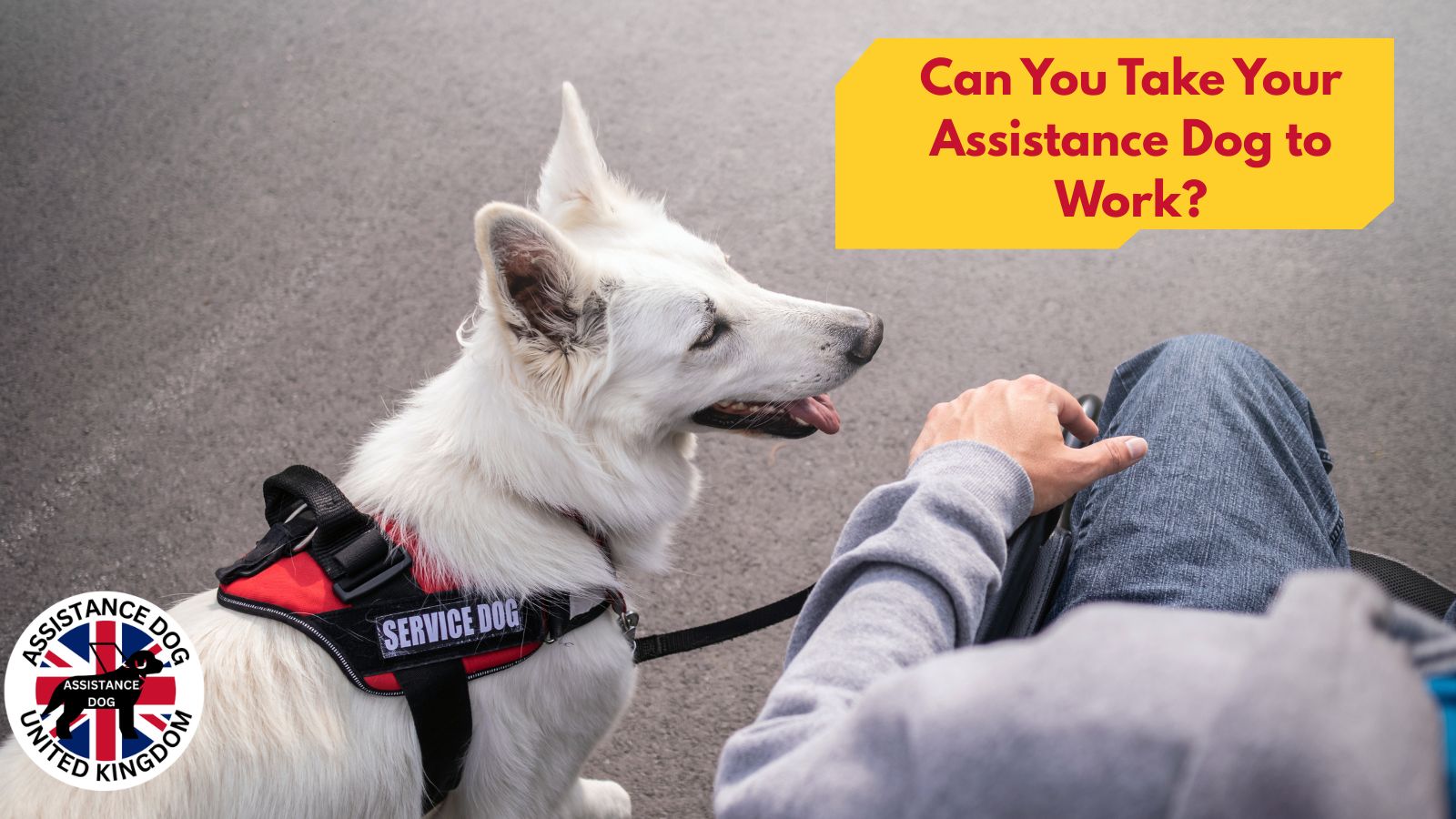

Can Emotional Support Dogs Be Assistance Dogs in the UK?
If your dog helps with your mental health, the Equality Act may already protect you — here's how to make sure.
Sometimes, Healing Comes on Four Legs
Imagine this: You’re walking into a shop, dog by your side, heart racing. You’re not trying to cause a scene. You’re just trying to get groceries, maybe some fresh air, maybe take your mind off the panic that’s been sitting in your chest since 9am.
Then someone says, “Sorry, dogs aren’t allowed.”
Your hands go clammy. You stammer. You know your dog helps — with your anxiety, your PTSD, your depression — but how do you prove it?
Here’s the truth many people don’t realise:
If your dog supports your mental health in a way that helps manage a disability, it may already qualify as an assistance dog under the Equality Act 2010.
Let’s break it down.
🧠 What Is an Emotional Support Animal (ESA)?
An Emotional Support Animal (ESA) provides comfort and companionship that helps relieve symptoms of a mental health condition. While the UK doesn’t have a formal ESA legal status (unlike the USA), that doesn’t mean your dog has no protection.
In fact, in many cases, ESAs can meet the legal criteria of an assistance dog — as long as they’re trained to help you manage your condition.
📜 What the Equality Act 2010 Really Says
The Equality Act 2010 protects people with disabilities — including mental health conditions like:
- Anxiety disorders
- Depression
- PTSD
- Autism
- OCD
- Bipolar disorder
- And many others
If your condition is long-term and has a substantial impact on daily life, it is legally recognised as a disability.
And here’s the key:
The law doesn’t restrict assistance dogs to guide dogs or those trained by charities.
You can train your dog yourself. And emotional support tasks can count.
🐕 When an ESA Becomes an Assistance Dog
If your dog is trained — even by you — to assist with your disability, then under UK law, it may be considered an assistance dog.
That means:
✅ You have a right to bring them into shops, cafés, public transport, and taxis
✅ Landlords can’t ban them under "no pets" rules
✅ You’re protected from discrimination
Examples of ESA tasks that qualify:
- Grounding you during anxiety attacks
- Interrupting harmful behaviours (like picking or panic spirals)
- Providing deep pressure therapy by lying across your lap
- Waking you from night terrors
- Helping you stay calm in crowded public places
These aren’t “just comforting.” These are active support tasks — and they qualify under the law.
🎯 The Problem: Public Confusion and Lack of ID
Unfortunately, most businesses don’t know this.
They often assume only dogs from big-name charities like Guide Dogs are legitimate. This leads to:
- Refusals at entrances
- Embarrassing confrontations
- Stress that defeats the purpose of the support dog
That’s why many ESA owners are choosing to register their dog as an assistance dog — and carry ID cards and supporting materials.
It’s not about “official registration” (because no government database exists).
It’s about educating others and protecting yourself.
🛡️ Why Register with the Assistance Dog Registry?
At AssistanceDogRegistry.co.uk, we help owner-trained assistance dog handlers:
- 📘 Understand their legal rights
- 🪪 Access personalised ID cards, tags, and vests
- 🔒 Create an online profile linked to a QR code or NFC card
- 💬 Communicate clearly in public spaces without confrontation
We’re not here to gatekeep. We’re here to empower.
Whether your dog provides emotional support or helps you in specific ways every day, we believe your story deserves to be seen and respected.
❤️ Real People, Real Impact
We’ve heard from hundreds of people just like you:
- Veterans with PTSD whose dogs keep them grounded
- Autistic adults who rely on their dog’s calm presence
- Trauma survivors who can finally travel alone again
- Young women facing panic attacks in supermarkets — until they wore a vest that said “Assistance Dog”
Every one of these people thought, “But my dog’s just an ESA.”
Until they realised: that’s all an assistance dog needs to be.
🐾 Still Wondering If Your ESA Qualifies?
Here are 3 questions to ask yourself:
- Does my dog help me manage a diagnosed condition or disability?
- Have I trained (or am I training) them to support me in public situations?
- Do they help me access daily life in ways I couldn’t do alone?
If the answer is yes — you’re not “faking” anything.
You’re protected. You deserve confidence, not conflict.
📢 Final Thought: Claim Your Rights — Without Fear
The world is slowly catching up. But you don’t need to wait.
Registering your emotional support dog as an assistance dog isn't cheating the system — it’s using the rights the system already gives you.
Because sometimes, healing really does come on four legs.
And healing deserves protection.
✅ Ready to Register Your Dog?
Start your journey here-Create your profile. Order your card. Walk into public spaces with your head high.
🎟️ Sign Up for the Lifetime Package Today
💡 Click here to learn more & register
FAQ
1. What is an assistance dog?
An assistance dog is trained to perform specific tasks to aid individuals with disabilities, enhancing their independence and quality of life.
2. Why is socialization important for assistance dogs?
Proper socialization ensures assistance dogs remain calm, focused, and well-behaved in various public settings, enabling them to perform their duties effectively.
3. At what age should I start socializing my assistance dog?
It's beneficial to begin socialization during puppyhood; however, with patience and consistent training, dogs of any age can learn to navigate public environments confidently.
4. How long does it take to socialize an assistance dog?
The duration varies based on the dog's temperament, previous experiences, and the consistency of training. Regular, positive exposure to different environments is key.
5. Can I socialize my assistance dog if they are older?
Yes, older dogs can be socialized successfully. While it may require more time and patience, with positive reinforcement, they can adapt to new situations.
6. What should I do if my assistance dog shows fear in public?
If your dog exhibits fear, calmly remove them from the situation and gradually reintroduce the stimulus at a comfortable distance, rewarding calm behavior.
7. How do I handle public distractions during training?
Teach focus commands like "watch me" to redirect your dog's attention. Gradual exposure to distractions, paired with positive reinforcement, can improve focus.
8. Are there specific public places ideal for socialization?
Begin with quiet areas like parks, then progress to busier environments such as cafes, public transport, and shopping centres as your dog becomes more comfortable.
9. How can I ensure my assistance dog behaves appropriately around other animals?
Controlled introductions and rewarding calm behaviour are essential. Consistent training helps your dog remain focused on their tasks, even around other animals.
10. What are the legal requirements for assistance dogs in public places?
In many regions, assistance dogs are permitted in public areas to support their handlers. It's important to familiarize yourself with local laws and regulations regarding assistance dogs.
Learn more about our Lifelong Partner Package
Learn More – Additional Assistance Dog Letter Templates
If you found this travel guide useful, you may also benefit from these other essential assistance dog letter templates we’ve published:
📌 Housing Accommodation Request Letter – Need to request reasonable accommodation from your landlord? This template ensures your rights under the Equality Act 2010 are respected.
📌 Workplace Assistance Dog Request Letter – If you need accommodations to bring your assistance dog to work, this letter outlines your legal rights and reasonable adjustments your employer should consider.
📌 Medical Confirmation of Need for an Assistance Dog – A doctor’s letter template to confirm your need for an assistance dog for public access, travel, and daily life.
🔹 More templates are coming soon! Let us know if you have specific needs, and we’ll create more resources to support assistance dog handlers.