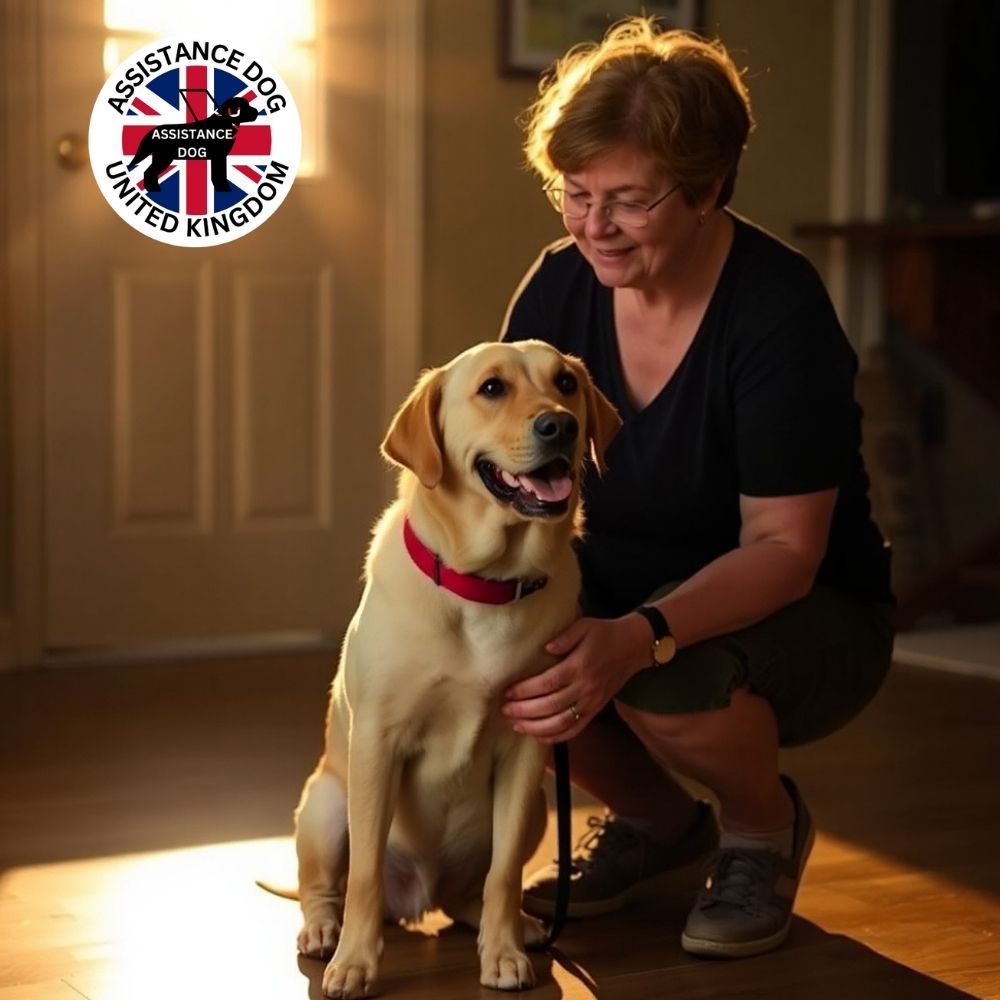
For many people living with disabilities, an assistance dog is more than just a pet – they are a lifeline. These amazing dogs help with daily tasks, give confidence, and provide freedom. But what if you could train your own assistance dog?
In the UK, more and more people are choosing to owner-train their assistance dogs. This can be an incredible journey, but it’s not for everyone. Before you start, it’s important to understand what’s involved and what your legal rights are.
This is Part 1 of our 5-part series: Training Your Own Assistance Dog in the UK. We’ll guide you through every step of the journey. Let’s begin!
Training your own assistance dog can be rewarding, but it also takes time, patience, and hard work. Here are some things to think about before you start:
Many new handlers worry about certification or tests like the “PAT Test” – but this is a myth!
Under the Equality Act 2010, owner-trained assistance dogs have the same legal rights as charity-trained dogs.
You do not need a certificate or to pass a special test for your dog to have public access rights.
What matters is that your dog is trained to assist with your disability and behaves well in public.
Knowing your rights is important. Carrying an Assistance Dog Law Card can help you feel confident when out in public and avoid awkward questions.
Not every dog is suited to be an assistance dog. Your dog needs to be:
If you are choosing a puppy, consider:
Popular breeds for assistance dogs include:
If you feel that owner-training your assistance dog is right for you, it can be a life-changing experience.
Take your time, learn your rights, and prepare for the journey ahead.
In Part 2, we will cover Obedience and Socialization – The Foundation for Your Assistance Dog’s Success.
Helpful Resources for Your Journey:
Assistance Dog Registry – Join a community of handlers and access helpful tools.
Assistance Dog Law Cards – Help you explain your legal rights in public.
ID Cards & NFC Tags – Provide quick information about your dog’s role and your contact details.
Ready to learn more about how the Assistance Dog Registry can support your partnership?

For many individuals living with disabilities, an assistance dog is more than just a companion—it's a lifeline to independence, confidence, and daily freedom. But the journey to partnering with an assistance dog can take different paths, each with its own unique challenges and rewards.
In this comprehensive guide, we'll explore the two primary options for obtaining an assistance dog in the UK: charity-trained and owner-trained. We'll also discuss legal rights, public access challenges, and valuable resources for handlers, including the benefits of registering with the Assistance Dog Registry.
Charity-trained assistance dogs are provided by specialized organizations that raise and train dogs to assist individuals with disabilities. These dogs undergo extensive training using humane, reward-based methods before being carefully matched with a handler.
"Receiving my charity-trained assistance dog changed my life. The wait was long, but the professional training and ongoing support have been invaluable." - Sarah, assistance dog handler
Owner-training involves taking full responsibility for selecting, raising, and training a dog to meet your specific needs. This path demands dedication, patience, and a thorough understanding of dog behavior and assistance tasks.
"Owner-training my assistance dog was challenging, but incredibly rewarding. The bond we've formed is unbreakable, and I've tailored his skills to my exact needs." - Mark, owner-trainer
Under the Equality Act 2010, both owner-trained and charity-trained assistance dogs have equal rights to access public spaces. There is no legal requirement for certification or specific testing. However, handlers often face challenges due to public misconceptions.
While not legally required, many handlers find that having clear identification and resources can significantly reduce public access challenges and boost confidence.
The Assistance Dog Registry offers a comprehensive support package designed to empower handlers throughout their partnership with their assistance dog.
"Registering with the Assistance Dog Registry opened a door to my confidence. The ID card and vest have helped me feel seen, understood, and respected in public." - Emma, registered handler
Choosing between a charity-trained or owner-trained assistance dog is a personal decision that depends on your individual needs, resources, and circumstances. Consider the following factors:
Whichever path you choose, remember that the ultimate goal is a well-trained, reliable dog that significantly improves your quality of life. Both charity-training and owner-training are valid paths, each deserving of respect and support.
Whether you opt for a charity-trained dog or embark on the owner-training journey, partnering with an assistance dog can be life-changing. By understanding your options, knowing your rights, and accessing valuable resources like the Assistance Dog Registry's "Lifelong Partner" package, you can navigate this journey with confidence and support.
Ready to learn more about how the Assistance Dog Registry can support your partnership?

For many assistance dog handlers, their dog is not just a companion but a vital support system that makes daily life more accessible and less stressful. However, despite legal protections, some handlers still face the distressing experience of being turned away from shops, cafes, or public spaces.
Why does this happen? More importantly, how can you ensure it doesn’t happen to you?
While UK law is clear that assistance dogs have the right to accompany their handlers into public places under the Equality Act 2010, not everyone is aware of or respects this law. Businesses sometimes deny entry due to:
Being refused entry can be deeply upsetting. It undermines your confidence, disrupts your day, and can feel like a personal attack. Many handlers report feeling humiliated or anxious about venturing out again.
Visual Clarity is Key:

Samantha, a handler from Manchester, recalls: “Before getting a vest and ID card, I was constantly questioned. Since registering with the Assistance Dog Registry and using their full kit, I feel confident. People see the vest, the ID, and there are no questions. I finally feel respected.”
It is important to note that there is no official or mandatory registration system in the UK for assistance dogs. However, having clear visual indicators, such as a registry ID card and vest, can drastically reduce confrontations.
Our Lifelong Partner Package is designed to give you the tools to face public spaces confidently. It includes:
These tools don’t grant legal status but serve as a visual reassurance to the public and businesses, helping to ensure you and your dog are welcomed, not questioned.
Don’t let lack of awareness or doubt ruin your day. Equip yourself and your dog with the gear that signals your rights loud and clear.

I remember the day so clearly. My heart was racing as I stood outside the small corner shop with Daisy, my black and tan dog, sitting patiently by my side. She looked up at me with her gentle eyes, sensing my nerves. This was our first real test together. After months of training Daisy to be my assistance dog, today was the day we would finally step into the world as a team.
Daisy wasn’t professionally trained by an organization. I had trained her myself, from the ground up. Every sit, stay, and gentle lead through busy streets had been a journey we shared. And though I knew she was ready, I was terrified. What if they didn’t let us in? What if someone challenged me?
But we were prepared. I had registered Daisy with the Assistance Dog Registry and received our bright yellow high-visibility vest and her personalized ID card. These weren’t just accessories to me. They were our shield against doubt—a visual reassurance to the world that Daisy was more than a pet; she was my support, my freedom.
Taking a deep breath, I stepped through the door. Immediately, I saw the shop assistant glance at Daisy. Her expression shifted from neutral to uncertain. “Excuse me, you can’t bring dogs in here,” she said.
My stomach knotted. This was exactly what I feared. But I had rehearsed this moment in my mind so many times. I smiled, though my voice trembled slightly. “She’s my assistance dog. She’s trained to support me.”
The assistant hesitated, clearly unsure. I reached for Daisy’s ID card, attached neatly to my lanyard. I showed it to her, pointing to the legal information printed on the back. “Under the Equality Act, she has the right to accompany me in public spaces,” I explained.
I watched the assistant’s eyes scan the card, then flick back to Daisy’s vest, which clearly read “Assistance Dog” in bold letters. Relief softened her features. “Oh, I didn’t realize. Of course, you’re welcome,” she said.
That simple exchange might seem small to others, but to me, it was monumental. It was the difference between feeling excluded and feeling human. The vest and ID card didn’t just open a door to the shop; they opened a door to my confidence.
From that day forward, everything changed. I no longer left home fearing confrontation. I knew Daisy and I had the tools to handle it. We were seen, understood, and respected.
Training my own assistance dog was a hard journey, but registering with the Assistance Dog Registry was the final step that made it all come together. That first shop visit proved to me that we were ready for the world—and that the world was ready for us.
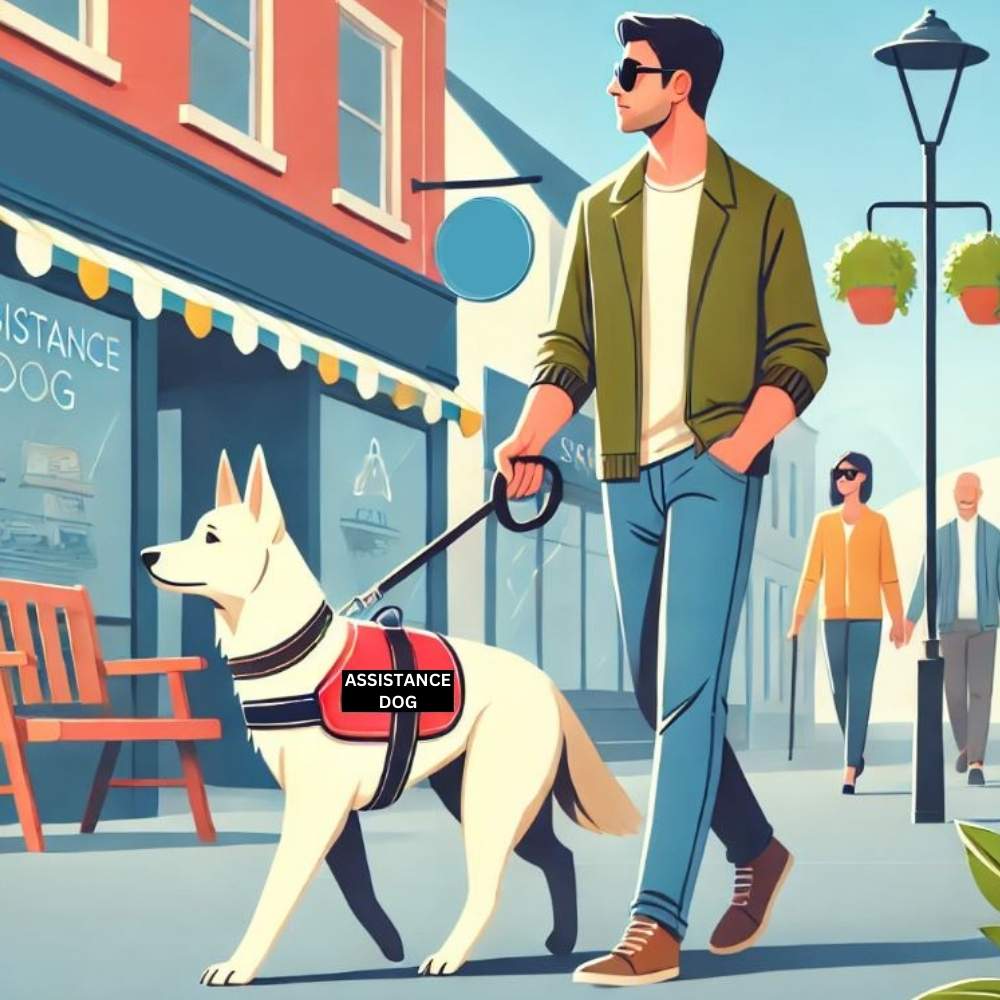
This guide is for owner-trained and assistance dog handlers using voluntary support tools like law cards, lanyards, or vests. You already have legal rights — these tools just help explain them, if needed.
Living with an assistance dog can be life-changing, offering vital support and independence.
However, many owners face confusion and challenges when navigating public spaces, housing, or travel. Knowing your rights as an assistance dog handler is essential to ensure you and your dog are treated fairly and legally.
In this guide, we break down the key legal rights you have as an assistance dog owner in the UK, helping you feel confident when out and about.
An assistance dog is a specially trained dog that supports individuals with disabilities, medical conditions, or mental health needs. These dogs help with tasks such as:
Assistance dogs are not pets; they are working dogs that offer essential support to their handlers.
The Equality Act 2010 is the primary law protecting assistance dog owners in the UK. It ensures that individuals with disabilities are not discriminated against. This protection extends to those who rely on assistance dogs.
Sadly, some businesses and individuals are still unaware of these laws. If you are ever refused entry or treated unfairly, here’s what you should do:
False. The Equality Act 2010 covers all types of assistance dogs, not just guide dogs for the blind. Dogs assisting with hearing, mobility, autism, PTSD, and other conditions are equally protected.
False. There is no legal requirement to register or certify an assistance dog in the UK. However, voluntary registration platforms like the Assistance Dog Registry can help you demonstrate your dog’s role and provide peace of mind in public situations.
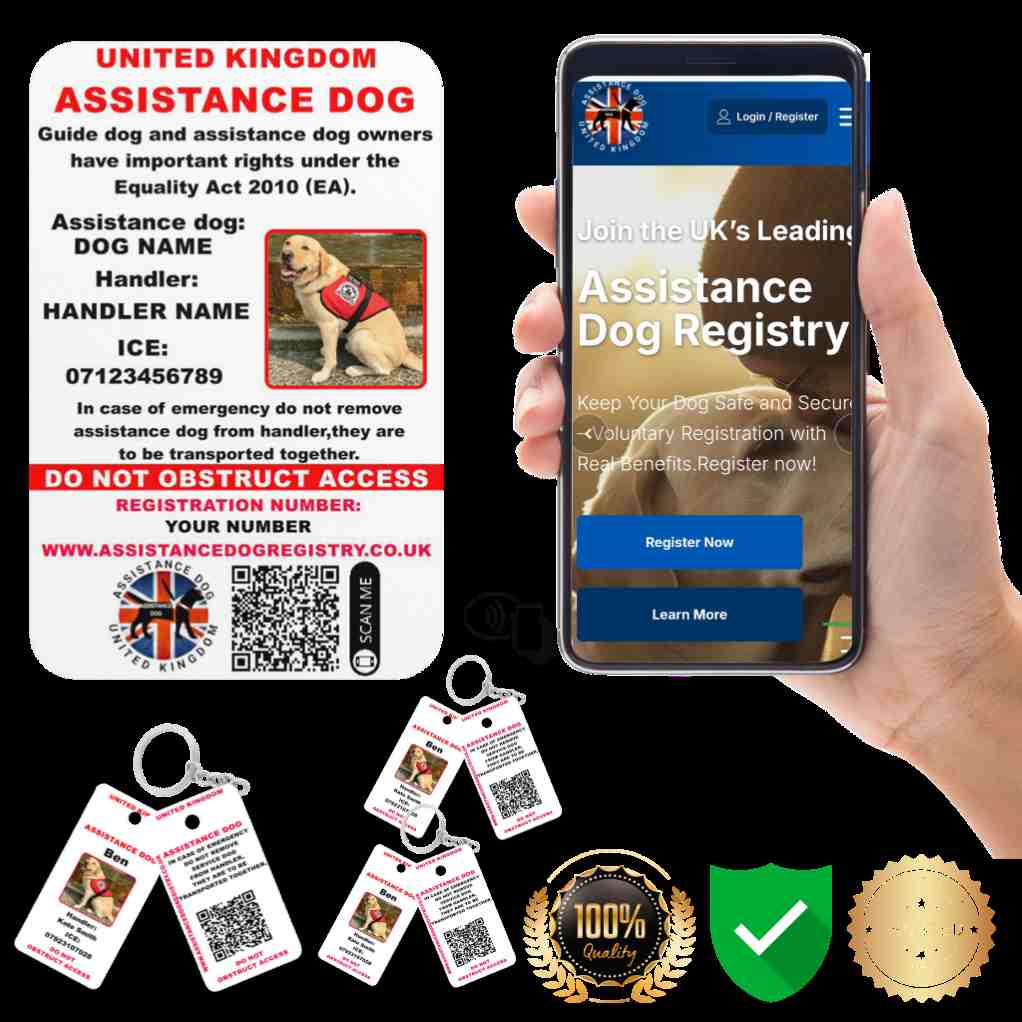
Although you don’t legally need an ID card, many owners find that having a professional-looking Assistance Dog ID Card and Law Card reduces conflicts. These items serve as quick visual proof of your dog’s role and your rights, making it easier to educate others.
At Assistance Dog Registry, we offer customizable ID cards, lanyards, and law cards designed specifically for UK assistance dog owners. Our products are trusted by thousands of handlers across the UK to navigate daily life with confidence.
Navigating the world with an assistance dog can sometimes feel overwhelming, but knowing your rights empowers you. At Assistance Dog Registry, we are here to support you with helpful resources and practical tools like our ID cards and registration service.
Click here to explore our Assistance Dog ID Cards and Law Cards.
Stay confident, stay protected, and enjoy the freedom your assistance dog brings.
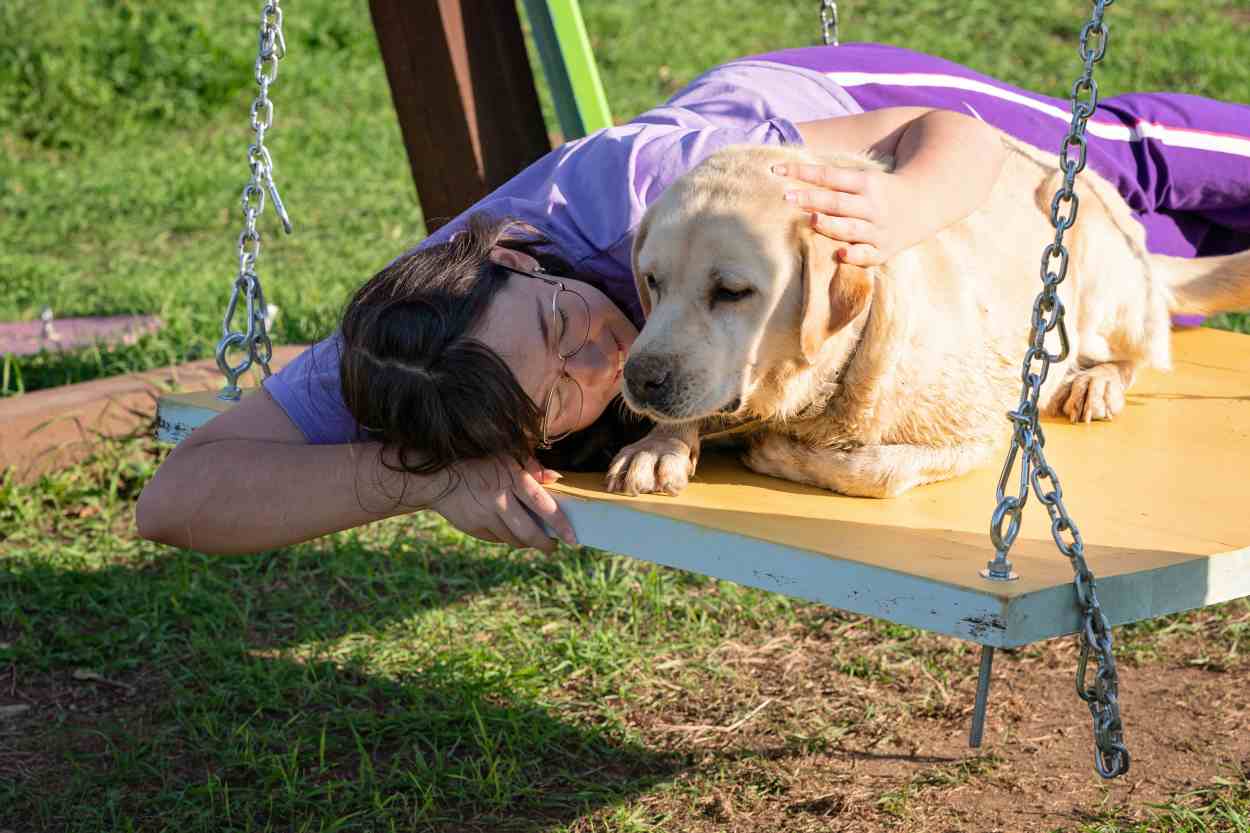
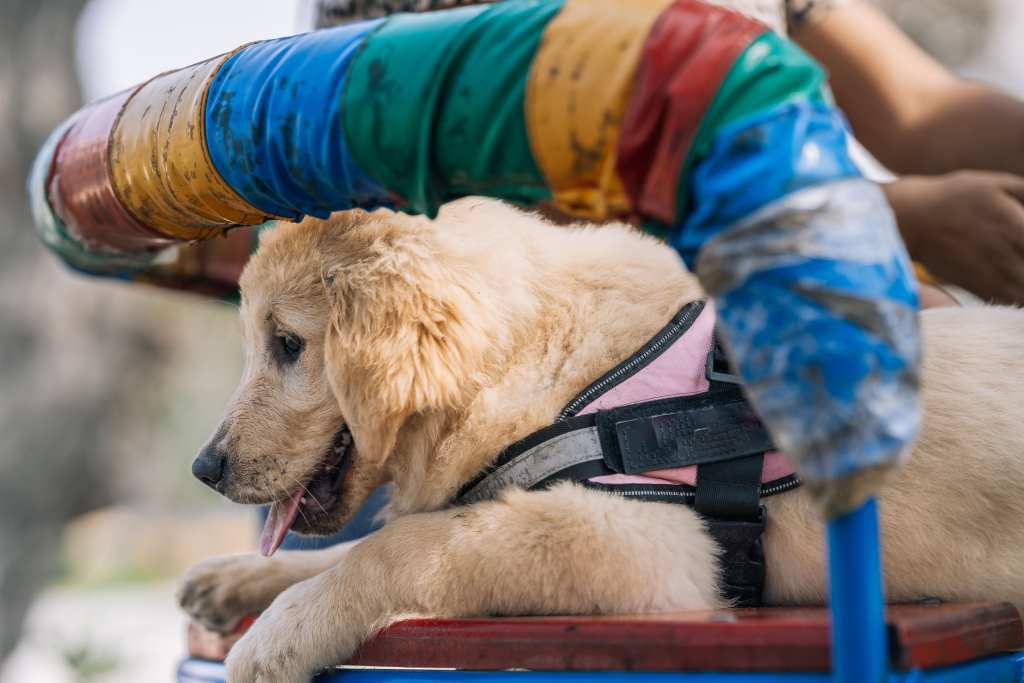
Training your own assistance dog can be incredibly rewarding, especially when supporting a loved one with Autism Spectrum Disorder (ASD). Assistance dogs provide comfort, companionship, and essential help for children and adults with autism. Owner-trained dogs can be just as effective as professionally trained ones.
An owner-trained assistance dog for autism is a dog trained by the owner to provide assistance to a person with ASD. Unlike dogs provided by charities or professional organizations, owner-trained dogs offer:
Lower costs since you aren't paying for professional training programs.
Personalized training tailored to the individual's unique needs.
A deeper bond formed during the training process, which creates a strong partnership.
Owner-trained assistance dogs provide a wide range of benefits to individuals with autism and their families, such as:
Social Interaction and Independence
Safety and Security
Training an assistance dog for autism requires time, patience, and dedication, but it is achievable with the right guidance. Here are some steps to help you get started:
Start with Basic Obedience Training
Under the Equality Act 2010, assistance dogs, including those that are owner-trained, have the same rights as those trained by professional organizations. This means your assistance dog has the legal right to accompany you in public places, providing crucial support for you or your loved one with autism.
Your dog's registration with the Assistance Dog Registry can also help make access smoother, as it ensures your dog's role is clearly recognized by businesses and the public.
Tips for Success When Training Your Assistance Dog
The Advantages of Registering Your Assistance Dog
Real Stories: Owner-Trained Assistance Dogs Changing Lives
Families who have trained their own assistance dogs often share stories of transformation:
Conclusion
Training your own assistance dog for autism is an empowering journey. Not only does it create a strong bond between you and your dog, but it also provides personalized support that truly meets the needs of the person with autism. With patience, dedication, and the right support, owner-trained assistance dogs can offer life-changing benefits, helping individuals with autism lead more fulfilling lives.
If you’re considering training your own assistance dog, explore how the Assistance Dog Registry can help you every step of the way. Register today and become part of a supportive community dedicated to enhancing the lives of those with autism through the power of assistance dogs.
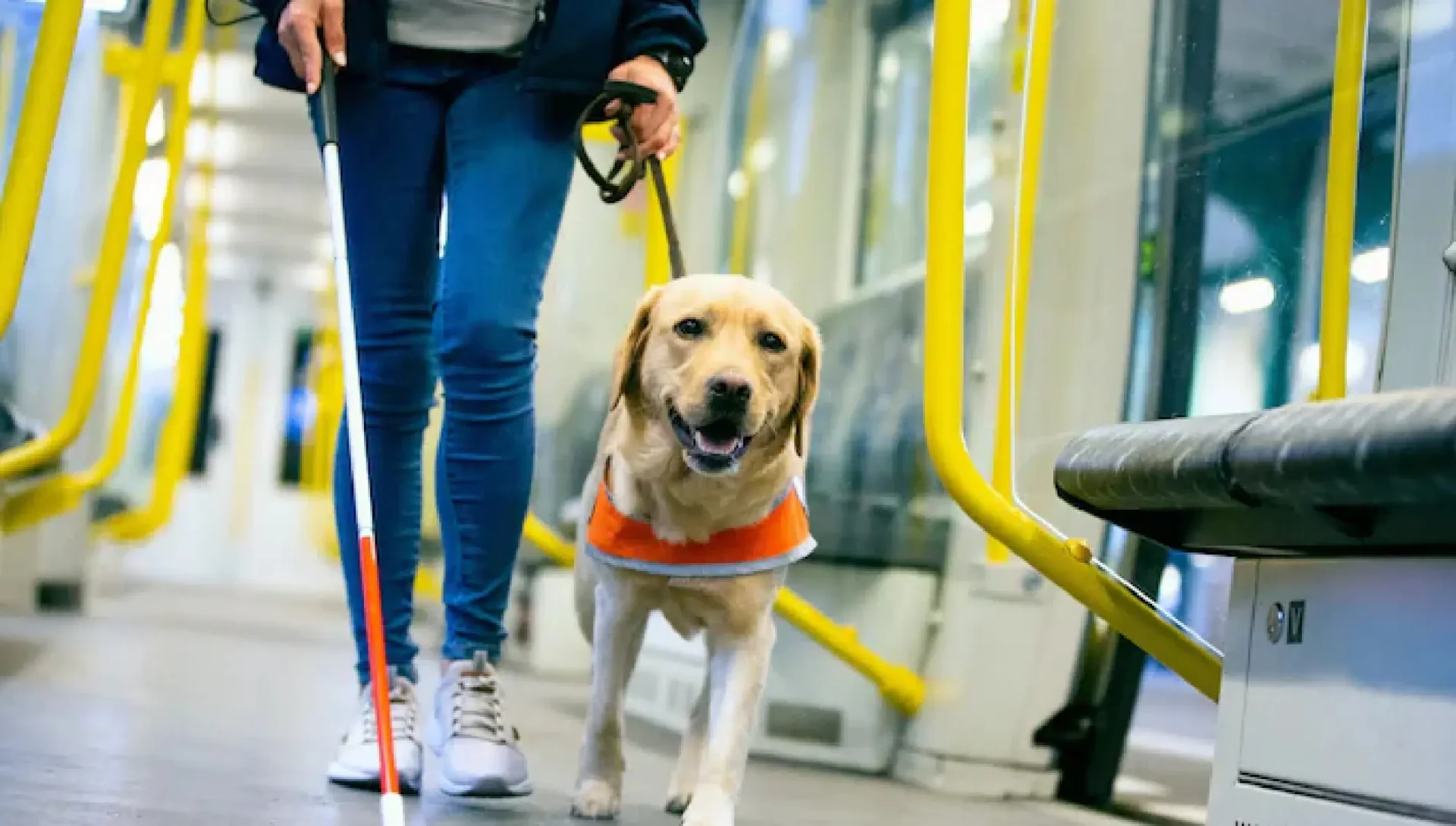
Assistance dogs are more than just loyal companions—they provide critical support to individuals with disabilities, helping them navigate everyday life with greater independence and confidence. These specially trained dogs are capable of performing a wide range of tasks that help their handlers overcome physical, sensory, and mental challenges. Whether it's guiding a person with visual impairment, alerting a person who is deaf, or providing physical assistance to someone with mobility issues, assistance dogs significantly enhance the quality of life for their handlers.
In this blog, we’ll dive into the various roles assistance dogs play, the different types of assistance dogs, and how they help individuals live fuller, more independent lives.
There are several categories of assistance dogs, each trained to meet the specific needs of their handler. Some of the most common types include:
Each of these types of assistance dogs is specifically trained to respond to the unique needs of their handler, ensuring that they can navigate daily life with fewer obstacles.
Assistance dogs are trained to perform a variety of tasks that help their handlers manage day-to-day challenges. These tasks depend on the specific needs of the handler but often include:
These tasks are essential for individuals who rely on their assistance dog for physical, emotional, or medical support, making everyday tasks more manageable and helping to prevent accidents or medical emergencies.
One of the greatest benefits of having an assistance dog is the increased independence it provides to people with disabilities. With an assistance dog by their side, individuals who might otherwise struggle with certain activities can confidently participate in everyday tasks such as shopping, traveling, and working.
For example, a guide dog can enable a person who is visually impaired to travel safely and independently, while a mobility assistance dog can help someone with limited mobility manage tasks that might otherwise require human assistance. Medical alert dogs can also provide peace of mind, knowing that their handler will be warned of impending health issues like seizures or hypoglycemia before they occur.
This newfound independence can have a profound impact on the lives of assistance dog handlers, allowing them to lead fuller, more active lives without relying as heavily on others for help.
Beyond the physical tasks they perform, assistance dogs also offer emotional and psychological support. For many handlers, an assistance dog provides companionship and reduces feelings of isolation, especially for those who may have difficulty leaving their homes or engaging with others due to their disability.
Psychiatric service dogs are particularly skilled at providing emotional grounding, helping individuals manage conditions like anxiety, depression, and PTSD. These dogs can recognize signs of distress and provide comfort by offering tactile stimulation, such as nudging or lying across their handler’s body, to reduce anxiety and improve emotional stability.
The bond between a handler and their assistance dog is often incredibly strong, offering a sense of comfort, safety, and emotional well-being that goes far beyond the tasks the dog is trained to perform.
In the UK, assistance dogs can be trained by accredited organizations or by their owners. Regardless of the training method, assistance dogs must meet certain behavior standards, particularly when in public spaces. They need to remain calm, focused, and well-behaved in various environments, from busy city streets to quiet cafes. This level of training ensures that the dog can perform its duties effectively without causing disruption.
While assistance dogs are not required to wear specific identification or certification, it is highly recommended that they wear vests or harnesses that signal their role as assistance animals. This helps avoid misunderstandings in public spaces and reinforces their right to access areas where pets are normally prohibited.
In the UK, the Equality Act 2010 ensures that assistance dogs and their handlers have the legal right to access public spaces, services, and facilities without discrimination. Businesses and service providers must accommodate assistance dogs, even in places where pets are typically not allowed. Refusing entry to an assistance dog or treating the handler unfavorably due to the presence of the dog is considered unlawful discrimination.
Whether the dog is owner-trained or professionally trained, it plays a critical role in supporting the handler’s independence and well-being. Ensuring that assistance dogs are welcomed and treated appropriately in public spaces is key to upholding the rights and dignity of individuals with disabilities.
Assistance dogs are vital companions that enable individuals with disabilities to lead more independent, confident, and fulfilling lives. Whether they are trained to guide, alert, support, or provide emotional grounding, these dogs perform life-changing tasks that improve the quality of life for their handlers.
If you have an assistance dog, consider registering them through our free registration process to ensure they receive the recognition and support they deserve. Visit our website to learn more about how your dog can help you navigate the world with greater independence and peace of mind.
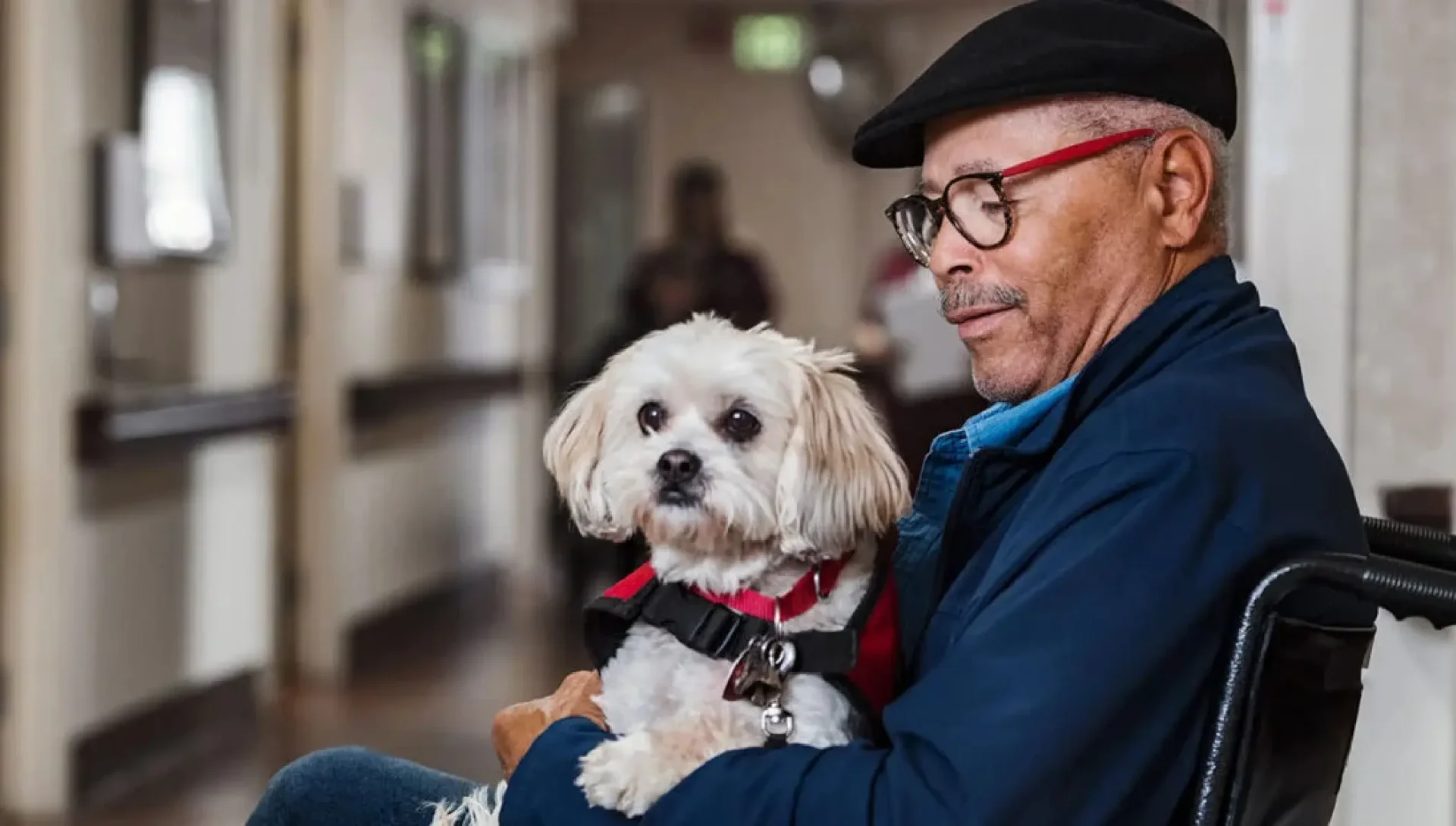
Assistance dogs provide invaluable support to people with disabilities, helping them live more independent lives. However, many people are unaware of the legal rights that both assistance dogs and their handlers are entitled to, particularly in public spaces. In the UK, the Equality Act 2010 grants crucial legal protections to assistance dog users, ensuring they can access the same services and facilities as anyone else, without discrimination. Here, we will explore the key legal rights assistance dogs and their handlers have when navigating public spaces.
The Equality Act 2010 is the primary piece of legislation that governs the rights of disabled individuals in the UK, including assistance dog users. Under this act, assistance dogs are legally recognized as a form of auxiliary aid that enables people with disabilities to access goods, services, and facilities. As such, the act requires businesses, service providers, and public spaces to make "reasonable adjustments" to accommodate both the handler and their assistance dog.

Reasonable adjustments refer to modifications or accommodations that must be made by businesses or service providers to ensure that disabled individuals can access their services without facing barriers. When it comes to assistance dogs, reasonable adjustments might include allowing the dog into spaces that typically prohibit pets, such as restaurants, supermarkets, hotels, or public transport. The key factor is that these adjustments must not impose an unreasonable burden on the business while ensuring the handler's right to access is respected.
Where Can Assistance Dogs Go?
Assistance dogs are allowed in most public spaces, including:
The purpose of an assistance dog is to assist individuals with disabilities in performing tasks that they may struggle to do themselves. For instance, guide dogs help visually impaired individuals navigate the world around them, while hearing dogs assist those who are deaf by alerting them to important sounds. Other assistance dogs might provide physical support, fetch items, or alert to medical conditions like seizures or low blood sugar.
Because of the essential role these dogs play, denying access to an assistance dog is akin to denying a person access to their disability aid—something that is both discriminatory and illegal under the Equality Act 2010.
In the UK, assistance dogs can be either owner-trained or professionally trained by accredited organizations. Regardless of where or how the dog is trained, it must behave appropriately in public settings and reliably perform tasks that support the handler. The dog should remain calm and well-mannered in various environments, from busy streets to quiet cafes, ensuring it does not pose a risk or cause a disturbance.
While businesses cannot demand proof of training or certification, they do have the right to ask the handler to remove the dog if it is behaving aggressively or disruptively.
Despite the legal protections in place, some assistance dog users still face discrimination when trying to access public spaces. If a business or service provider refuses entry to an assistance dog without a valid reason (such as health and safety concerns), this can be considered unlawful discrimination under the Equality Act.
If you find yourself in a situation where your assistance dog is denied access, there are several steps you can take:
While the Equality Act grants strong protections for assistance dogs, there are limited circumstances where businesses can refuse entry. These exceptions are typically related to health and safety concerns, such as:
It is important to note that a general dislike or fear of dogs is not a valid reason to refuse entry to an assistance dog.
The legal rights of assistance dog handlers in the UK are robust and designed to ensure that disabled individuals can live independently and access public spaces with minimal barriers. The Equality Act 2010 provides crucial protections that prohibit discrimination and require businesses and service providers to accommodate assistance dogs.
Understanding your rights as an assistance dog handler—and educating businesses about these rights—can help ensure a more inclusive society where assistance dog users are treated with respect and dignity.
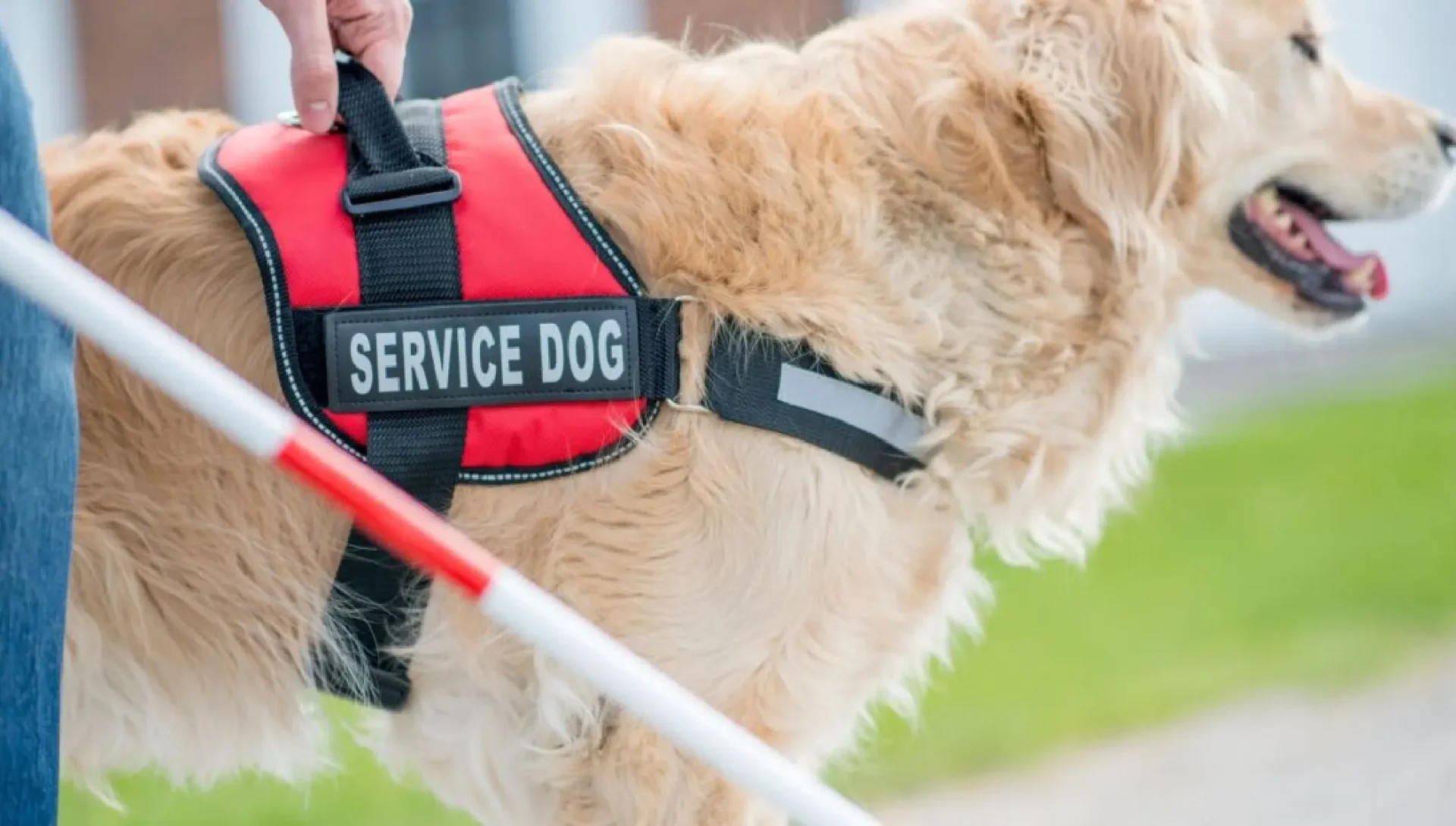
Assistance dogs provide critical support for individuals with disabilities, offering them increased independence and the ability to navigate the world more freely. In the United Kingdom, there are specific laws and regulations that safeguard the rights of assistance dog users, ensuring they can access public spaces and services without facing unnecessary barriers or discrimination. This guide explores the key legislation and rules that govern assistance dogs in the UK, with a focus on the legal protections offered to both the dogs and their handlers.
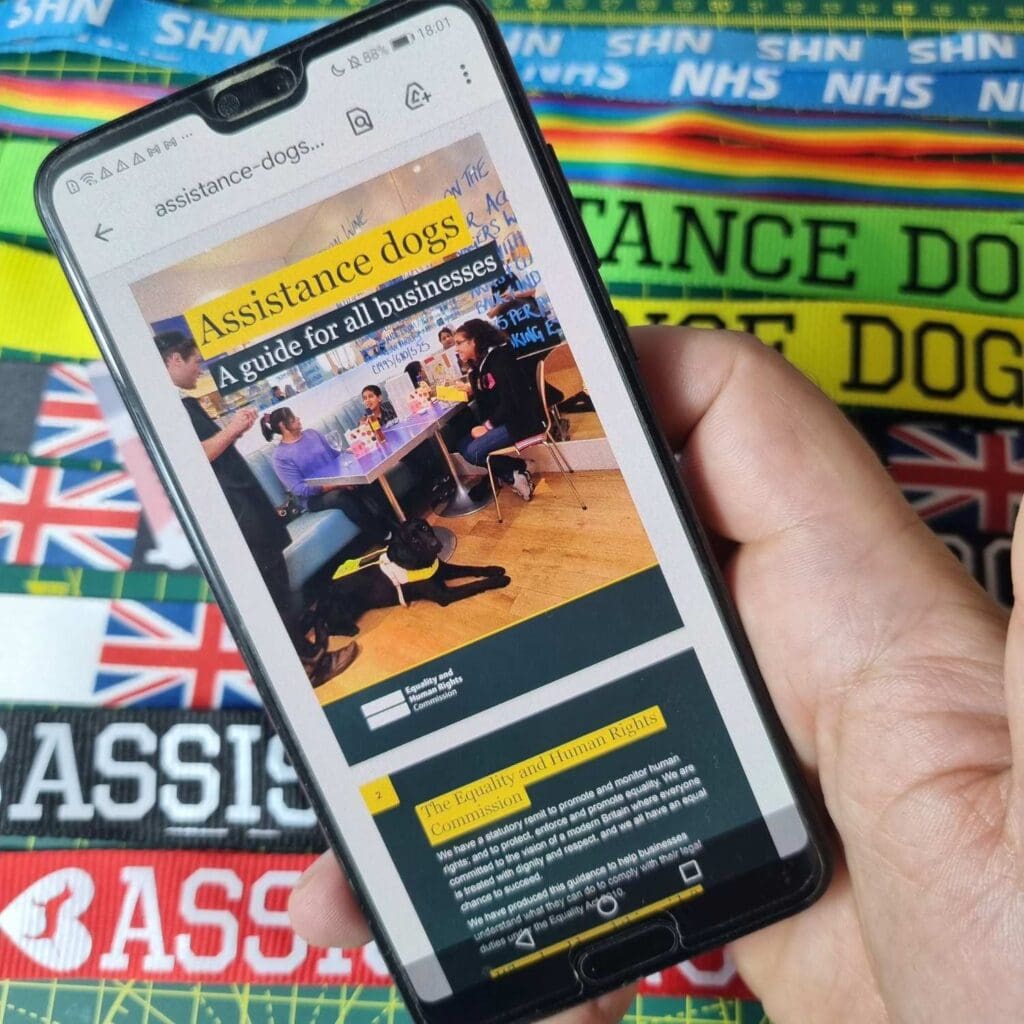
The Equality Act 2010 serves as the cornerstone for assistance dog laws in the UK. This legislation protects individuals from discrimination based on disability, and it recognizes assistance dogs as a crucial auxiliary aid for disabled individuals. Under this act, disabled individuals who rely on assistance dogs are granted specific rights that protect their access to public places, goods, services, and facilities.
The Equality Act requires businesses and service providers to make "reasonable adjustments" to accommodate disabled individuals. These adjustments extend to allowing assistance dogs into places where pets are typically prohibited, such as restaurants, retail stores, public transportation, and educational institutions. The act ensures that assistance dog users are not unfairly treated or denied services simply because they rely on an animal for support.
One of the most important legal protections afforded to assistance dog users is the right to access public spaces with their dogs. This means that assistance dogs must be allowed to accompany their handlers into virtually all public areas, including:
It is important to note that refusing entry to an assistance dog without a legitimate reason is considered a form of discrimination under the Equality Act. Businesses and service providers that violate these rules could face legal consequences, including fines and compensation claims from affected individuals.
A distinctive feature of the UK’s assistance dog laws is the recognition that assistance dogs can be trained by their owners, rather than exclusively through accredited organizations. This is significant because it broadens access to assistance dogs for individuals who may not be able to afford or access formal training programs.
Owner-trained assistance dogs can be just as effective as those trained by organizations, provided they meet high standards of behavior and are able to perform tasks that assist their handler’s specific needs. The process of training an assistance dog typically involves teaching them to perform tasks such as retrieving items, guiding their handler, alerting them to sounds, or providing physical support. In the case of owner-trained dogs, it is the responsibility of the handler to ensure that the dog is well-behaved in public, responds to commands reliably, and does not pose a threat or nuisance to others.
The concept of "reasonable adjustments" is central to the protections provided by the Equality Act. For assistance dog users, these adjustments ensure that they can access services without facing unnecessary challenges. Some examples of reasonable adjustments include:
It is essential for businesses and service providers to comply with the legal requirements set out by the Equality Act. Failure to do so can result in legal action being taken against them. If a business refuses entry to an assistance dog or discriminates against the handler, the individual affected can file a complaint or seek legal recourse.
In addition to fines, businesses may be required to pay compensation for any distress, humiliation, or inconvenience caused by their failure to accommodate the assistance dog and its handler. The law aims to ensure that disabled individuals are able to participate fully in society without facing undue hardship or discrimination.
The legal protections for assistance dog users also extend to educational institutions and workplaces. Schools, colleges, and universities must make reasonable adjustments to allow assistance dogs on their premises, ensuring that students with disabilities can fully participate in educational activities. Similarly, employers are required to accommodate assistance dogs in the workplace, provided that the presence of the dog does not pose a risk to health and safety.
In both educational and employment settings, the process of accommodating an assistance dog often involves creating a support plan that outlines how the dog will be integrated into the environment, what support the handler will need, and any potential challenges that may need to be addressed.
The UK’s laws and regulations surrounding assistance dogs provide strong protections for individuals with disabilities, ensuring they have equal access to public spaces, services, and employment opportunities. The Equality Act 2010 serves as the foundation for these protections, requiring businesses and service providers to make reasonable adjustments to accommodate assistance dog handlers.
Whether the assistance dog is owner-trained or professionally trained, the law recognizes the essential role these animals play in the lives of disabled individuals. By understanding and complying with these laws, both assistance dog users and businesses can help create a more inclusive society that supports the rights and needs of all individuals.