Nobody can. Not the government, not ADUK, and not us. Here is who actually has authority over assistance dogs in the UK, why the yellow booklet became a myth, and what the law really asks of you at a door.
📖 5 min read·By the ADR Team·Updated August 2026
Somebody stops you at a door and asks to see proof that your dog is an assistance dog. You reach for something. The question is what, and who decided it counts.
The short answer is that nobody decided, because nobody can. There is no organisation in the United Kingdom with the authority to certify an assistance dog. Not a government department, not a charity, not a coalition of charities, and not us.
That sentence surprises people, so it is worth going through slowly.
No government body licenses assistance dogs. No department maintains a list. There is no application, no inspection, and no certificate that carries legal weight, because Parliament never created one.
What Parliament created instead was a right. The Equality Act 2010 protects disabled people who use assistance dogs, and it places duties on service providers, employers and landlords. Those duties exist whether or not anyone has ever seen a piece of paper.
This matters more than it sounds. If the law required certification, whoever issued the certificates would hold enormous power over disabled people. The law does not work that way, and that is deliberate.
If nobody can certify your dog, the fair question is what any registry is for. The honest answer is that it is not there to give you rights. You already have those.
What the Equality Act does not give you is a quick way to demonstrate those rights while somebody is standing in front of you and a queue is building behind you. That moment is the problem. You are being asked to explain your disability to a stranger, in public, while your dog waits and people watch.
Do not take our word for it. The Equality Act 2010 is free to read in full on the government's own website. Shops, restaurants and other service providers have a duty to make reasonable adjustments under section 20, and subsection 5 of it covers what the Act calls an auxiliary aid.
Taxis and private hire vehicles have their own separate duties, in section 168 and section 170. Both are titled "Assistance dogs". Neither mentions a booklet, a card or a register. For what this means in practice, see our guide to whether a business can legally refuse an assistance dog.

A voluntary registry gives you something to hand over instead. A card, a tag, a profile the other person can look at and check for themselves. It does not make your dog more legitimate than it already was. It ends the conversation in seconds rather than minutes, and it moves the burden off you.
Put simply, the card is not for you. It is for them. You already know your dog is an assistance dog. The card exists so the person at the door can stop asking.
The same is true of the free things. A pocket guide with the actual wording of the law, a step by step kit for a refusal, and ready made letters for a landlord or an employer all work whether or not you ever register anything. They exist because knowing what to say is often worth more than anything you can hold up.
Assistance Dogs UK, usually shortened to ADUK, is a coalition of assistance dog charities. It is a membership body. Organisations join it, and it sets standards that its member organisations agree to work to.
That is a legitimate and useful thing to be. What it is not is a regulator.
ADUK has no statutory role. It was not created by legislation, it has no powers granted by Parliament, and it has no authority over anyone who is not a member of it. It cannot license a dog, it cannot refuse to license a dog, and it cannot rule on whether any particular animal is or is not an assistance dog in law. It is an association of charities, not a licensing authority.
So when a business asks to see an ADUK booklet, they are asking for something that a handful of charities issue to people who trained through those charities. They are not asking for a legal document, because no legal document exists.
The belief did not appear from nowhere, and the people who hold it are not being unreasonable.
Most assistance dogs that the public encounters were trained by large, well known charities. Those dogs often carry a distinctive booklet or an identity card. Over time, staff in shops, restaurants and taxis learned to look for that booklet, because in their experience the dogs that had one were the genuine article.
That is a reasonable pattern to notice. The mistake is turning a pattern into a rule. The booklet became, in the public mind, the thing that made the dog real, when in law it was only ever evidence that one particular charity had trained one particular dog.
Everyone who does not fit that route gets caught by the gap. That includes people who trained their own dog, which is entirely lawful in the UK, and people whose disability is served by a task no charity currently trains for.
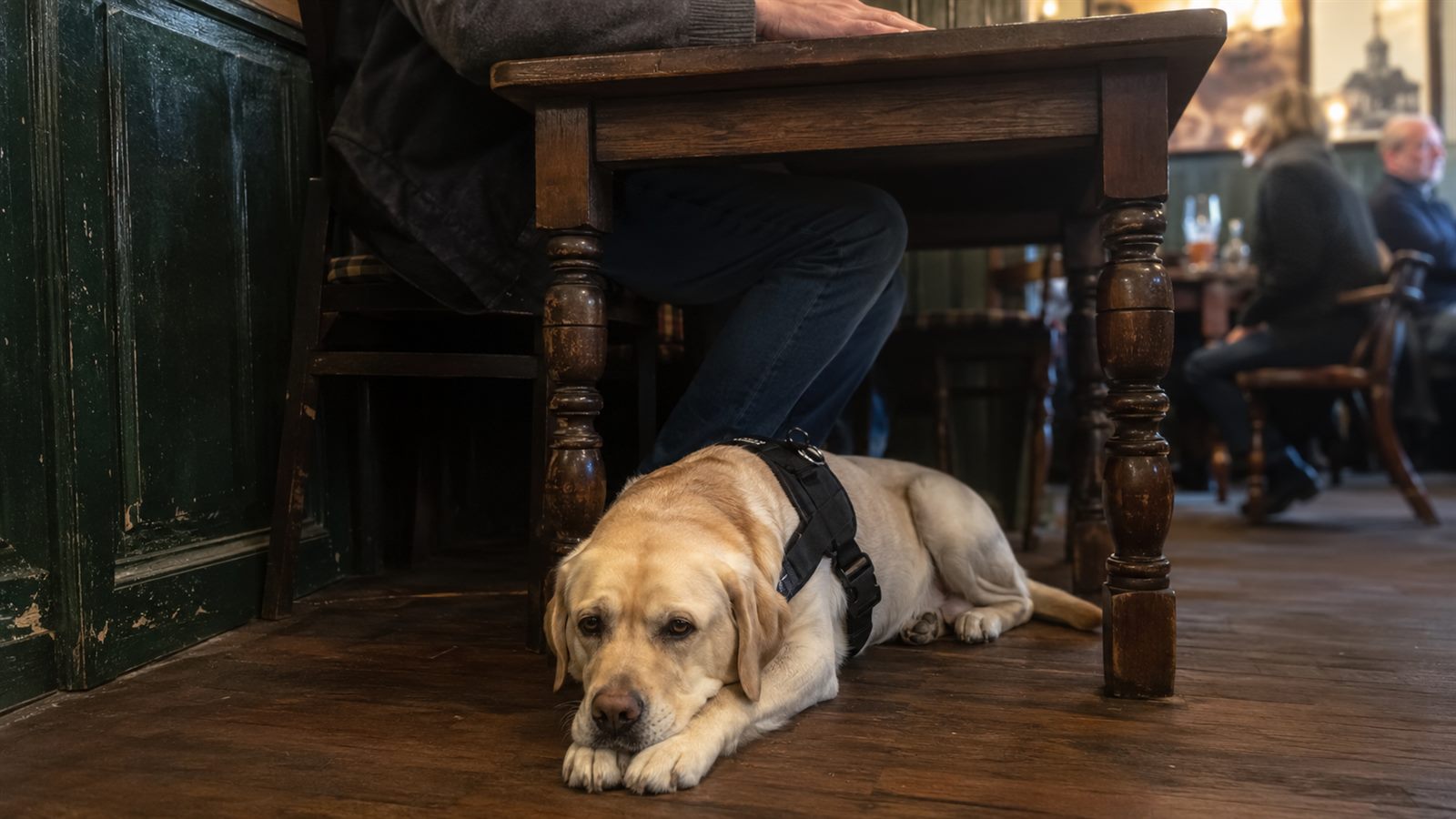
The test in UK law is about what the dog does, not who trained it or who vouched for it. An assistance dog is trained to perform tasks that mitigate the effects of a person's disability. The training route is not the test. The paperwork is not the test.
Owner-trained assistance dogs have the same rights as charity-trained ones. We have written about this before in whether a business can legally refuse an assistance dog and in our guide to what conditions qualify.
A business is entitled to form a view about whether a dog is under control and whether it appears to be a working animal. That is very different from demanding a document, and in practice a great many refusals come down to a member of staff asking for something the law never required.
It would be easy to stop here, having explained that the other lot cannot certify your dog. That would be dishonest by omission, so let us be plain about our own position.
The Assistance Dog Registry cannot certify your assistance dog either. Nobody can. We are a private registry. We are not a regulator, we are not appointed by anyone, and nothing we issue creates a legal right that you did not already have.
What we do is the narrower thing described above. Our cards, tags and profiles are not evidence of authority, because there is no authority to be evidence of. They are a practical tool for a difficult moment, and they should be judged on whether they work in that moment rather than on anything they claim to prove.
That is why our most used resources cost nothing. The UK Assistance Dog Rights Pocket Guide, the letter templates and the refusal kit all work perfectly well whether or not anyone ever buys anything from us. A business selling fake official status would have no reason to give away the thing that makes official status unnecessary.
Being right does not always help in the moment, so here is what tends to work.
The UK Assistance Dog Rights Pocket Guide, with the wording to use when you are challenged. The Access Refusal Kit, step by step. Six letter templates for landlords, employers, schools, colleges, hotels and businesses. A free printable ID card and certificate with your dog's name and photo.
Open a free accountNo payment, no card details, nothing that turns into a bill later.
No government body certifies assistance dogs in the UK. ADUK is a coalition of charities, not a regulator, and it has no authority over handlers or over anyone else. We are a private registry and we have no authority either. Your rights come from the Equality Act 2010, they depend on what your dog is trained to do, and they belong to you whether or not anybody has approved of them.
Anyone who tells you differently is either mistaken or selling something. Including, if we ever tell you differently, us.