
Can a Business Legally Refuse an Assistance Dog in the UK?
Your Rights Under the Equality Act 2010
If you rely on an assistance dog, one of the most stressful situations you can experience is being challenged in public.
You walk into a café, shop, or restaurant and a member of staff suddenly says:
“Sorry, no dogs allowed.”
People look at you. You feel embarrassed, frustrated, and unsure how to respond.
Many assistance dog handlers experience this at some point. The problem is that many businesses simply do not understand the law.
So the question is:
Can a business legally refuse an assistance dog in the UK?
In most situations, the answer is no.
Understanding your legal rights can make these situations much easier to handle.
The Law: The Equality Act 2010
The legal protection for assistance dog handlers in the UK comes from the Equality Act 2010.
Under this law, businesses must make reasonable adjustments so disabled people can access services in the same way as everyone else.
For many disabled people, an assistance dog is an essential part of daily life. These dogs perform important tasks such as:
- guiding people with visual impairments
- alerting to medical conditions
- providing mobility support
- assisting with psychiatric or neurological disabilities
Because of this, refusing entry to someone simply because they are accompanied by an assistance dog can amount to disability discrimination.
This means businesses should usually allow assistance dogs into places such as:
- shops
- cafés and restaurants
- taxis and public transport
- hotels and accommodation
- supermarkets
- public buildings
Even if a business normally has a “no dogs” policy, assistance dogs are generally an exception.
Do Assistance Dogs Need to Be Registered in the UK?
This is one of the most common misunderstandings.
Under the Equality Act 2010, assistance dogs do not need to be officially registered with any government organisation.
The law does not require:
- registration
- ID cards
- special jackets or vests
- certification from a particular training organisation
Many assistance dogs in the UK are owner-trained, and they can still be protected under the Equality Act as long as they assist a disabled person with tasks related to their disability.
However, misunderstandings still happen because many businesses are not fully aware of how the law works.
What Businesses Are Allowed to Ask
Although businesses should not refuse access simply because of the dog, staff may ask reasonable questions to understand the situation.
For example, they may ask:
- Is this an assistance dog required because of a disability?
- What tasks does the dog help you with?
These questions help staff understand that the dog is working and not simply a pet.
However, businesses should not demand medical proof or detailed personal information about your disability.
You are not required to disclose private medical details in order to access services.
What To Do If You Are Refused Entry
If a business refuses your assistance dog, the situation can feel upsetting and confrontational. However, staying calm often helps resolve the issue quickly.
Here are some practical steps you can take.
Stay calm and explain politely
Many staff members simply do not understand the law. Calmly explaining that your dog is an assistance dog protected under the Equality Act can often resolve the situation.
Ask to speak with a manager
Managers are usually more familiar with policies and may resolve the issue quickly.
Briefly explain the Equality Act
You can explain that refusing access because of an assistance dog may be considered disability discrimination under the Equality Act 2010.
Document the incident if necessary
If the problem continues, you may wish to note the business name, location, and what happened. This information can be useful if you decide to make a complaint later.
Most situations resolve quickly once staff understand the legal position.
Why Some Handlers Carry Identification
Although identification is not legally required, many assistance dog handlers choose to carry tools that help avoid misunderstandings.
These may include:
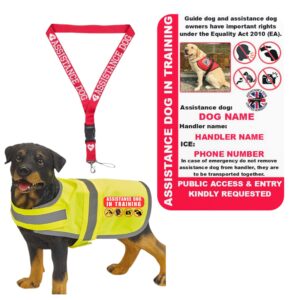
- an assistance dog ID card
- a vest or harness identifying the dog as working
- an online profile explaining the dog’s role
These tools can help staff quickly understand the situation and often prevent uncomfortable confrontations.
Many handlers find that clear identification helps make everyday interactions smoother.
Optional Registry Profiles for Assistance Dog Handlers
Some handlers choose to create a profile in the Assistance Dog Registry to make communication easier when questions arise.
A registry profile can include:
- handler and dog information
- optional identification cards
- an online profile that can be shown if requested
While registration is not required by law, many handlers find that having clear information available helps avoid misunderstandings in public places.
Lifetime Membership With Payment Plans
For handlers who want long-term access to their registry profile and identification tools, the Lifetime Partner Membership offers a permanent option.
This can include:
- a permanent registry profile
- a personalised assistance dog ID card
- a handler and dog information page
- optional identification accessories
To make this easier for handlers, the Lifetime membership can also be purchased using payment plan options such as Klarna or Clearpay. This allows the cost to be split into smaller payments rather than paying everything upfront.
Final Thoughts
Being challenged in public with an assistance dog can be frustrating, especially when you know your dog is helping you live independently.
The important thing to remember is that under the Equality Act 2010, businesses are generally required to make reasonable adjustments for disabled people. This usually includes allowing assistance dogs to enter premises even if pets are normally not allowed.
Understanding your rights can help you handle these situations calmly and confidently.
At the same time, many handlers choose to carry identification or maintain a registry profile to make everyday interactions easier and avoid unnecessary conflict.
As awareness improves, situations like these should become less common. Until then, having clear information available can make a big difference.
Legal Information Disclaimer
This article is provided for general informational purposes only and does not constitute legal advice.
While every effort has been made to ensure the information is accurate at the time of writing, laws and regulations may change and individual circumstances can vary.
Nothing in this article should be taken as professional legal advice. If you require advice regarding your specific situation, you should contact a qualified legal professional or a relevant support organisation.
For independent guidance on disability rights in the UK, you may contact the Citizens Advice consumer service or seek advice from a qualified solicitor specialising in disability discrimination law.
ACAS Helpline:
📱 0300 123 1100 — Monday to Friday, 8am–6pm (standard UK call rates apply)
Text Relay (for people who are deaf or have speech impairments):
☎️ 18001 0300 123 1100
Register your assistance dog today and enjoy every sunny moment without setbacks.
💡 Click here to learn more & register
FAQ
1. What is an assistance dog?
An assistance dog is trained to perform specific tasks to aid individuals with disabilities, enhancing their independence and quality of life.
2. Why is socialization important for assistance dogs?
Proper socialization ensures assistance dogs remain calm, focused, and well-behaved in various public settings, enabling them to perform their duties effectively.
3. At what age should I start socializing my assistance dog?
It's beneficial to begin socialization during puppyhood; however, with patience and consistent training, dogs of any age can learn to navigate public environments confidently.
4. How long does it take to socialize an assistance dog?
The duration varies based on the dog's temperament, previous experiences, and the consistency of training. Regular, positive exposure to different environments is key.
5. Can I socialize my assistance dog if they are older?
Yes, older dogs can be socialized successfully. While it may require more time and patience, with positive reinforcement, they can adapt to new situations.
6. What should I do if my assistance dog shows fear in public?
If your dog exhibits fear, calmly remove them from the situation and gradually reintroduce the stimulus at a comfortable distance, rewarding calm behavior.
7. How do I handle public distractions during training?
Teach focus commands like "watch me" to redirect your dog's attention. Gradual exposure to distractions, paired with positive reinforcement, can improve focus.
8. Are there specific public places ideal for socialization?
Begin with quiet areas like parks, then progress to busier environments such as cafes, public transport, and shopping centres as your dog becomes more comfortable.
9. How can I ensure my assistance dog behaves appropriately around other animals?
Controlled introductions and rewarding calm behaviour are essential. Consistent training helps your dog remain focused on their tasks, even around other animals.
10. What are the legal requirements for assistance dogs in public places?
In many regions, assistance dogs are permitted in public areas to support their handlers. It's important to familiarize yourself with local laws and regulations regarding assistance dogs.
Learn more about our Lifelong Partner Package
Learn More – Additional Assistance Dog Letter Templates
If you found this travel guide useful, you may also benefit from these other essential assistance dog letter templates we’ve published:
📌 Housing Accommodation Request Letter – Need to request reasonable accommodation from your landlord? This template ensures your rights under the Equality Act 2010 are respected.
📌 Workplace Assistance Dog Request Letter – If you need accommodations to bring your assistance dog to work, this letter outlines your legal rights and reasonable adjustments your employer should consider.
📌 Medical Confirmation of Need for an Assistance Dog – A doctor’s letter template to confirm your need for an assistance dog for public access, travel, and daily life.
🔹 More templates are coming soon! Let us know if you have specific needs, and we’ll create more resources to support assistance dog handlers.