Takeaway first: if a shop, cafe or taxi challenges your assistance dog, the law is already on your side. You do not need to win an argument. You need a calm thirty seconds, three sentences, and something quick to show. This guide gives you all three.
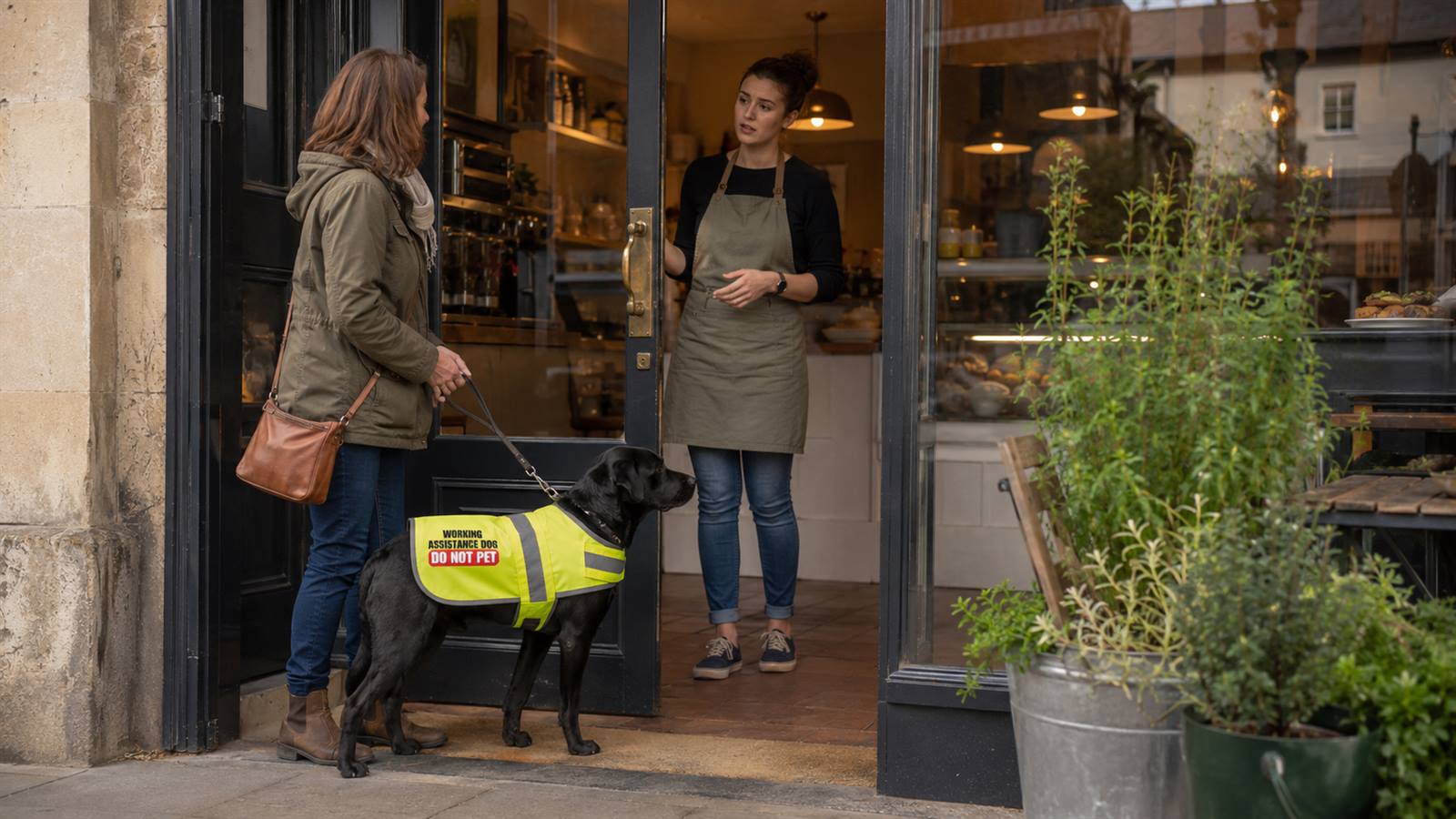
It usually happens fast. You are halfway through the door, thinking about your shopping list, and someone in a uniform says the sentence every handler dreads: "Sorry, no dogs allowed."
Your heart rate goes up. People are looking. And in that moment, the law, your rights and every article you have ever read seem very far away.
This post is about exactly that moment. Not the theory, the moment. What is actually happening, what to say, and how it usually ends when you handle it calmly. If you want the full legal background first, our complete guide to your rights as an assistance dog owner covers it in depth. This page is the field version.
Here is the thing that changes how the whole conversation feels: the person challenging you is almost never hostile. They are usually wrong, and usually trainable.
Most refusals come from a staff member who has been told "no dogs" as a hygiene rule and has never been taught the exception. They are not enforcing a considered policy. They are repeating a sentence. Which means your job is not to fight them. Your job is to give them a reason to change their mind that they can defend to their own manager.
It also helps to be clear about what your dog is in the eyes of the law. If you are ever unsure where your dog stands, our guide to what counts as an assistance dog in the UK explains it plainly, including the fact that owner-trained dogs qualify.
Handlers tell us the same pattern works again and again. Calm voice, no lecture, three steps:
1. Name what the dog is.
"This is my assistance dog. She is trained to support my disability."
2. Name the law, once.
"Under the Equality Act 2010, assistance dogs are allowed to accompany their handlers in places like this. Refusing us would be disability discrimination."
3. Move it up, politely.
"If you are not sure, could you check with your manager? I am happy to wait a moment."
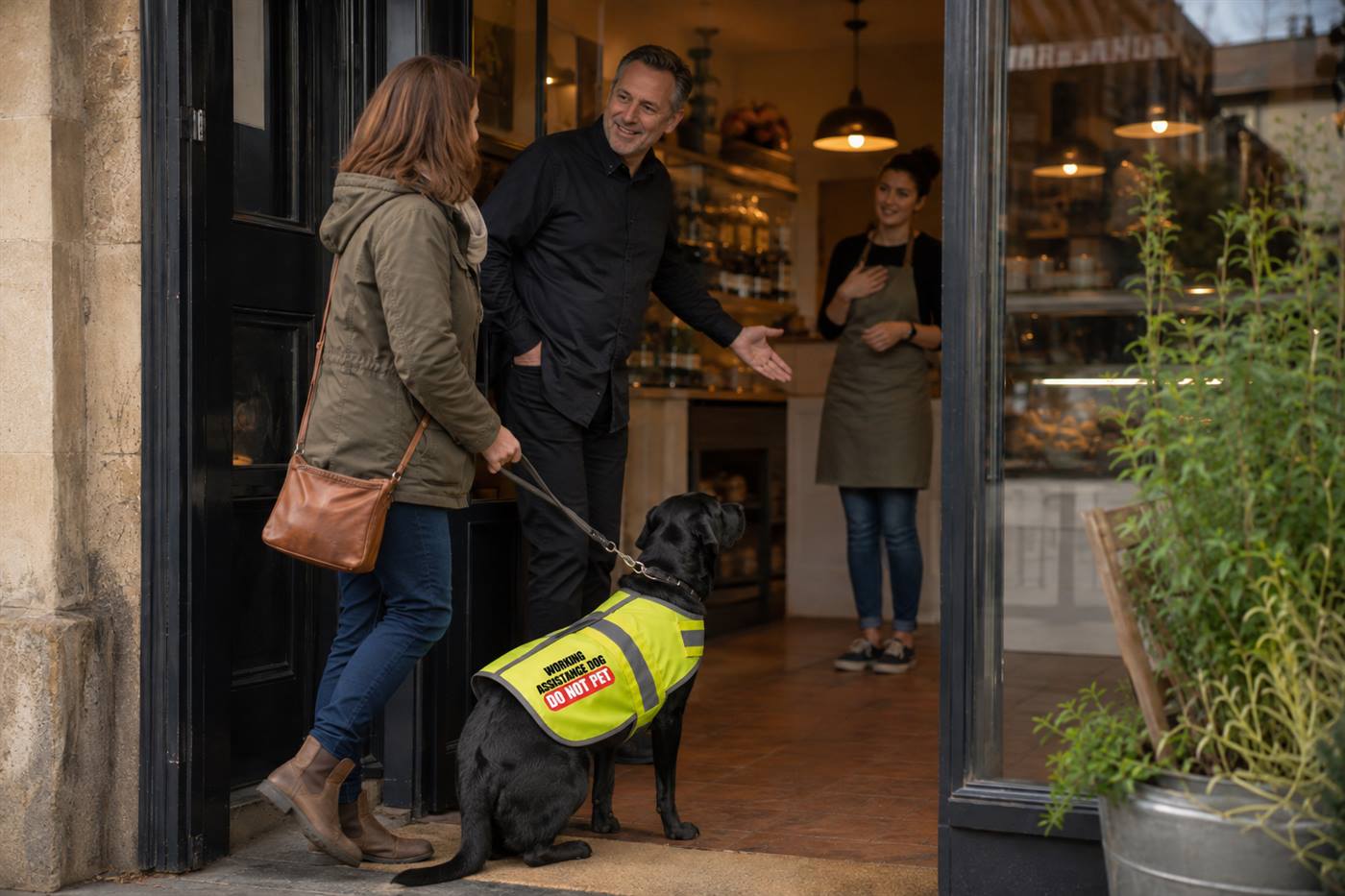
That third sentence matters more than people expect. It takes the decision away from the most junior person in the building, who has the least authority to say yes, and gives it to someone who can. Managers say yes far more often than doorstaff, because managers know what a discrimination complaint costs.
Check the law yourself. The duty to make reasonable adjustments for disabled people is in section 20 of the Equality Act 2010. Taxis and private hire vehicles have their own separate duties in section 168 and section 170, both titled "Assistance dogs". The Equality and Human Rights Commission guide for businesses (PDF) spells out the same duties in plain English, and it is written for the very people who might be challenging you. You will notice none of these mention a certificate, a card or a register. Your rights come from your disability and your dog's training, not from any document.
We say this on every page we write, because it is true and because you deserve to know it: no card grants rights, including ours. If you want the full picture of who can and cannot certify an assistance dog in this country, we wrote about it honestly in Who can certify your assistance dog in the UK? You already have the right. Everything below is about making that right quick and painless to use.
Here is the honest gap in the system. The Equality Act gives you the right, but it does not give the shop worker any way to recognise it in five seconds. There is no official badge, no government card, nothing a busy staff member can glance at. The government gave you the right. Nobody gave you the tools.
So the conversation at the door becomes a trust exercise between two strangers, and that is exactly where it goes wrong. The staff member is not asking "does this person have rights". They are asking "how do I know, and what do I tell my boss".
That is the gap handlers fill in practical ways:
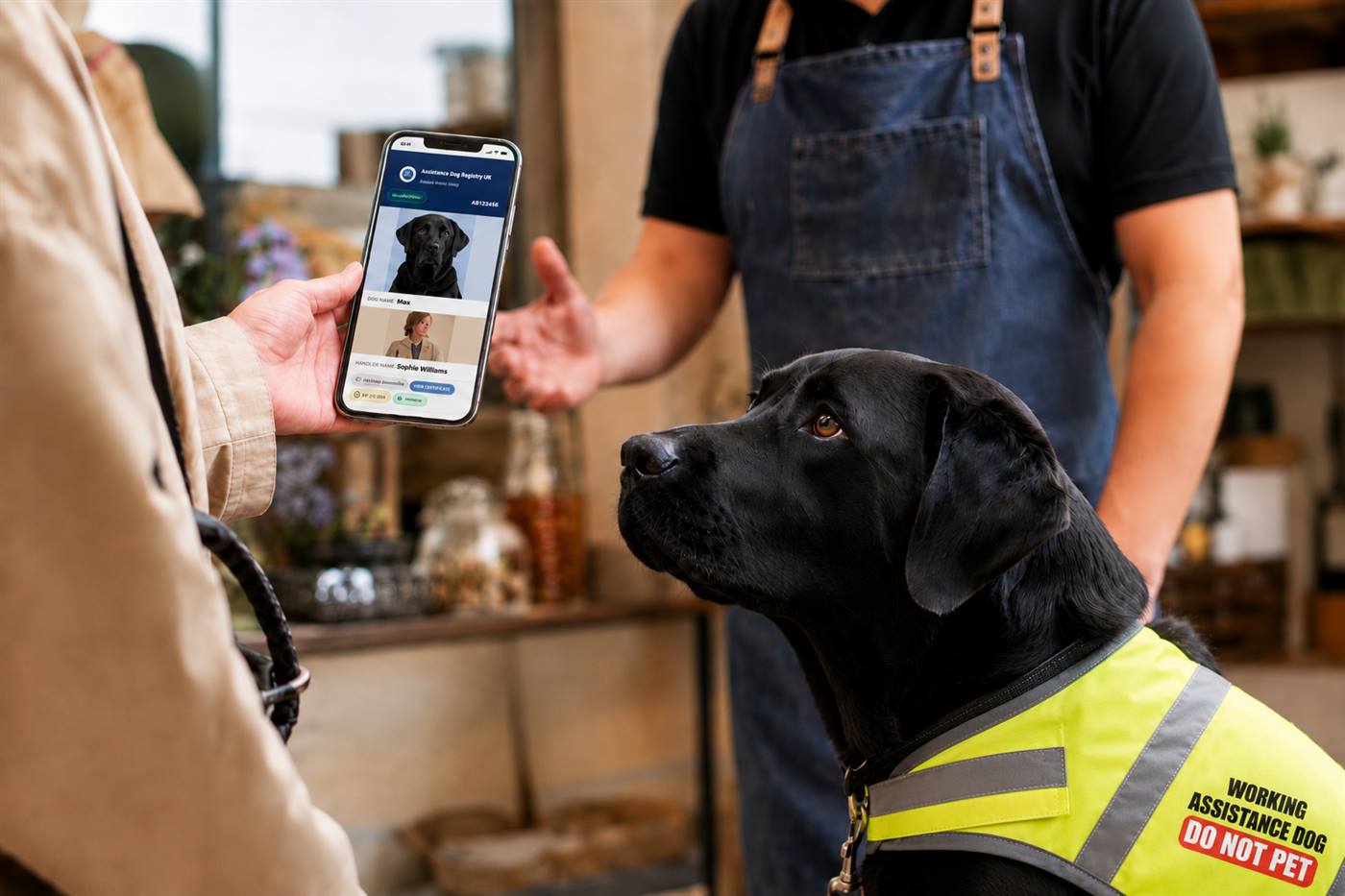
None of these are legally required. All of them shorten the moment. That is their entire job. Our pocket guide to UK assistance dog rights is built for the same purpose: the law, condensed to what you can actually use standing in a doorway.
Dogs in training. The protections read differently while your dog is still learning. Our guide to assistance dogs in training and your rights covers that stage honestly.
Pubs and restaurants. Food premises are where "hygiene" gets used as a refusal reason most often, and it is wrong: food hygiene law explicitly permits assistance dogs in customer areas. We took apart a real case in what UK law really says when a pub refuses an assistance dog.
Work and housing. The same Equality Act reasoning extends to your job and your tenancy. See your assistance dog rights at work and, if you rent, the Renters' Rights Act and no-pets clauses.
Sometimes the answer stays no. When it does, do not escalate at the door. Do this instead:
A member called us recently from a bingo hall, mid refusal. She was flustered, the staff member was firm, and the evening was about to be ruined. The advice was the three steps above: name the dog, name the law once, ask for the manager. Two minutes later she was inside, with an apology. Nothing about her rights changed in those two minutes. What changed was that the decision reached someone with the authority to make it.
That is the pattern. The law does the heavy lifting. You just need to stay calm long enough for it to arrive.
If you want the practical tools handlers use at the door, they are what we make:
And if you only take one thing from this page, take the three sentences. They cost nothing, and they end most challenges before they start.
The Assistance Dog Registry team